Trade
USDC, digital dollar infrastructure, stablecoin adoption, crypto payments, blockchain finance

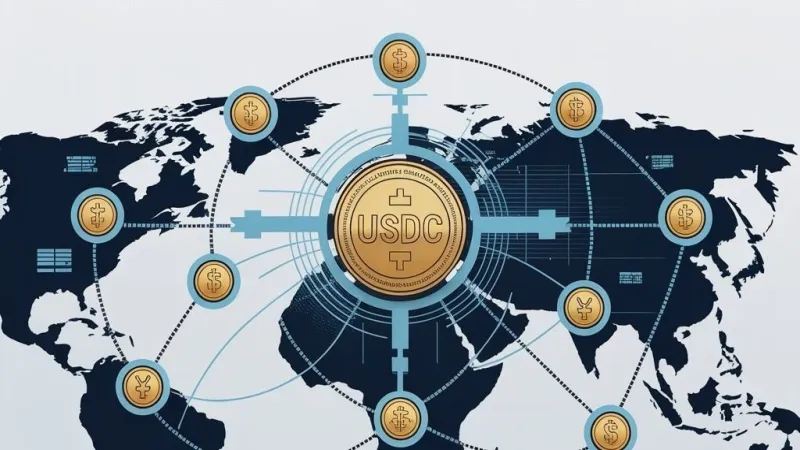
Global trade platforms are increasingly exploring stablecoin based payment systems as businesses search for faster and more efficient methods of settling international transactions. Among these digital payment tools, USD Coin has emerged as one of the most widely used dollar backed stablecoins within blockchain based financial infrastructure. As cross border commerce becomes more digital, companies involved in trade finance, logistics, and international procurement are evaluating how stablecoins can streamline payment processes that traditionally involve multiple banking intermediaries. The growing integration of USDC into digital trade platforms reflects a broader shift toward programmable financial infrastructure designed to support global commerce in a more connected economy.
Trade Finance Faces Long Standing Settlement Delays
International trade has long depended on complex banking systems that process payments through correspondent banks and clearing networks. While these systems have supported global commerce for decades, they often involve delays, documentation requirements, and transaction fees that increase operational costs for businesses. Payments moving between different financial jurisdictions may take several days to settle, especially when transactions require multiple intermediary institutions. These inefficiencies have encouraged technology companies and financial innovators to explore blockchain based payment solutions that can reduce settlement times and simplify the movement of funds across borders.
Stablecoins Offer Faster Digital Settlement Options
Stablecoins are designed to maintain a consistent value relative to traditional currencies, making them useful as a digital representation of fiat money within blockchain networks. USDC in particular has gained recognition among businesses and financial institutions because it is widely supported across major trading platforms and payment systems. Using stablecoins for settlement allows companies to transfer value directly between digital wallets without relying on traditional banking hours. Transactions recorded on blockchain networks can be verified quickly, creating a transparent payment record that can improve efficiency in trade related financial operations.
Digital Trade Platforms Expand Blockchain Integration
Several digital trade platforms and financial technology companies have begun integrating blockchain based payment rails to improve settlement efficiency for global commerce. By incorporating stablecoins such as USDC into their payment architecture, these platforms enable businesses to settle invoices and contractual payments through digital asset transfers rather than conventional bank wires. This integration reduces friction in cross border transactions and provides companies with greater visibility over payment flows. As more businesses adopt digital trade platforms to manage procurement and logistics, the demand for stablecoin settlement mechanisms continues to increase.
Businesses Explore Stablecoins for Supply Chain Payments
Companies involved in international supply chains are increasingly evaluating stablecoins as a tool for managing payments between suppliers, distributors, and logistics providers. Many supply chains span multiple countries and currencies, which can create complications in settlement and financial reporting. Stablecoins provide a dollar denominated instrument that can move seamlessly across jurisdictions without requiring currency conversions at each stage of the transaction. This capability has attracted interest from companies seeking to improve the efficiency of supply chain payments while maintaining predictable pricing in international contracts.
Regulatory Attention Follows Stablecoin Expansion
As stablecoins become more integrated into international trade infrastructure, policymakers and financial regulators are examining how these digital payment systems should be governed. Regulatory discussions are focusing on reserve transparency, operational oversight, and compliance with anti money laundering standards. Authorities in several major financial jurisdictions are evaluating whether stablecoin issuers should operate under frameworks similar to payment institutions or banking entities. Market participants believe that clearer regulatory guidelines could support broader adoption by providing legal certainty for businesses that intend to incorporate stablecoin payments into commercial operations.
Trade Ecosystems Continue to Evolve
The expansion of stablecoin usage in global trade reflects the ongoing evolution of financial infrastructure supporting international commerce. Digital platforms are increasingly connecting logistics data, financial settlements, and supply chain management within integrated systems that rely on real time information. Stablecoins such as USDC fit naturally within this environment because they provide programmable digital value that can interact with automated financial processes. As trade networks continue to modernize, blockchain based payment rails may become an increasingly common component of cross border financial systems.
Outlook
While traditional banking networks will continue to play an important role in global trade, the integration of stablecoins into digital trade platforms indicates that businesses are actively exploring new settlement technologies. If adoption continues to expand, USDC and similar digital dollar instruments could become an important part of the payment infrastructure supporting international commerce in the years ahead.

You may like

USDC Circulation Expands as Stablecoin Liquidity Reenters Global Crypto Markets

Emerging Markets Turn to USDT for Cross Border Transactions as Dollar Liquidity Tightens

Institutional Capital Returns to Digital Markets as USDC Settlement Volumes Rise

Dollar Backed Stablecoins Gain Ground as USDC Strengthens Digital Dollar Infrastructure

Regulators Examine Stablecoin Frameworks as USDC Becomes Central to Digital Payment Policy

AI Driven Payment Infrastructure Begins Using USDC for Programmable Financial Transactions
Trade
Pakistan Afghanistan Conflict Disrupts Central Asian Trade Connectivity Plans

Rising military tensions between Pakistan and Afghanistan have begun disrupting regional trade expectations, creating uncertainty for Central Asian countries that were counting on the two neighbors to provide faster access to global sea routes. The conflict, which has intensified along the long frontier between the two countries, is already raising concerns among regional policymakers and trade experts who fear that ongoing fighting could delay major connectivity projects linking Central Asia with Pakistani ports. For landlocked economies such as Kazakhstan, Uzbekistan and Kyrgyzstan, access to seaports through Afghanistan and Pakistan has long been viewed as a critical pathway for expanding exports and integrating more deeply with global markets. Analysts warn that escalating hostilities could undermine months of diplomatic progress aimed at building new trade corridors connecting Central Asia with South Asia and international shipping routes.
Reports indicate that clashes between the two sides have included air operations and ground confrontations along the approximately 1600 mile border that separates Pakistan and Afghanistan. The situation has raised fears that transport routes passing through Afghanistan could become unstable or temporarily inaccessible. Trade planners in Central Asia had been exploring Afghanistan and Pakistan as the most direct route to the Arabian Sea which would allow their exporters to ship goods more efficiently to international markets. For countries that currently rely on long overland routes through other regions, the proposed corridor promised to significantly reduce transportation costs and shorten delivery times for exports ranging from agricultural commodities to industrial products. The emerging conflict is now casting doubt over the pace at which these projects can move forward.
In recent months Central Asian governments had intensified diplomatic engagement with both Islamabad and Kabul in an effort to strengthen economic connectivity. High level visits from leaders of Kazakhstan, Kyrgyzstan and Uzbekistan to Pakistan helped lay the groundwork for new trade partnerships and infrastructure plans. Among the most ambitious proposals discussed was a trans Afghan railway network that would connect Central Asian markets with Pakistan’s major ports including Karachi, Port Qasim and Gwadar. These projects were designed to transform regional trade by giving landlocked economies a reliable maritime outlet. Officials also discussed the development of logistics hubs and terminals at Pakistani ports that would facilitate the movement of Central Asian exports to global markets.
Economic cooperation with Afghanistan had also been expanding in parallel with these plans. Central Asian countries had been seeking to increase commercial engagement with Kabul as part of a broader strategy to improve regional stability and connectivity. Uzbekistan in particular had taken steps to deepen economic ties including reopening cross border transit points and expanding bilateral trade flows. Officials in Tashkent had expressed ambitions to significantly increase trade with Afghanistan in the coming years as infrastructure links improved. However the new conflict between Pakistan and Afghanistan threatens to slow or suspend many of these initiatives as governments reassess security conditions and the viability of long term transport corridors passing through the region.
Regional analysts believe that prolonged instability could delay Central Asia’s broader goal of overcoming the limitations of being landlocked economies. Without reliable access to seaports exporters in the region face higher transportation costs and limited trade flexibility. The longer the conflict continues the more difficult it may become for countries in the region to implement connectivity agreements and infrastructure projects that were designed to expand trade routes and stimulate economic growth across Central and South Asia.
Trade
Venezuela Oil Exports From Jose Terminal Approach Seven Year High

Venezuela’s crude exports from its main oil terminal are expected to rise sharply in March, pushing shipments close to their highest level in nearly seven years. Early loading schedules indicate that exports from the Jose terminal, the country’s largest oil hub, could reach around 848000 barrels per day during the month. The terminal handles the majority of Venezuela’s overseas oil shipments and plays a central role in the country’s energy trade. Industry observers say the expected increase reflects a stronger pace of cargo loading as authorities and international traders accelerate shipments under the current oversight framework governing Venezuelan oil sales. Analysts believe the increase in exports could help reduce large inventories that had accumulated in recent months while also improving cash flow for the country’s energy sector.
The Jose terminal is responsible for more than eighty percent of Venezuela’s crude exports and serves as a key gateway for oil shipments to global markets. Located on the Caribbean coast in the state of Anzoategui, the industrial complex includes storage facilities, processing plants and tanker loading terminals that allow crude oil and petroleum products to be exported to international buyers. The hub receives large volumes of heavy crude produced in the Orinoco Belt before the oil is blended and shipped abroad. Because of its scale and infrastructure the terminal has long been considered the backbone of Venezuela’s oil export system.
Shipping activity has accelerated in recent months as traders and energy companies seek to move larger volumes of Venezuelan crude to global markets. Reports from maritime tracking data indicate that several large cargoes are scheduled to depart from the Jose port during March, with shipments destined for buyers in the United States, Europe and parts of Asia. Energy companies have also begun using larger tankers to move Venezuelan crude more efficiently, helping reduce transportation costs and clear stockpiles that built up during earlier disruptions. Analysts say the use of very large crude carriers could significantly speed up export operations while allowing producers to ship greater volumes in fewer voyages.
Venezuela’s oil sector has faced major challenges in recent years due to sanctions, declining investment, and operational difficulties that reduced production capacity. Despite possessing the world’s largest proven oil reserves, the country has struggled to maintain consistent output levels. Sanctions and restrictions on international trade limited access to technology, financing, and shipping services, which contributed to declining production and export volumes. However recent changes in market conditions and the involvement of international trading firms have helped revive export flows, allowing the country to gradually rebuild its presence in global energy markets.
Energy analysts say the rising export volumes could have wider implications for global oil markets if the trend continues. Increased shipments from Venezuela may help supply refiners that process heavy crude oil while providing additional barrels to international buyers seeking alternatives to other suppliers. At the same time the situation remains closely monitored by policymakers and energy companies due to ongoing geopolitical tensions surrounding Venezuelan oil trade. Market participants say the pace of exports from the Jose terminal in the coming months will be a key indicator of whether Venezuela’s oil sector can sustain its recovery and maintain stronger production and shipment levels in the near term.
Trade
Hungary Seeks to Expand Trade and Investment Cooperation With Pakistan

Hungary has expressed strong interest in expanding trade and investment cooperation with Pakistan as both countries look to strengthen economic ties and explore new business opportunities. Hungarian Ambassador to Pakistan Dr Zoltan Varga said that the two nations share traditionally friendly diplomatic relations and have significant potential to increase bilateral trade. Speaking during an interactive session at the Islamabad Chamber of Commerce and Industry, the envoy highlighted that Pakistan and Hungary have maintained stable relations for decades and continue to explore new avenues for economic collaboration. He noted that the growing interaction between businesses and policymakers from both countries reflects a shared interest in building stronger commercial partnerships. According to the ambassador, enhanced engagement between public institutions and private sector stakeholders could play an important role in unlocking new trade prospects and encouraging greater investment activity.
The ambassador pointed out that Pakistan and Hungary marked the 60th anniversary of diplomatic relations last year, an occasion that was accompanied by some business and economic engagements between the two countries. These initiatives were aimed at strengthening institutional ties and promoting dialogue between companies from both sides. He also mentioned the role of the Pakistan Hungary Joint Economic Commission which serves as an important platform for discussing trade policy issues and identifying new areas of cooperation. The most recent meeting of the commission took place last year and discussions are already underway for the next session which is expected to be held in Budapest. Officials believe that continued dialogue through such platforms can help remove barriers to trade and open new channels for commercial collaboration between the two economies.
Dr Varga noted that the current bilateral trade volume between Pakistan and Hungary is estimated at around one hundred million dollars which he described as modest compared to the economic potential of both countries. He emphasized that this level of trade demonstrates the opportunity for significant expansion in the coming years. Hungary’s most visible economic presence in Pakistan is through the MOL Group, a Hungarian oil and gas company that has been operating in the country for more than two decades. The company’s continued operations in Pakistan have contributed to energy sector development while also demonstrating the benefits of long term foreign investment partnerships. The ambassador said such successful collaborations highlight the value of stable business environments and encourage other international firms to consider Pakistan as a destination for investment.
Officials at the Islamabad Chamber of Commerce and Industry also stressed the importance of strengthening economic cooperation between the two countries. Chamber President Sardar Tahir Mehmood said Pakistan offers a large and dynamic market with a population exceeding 250 million people and considerable potential for trade expansion. He noted that Pakistan currently exports textiles, leather products and food items to Hungary while imports from Hungary include machinery, pharmaceuticals and specialized industrial equipment. According to business leaders there are numerous sectors where cooperation could grow including energy development, information technology services, pharmaceutical manufacturing, infrastructure projects and agricultural technology. The upcoming European Union Pakistan Business Forum scheduled for next month is expected to provide another platform for companies from both countries to build connections and explore investment partnerships.

USDC Circulation Expands as Stablecoin Liquidity Reenters Global Crypto Markets

Emerging Markets Turn to USDT for Cross Border Transactions as Dollar Liquidity Tightens

Crypto Liquidity and Capital Flows: Could Rising USDT Activity Influence Pakistan’s Equity Markets
Trending
PSX1 month agoCrypto Liquidity and Capital Flows: Could Rising USDT Activity Influence Pakistan’s Equity Markets
PSX1 month agoPSX Bloodbath as KSE100 Plunges Over 13,000 Points After Trading Resumes
PSX1 month agoPSX Plunges Over 11,000 Points as Middle East Tensions Shake Markets
PSX1 month agoKSE 100 Drops Over 1,300 Points After Early Session Recovery
PSX1 month agoPSX Trading Halted After KSE30 Triggers Market Circuit Breaker
Crypto1 month agoEthereum Tests ‘DVT-Lite’ System to Simplify Validator Setup for Institutional Staking
Local Affairs1 month agoPakistan’s Provincial Governments Accelerate Urban Development Plans
Global Affairs1 month agoGlobal Power Shifts Reshape Diplomacy as Emerging Alliances Redefine International Order