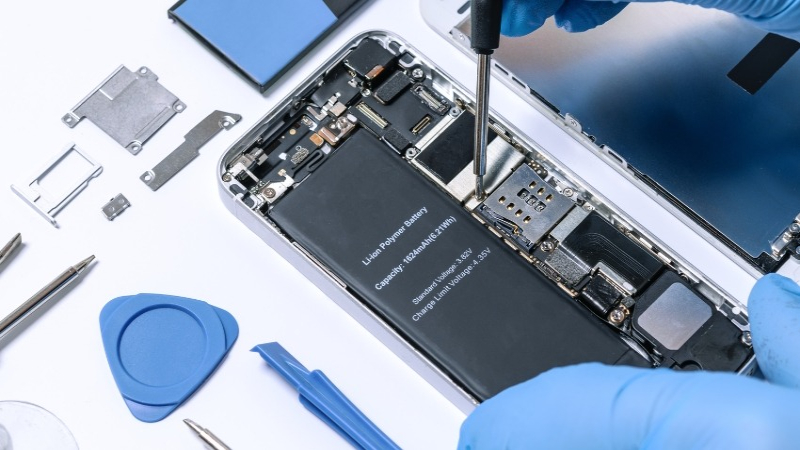
Pakistan’s mobile phone industry has experienced rapid growth over the past several years, driven largely by government policies designed to encourage local assembly of devices. The transformation has been dramatic. In 2019, the majority of phones sold in Pakistan were imported fully built devices. Today, nearly 94 percent of mobile phones available in the local market are assembled within the country.
Despite this progress, policymakers acknowledge that the current model of local assembly represents only the first step in building a sustainable electronics manufacturing ecosystem. The government is now preparing a new mobile manufacturing policy covering the period from 2026 to 2033, with the goal of shifting the industry from simple assembly operations toward deeper local manufacturing and higher value production.
The proposed framework aims to increase domestic value addition, encourage exports, and integrate Pakistan into global electronics supply chains.
Local Assembly Has Expanded Rapidly Since 2020
Pakistan introduced its first dedicated mobile manufacturing policy in 2020 when locally assembled phones represented only a small share of the domestic market. At that time, roughly 70 percent of mobile devices sold in Pakistan were imported as fully built units.
The policy offered incentives for manufacturers to establish assembly operations within the country. These incentives included tax advantages and import duties designed to encourage companies to import components for assembly rather than finished phones.
As a result, the industry expanded quickly. The Pakistan Telecommunication Authority issued 37 manufacturing licenses during the past several years, allowing global smartphone brands to establish assembly lines across the country.
Today nearly every major smartphone brand assembles devices locally, including Samsung, Xiaomi, Vivo, Oppo, and several others. Apple remains one of the few global manufacturers that has not established assembly operations in Pakistan.
The rapid growth of assembly operations helped reduce import dependence while lowering device prices for local consumers. Increasing internet penetration and a growing population also contributed to rising smartphone demand, further encouraging manufacturers to set up operations within the country.
However, the majority of components used in locally assembled devices are still imported from abroad. Industry estimates suggest that more than 90 percent of parts used in Pakistan’s mobile phones originate from international suppliers.
New Policy Targets Local Manufacturing and Export Growth
The government’s upcoming mobile manufacturing framework aims to address this limitation by encouraging deeper localisation of the supply chain. The policy proposes raising the local content share of smartphone production to approximately 50 percent by 2033.
To achieve this objective, policymakers plan to introduce incentives designed to support domestic manufacturing of key components and attract international electronics manufacturers to establish production facilities in Pakistan.
Another major goal of the policy is to expand exports of locally produced mobile phones. Authorities hope that Pakistan’s electronics sector can eventually export more than 500 million dollars worth of mobile devices and related components.
The framework proposes the introduction of a Technology Innovation Fund designed to support research, development, and export incentives. This fund would be financed through levies imposed on imported mobile devices and components, generating resources that could be reinvested in export promotion programs.
According to government projections, these levies could generate more than 100 billion rupees during the seven year policy period. The funds would help finance export rebates for companies that meet performance benchmarks and achieve international quality certifications.
Manufacturers participating in the program would be required to meet global regulatory standards such as CE certification and environmental compliance frameworks in order to qualify for incentives.
Pakistan Aims to Join Global Electronics Supply Chains
Beyond local manufacturing, the policy envisions positioning Pakistan as a competitive electronics production hub capable of participating in global supply chains.
Countries such as China and Vietnam currently dominate the global smartphone manufacturing industry. China produces the majority of the world’s smartphones, including most Apple iPhones, while Vietnam has become a major production center for Samsung devices.
Other countries including India, Malaysia, and Indonesia have also expanded their electronics manufacturing capabilities through targeted government incentives and supply chain investments.
Pakistan hopes to follow a similar path by encouraging multinational companies to establish manufacturing facilities and collaborate with local firms.
The policy also proposes attracting global technology companies such as Apple and Samsung to build full manufacturing plants rather than simple assembly lines. In addition, the government is considering initiatives related to refurbishment and re export of used smartphones.
Officials estimate that Pakistan could refurbish millions of devices annually and export them to international markets, potentially generating hundreds of millions of dollars in revenue.
Challenges Remain for Export Competitiveness
Despite the ambitious goals of the new policy, industry experts caution that entering the global smartphone export market will be challenging. Major manufacturing hubs already serve most international markets, supported by well developed supply chains and trade agreements.
Countries that dominate mobile phone exports have built decades of expertise in electronics manufacturing and benefit from extensive supplier ecosystems. Pakistan will need to develop similar infrastructure and partnerships to compete effectively.
Another challenge involves the manufacturing of high value components such as smartphone displays, processors, and advanced sensors. These components require significant capital investment and specialized technical expertise.
While the policy outlines long term localisation targets, industry observers note that achieving these goals will require sustained investment, regulatory support, and cooperation between government institutions and private companies.
Outlook
Pakistan’s new mobile manufacturing policy represents an effort to transform the country’s smartphone industry from a simple assembly base into a competitive electronics manufacturing ecosystem. Achieving deeper localisation and export growth will require long term commitment, strategic investment, and strong collaboration between government and industry stakeholders.







 Artificial Intelligence4 months ago
 Football3 months ago
 Latest News7 months ago
 Latest News7 months ago
 Football3 months ago
 Latest News7 months ago
 Latest News7 months ago
 Football3 months ago