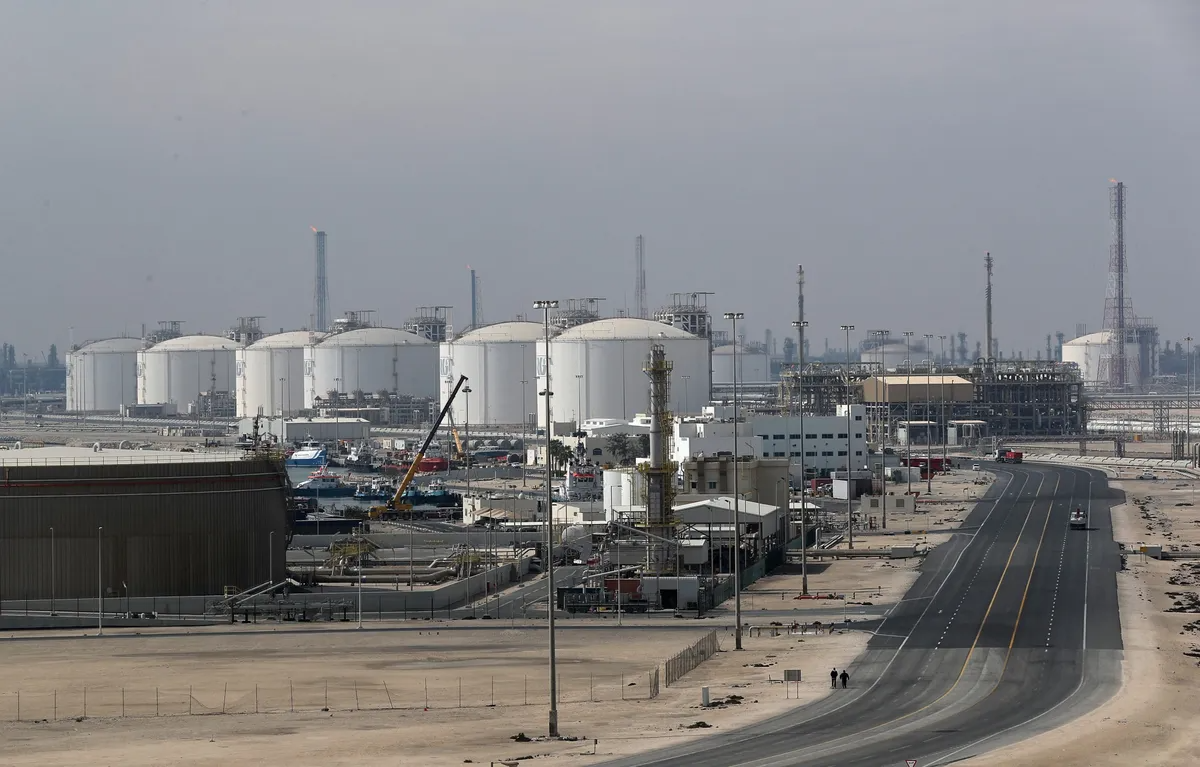
Global natural gas markets have entered a period of heightened volatility after a sudden disruption to liquefied natural gas (LNG) exports from Qatar, one of the world’s largest suppliers. The interruption has triggered a sharp reaction across international energy markets, sending gas prices significantly higher in both Europe and Asia. Buyers across these regions have rushed to secure alternative supplies, fearing prolonged shortages that could threaten energy security and industrial activity. As LNG plays a critical role in balancing global energy demand, the disruption has quickly reverberated across multiple markets, forcing importers to reassess supply strategies while traders monitor shifting cargo routes and price signals in the weeks ahead.
The sudden halt in shipments from Qatar has pushed natural gas prices up dramatically compared with last year’s levels. Prices across major markets in Europe and Asia have surged by roughly fifty percent from year-earlier levels, reflecting growing concerns about supply constraints and limited replacement options. At the same time, logistical limitations are making it difficult for buyers to quickly secure additional cargoes. A shortage of available LNG tankers, combined with limited spare liquefaction capacity among other producers, has slowed the pace at which alternative shipments can reach affected markets. This imbalance between supply and demand is expected to keep global gas prices elevated for the foreseeable future.
Despite these constraints, several major LNG exporters outside the Middle East are attempting to redirect cargoes toward the regions facing the strongest demand. Producers in the United States are widely viewed as being best positioned to capitalize on the situation due to their large export capacity and flexible supply networks. Other major exporters, including Australia, Russia, Malaysia, and Nigeria, may also adjust shipment schedules in response to the widening price gap between global regions. Energy traders note that cargo diversions are becoming increasingly common as suppliers seek to take advantage of price differences between local markets and higher-priced destinations in Europe and Asia.
Forward market data suggests that natural gas prices in both Europe and Asia could reach their highest annual averages since 2022 if current trends continue. Contracts for LNG deliveries to Asia in 2026 are currently priced near $12.95 per million British thermal units, representing a significant increase from the previous year. In Europe, benchmark gas prices have also climbed sharply, with futures contracts indicating an average price of around $12.41 per million British thermal units for the coming year. While these forward prices may fluctuate as market conditions evolve, the current projections highlight the scale of disruption caused by the sudden supply shock.
The sharp rise in gas prices is also creating substantial profit opportunities for LNG exporters, particularly those able to deliver spot cargoes quickly. Producers in the United States, where natural gas production costs remain relatively low, could generate exceptionally strong margins if prices in Europe and Asia remain at current levels. Analysts estimate that even after accounting for liquefaction and shipping costs, exporters could still realize profit margins exceeding two hundred percent on certain shipments. This economic incentive is expected to encourage further redirection of cargoes toward higher-priced markets in the near term.
Energy analysts are now closely monitoring global shipping patterns and LNG flows to determine how exporters respond to the changing market environment. Shipment data indicates that the United States already sends a large share of its LNG exports to Europe and could continue prioritizing that market due to relatively shorter shipping distances and strong demand from European utilities. If the disruption persists, additional cargo diversions and price volatility are likely as traders attempt to balance supply shortages with the evolving needs of global energy consumers.











 Artificial Intelligence4 months ago
 Football3 months ago
 Latest News7 months ago
 Latest News7 months ago
 Football3 months ago
 Latest News7 months ago
 Latest News7 months ago
 Latest News7 months ago