PSX
PSX Plunges Over 11,000 Points as Middle East Tensions Shake Markets

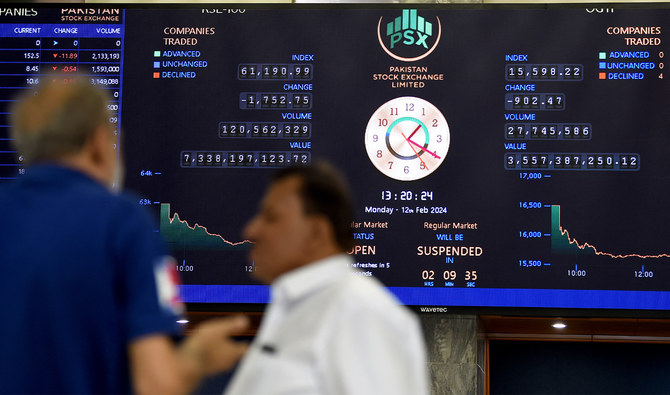
Pakistan’s stock market witnessed a sharp selloff as the Pakistan Stock Exchange (PSX) plunged dramatically at the start of the trading week, reflecting growing investor concerns over geopolitical tensions and domestic economic uncertainties. The benchmark KSE-100 Index dropped more than 11,000 points during Monday’s trading session, falling to around 146,480 points. The decline represented a loss of nearly seven percent compared with the previous closing level. The massive drop highlighted a wave of panic selling across the market as investors moved to reduce exposure to equities amid fears that rising global oil prices and policy uncertainty could affect economic stability and corporate profitability in the coming months.
Earlier in the session, trading activity at the exchange was temporarily suspended after the index recorded a fall exceeding 10,000 points. The halt was triggered under the exchange’s regulatory framework designed to prevent extreme volatility and allow investors time to reassess market conditions. Despite the temporary suspension, selling pressure continued once trading resumed, pushing the index further into negative territory. Market analysts noted that the decline reflected both domestic economic concerns and broader global market trends, with investors reacting strongly to developments in international energy markets and geopolitical tensions in the Middle East.
Market participation remained significant despite the sharp drop in share prices. Trading data showed that more than 621 million shares were exchanged during the session, representing a substantial increase compared with the previous trading day when around 363 million shares were traded. The total value of shares traded reached approximately Rs37 billion, indicating intense market activity driven largely by selling pressure. A total of 480 companies traded their shares during the day, with only 33 companies recording gains while 386 companies closed lower. Meanwhile, the share prices of 61 companies remained unchanged, reflecting widespread declines across multiple sectors.
Several stocks dominated the trading activity during the session. K-Electric Limited emerged as the most actively traded company, with more than 127 million shares changing hands at around Rs7.20 per share. Other heavily traded stocks included F. Nat. Equities and Bank of Punjab, both of which recorded significant trading volumes during the day. While most companies experienced losses, a few firms managed to record gains. Blessed Textiles Limited posted the highest increase in share price, followed by Faisal Spinning Mills Limited. On the downside, Unilever Pakistan Foods Limited recorded the largest decline in share price, while Sazgar Engineering Works Limited also faced notable losses.
Global developments played a major role in shaping investor sentiment during the session. Oil prices surged sharply amid escalating conflict in the Middle East, raising concerns about supply disruptions and rising energy costs. Brent crude prices climbed above $110 per barrel, while US West Texas Intermediate crude also surged significantly. Analysts say the spike in energy prices has intensified fears of inflation and higher business costs worldwide. If the conflict continues to disrupt energy supplies and shipping routes in the region, global fuel prices could remain elevated for an extended period. For Pakistan’s equity market, rising energy costs and geopolitical uncertainty are likely to remain key factors influencing investor sentiment and market performance.

You may like

Crypto Liquidity and Capital Flows: Could Rising USDT Activity Influence Pakistan’s Equity Markets

Saudi Aramco Expands Spot Crude Sales to Stabilize Global Oil Markets

PSX Bloodbath as KSE100 Plunges Over 13,000 Points After Trading Resumes

PSX Trading Halted After KSE30 Triggers Market Circuit Breaker

SECP approves LSE Capital voluntary de registration from modaraba business

Global Markets on Edge as Gulf War Threatens Energy and Supply Chains
PSX
Crypto Liquidity and Capital Flows: Could Rising USDT Activity Influence Pakistan’s Equity Markets

Financial markets are increasingly influenced by the rapid development of digital assets and blockchain based financial infrastructure. Among the most important developments is the expansion of stablecoin liquidity, particularly USDT, which has become a major settlement asset in global cryptocurrency trading. While digital asset markets operate separately from traditional stock exchanges, analysts are beginning to observe subtle connections between cryptocurrency liquidity and capital movement in emerging market economies. In Pakistan these developments have sparked discussions about whether digital capital flows could eventually influence investment behavior in the Pakistan Stock Exchange.
Stablecoins and Global Capital Mobility
Stablecoins function as digital versions of dollar linked assets that allow traders and investors to move capital quickly across cryptocurrency platforms. USDT is widely used for trading because it offers price stability compared with other digital assets. Investors often convert funds into stablecoins when they want to remain active in the crypto ecosystem while avoiding volatility. This flexibility has made stablecoins an essential liquidity layer in digital markets. As global stablecoin activity grows, analysts increasingly examine whether the movement of digital dollars could indirectly affect traditional financial markets.
Changing Investment Behavior
Over the past decade investors in many emerging economies have gained easier access to international financial markets through digital platforms. Cryptocurrency exchanges and online trading tools have created new channels for capital allocation. Some market observers suggest that the growth of digital assets may influence how younger investors distribute their savings between traditional assets such as stocks and newer instruments like cryptocurrencies. While the Pakistan Stock Exchange remains the country’s primary platform for equity investment, digital markets are gradually becoming part of the broader financial landscape.
Liquidity Signals in Cryptocurrency Markets
Market analysts often track stablecoin activity as an indicator of liquidity conditions within the cryptocurrency ecosystem. Rising USDT supply or transaction volumes can signal that investors are positioning capital for potential trading opportunities. When digital asset markets become more active, it may reflect a broader increase in risk appetite among investors. Although these trends do not directly determine stock market performance, they can provide insight into shifts in investor sentiment. Understanding these liquidity signals helps analysts interpret how capital flows evolve across both digital and traditional markets.
Pakistan’s Evolving Financial Ecosystem
Pakistan’s financial sector is experiencing gradual technological transformation. Digital payment platforms, fintech services and mobile banking applications have expanded access to financial services across the country. This environment has also increased public awareness of digital assets and blockchain technology. While regulatory frameworks for cryptocurrencies remain under discussion, many policymakers acknowledge the importance of understanding how digital finance interacts with the existing financial system. Discussions around digital assets increasingly include topics such as investor protection, financial stability and the monitoring of cross border capital movement.
Interaction Between Crypto and Equity Markets
Direct links between cryptocurrency markets and the Pakistan Stock Exchange remain limited. Most equity trading still occurs through regulated brokerage networks and institutional investment channels. However broader shifts in global liquidity can influence investor behavior. For example when international financial conditions become favorable and liquidity expands, investors often increase exposure to higher risk assets across multiple markets. In this context the growth of digital liquidity instruments such as USDT may reflect wider changes in global capital availability that eventually affect emerging market equities.
Institutional Interest in Digital Liquidity
Another factor shaping the conversation is the increasing participation of institutional investors in digital asset markets. Global trading firms and investment funds frequently use stablecoins for settlement and liquidity management. This trend indicates that digital assets are gradually becoming integrated into the wider financial system. As institutions continue exploring blockchain based financial infrastructure, the distinction between traditional and digital markets may gradually narrow. Financial analysts believe that understanding these developments will become increasingly important for evaluating long term capital flows.
Outlook
Pakistan’s equity market operates within a global financial environment that is evolving rapidly due to technological innovation. Stablecoins such as USDT represent a new form of digital liquidity that enables faster capital movement across markets. While the direct influence of stablecoins on Pakistan’s stock exchange remains limited, monitoring digital liquidity trends can provide valuable insight into broader investor behavior and global financial conditions.
PSX
PSX Bloodbath as KSE100 Plunges Over 13,000 Points After Trading Resumes

Pakistan’s stock market experienced a dramatic selloff as the benchmark KSE100 Index plunged more than 13,000 points shortly after trading resumed on Monday. The sharp decline highlighted extreme volatility at the Pakistan Stock Exchange (PSX) as investors reacted to growing economic concerns and global market uncertainty. By around 10:50 a.m., the index had fallen approximately 13,050 points, representing a drop of more than eight percent compared with the previous close. The massive decline reflected widespread panic selling across the market, with investors rapidly offloading stocks amid fears that rising global energy prices and economic pressures could negatively affect corporate earnings and overall economic stability.
Earlier in the morning session, trading activity at the exchange had been temporarily halted after the market triggered a circuit breaker. Around 9:20 a.m., the KSE100 Index dropped by nearly 9,780 points, crossing the six percent decline threshold required to activate the exchange’s market halt mechanism. As a result, all equity trading was automatically suspended under PSX regulations. At that time, the benchmark index had fallen to around 147,715 points, marking a sharp decline from the previous session’s closing level. The temporary suspension was implemented to prevent panic-driven trading and provide investors with time to reassess market conditions before trading resumed.
Once trading restarted, selling pressure intensified across multiple sectors of the market. Several major industries experienced significant losses, including automobile assemblers, cement manufacturers, commercial banks, oil and gas exploration companies, oil marketing firms, power generation companies, and refinery stocks. The broad-based decline indicated that investors were pulling funds from equities across nearly all sectors rather than focusing on specific companies. Market analysts noted that such widespread selling is typically observed during periods of heightened uncertainty when investors prefer to reduce risk exposure.
Large-cap companies that carry significant weight in the benchmark index also traded sharply lower during the session. Major stocks such as MCB Bank, Meezan Bank, National Bank of Pakistan, Mari Energies, Oil and Gas Development Company, Pakistan Petroleum Limited, Pakistan State Oil, Sui Northern Gas Pipelines, Sui Southern Gas Company, and Hub Power Company were among those experiencing heavy losses. Because these companies represent a large portion of the index’s value, declines in their share prices had a substantial impact on the overall market performance. The drop in these index-heavy stocks contributed significantly to the steep fall in the KSE-100 Index.
Market participants believe the sudden selloff was largely driven by rising global oil prices and fears of renewed inflationary pressure on the economy. Crude oil prices have surged sharply in global markets amid escalating geopolitical tensions, raising concerns about higher fuel costs and increased production expenses for businesses. For Pakistan, which relies heavily on imported energy, rising oil prices can significantly impact inflation and economic stability. Investors are increasingly cautious about the potential economic consequences if energy prices remain elevated for an extended period. As a result, market volatility may continue in the coming days as investors closely monitor global developments and domestic economic indicators.
PSX
PSX Trading Halted After KSE30 Triggers Market Circuit Breaker

Trading at the Pakistan Stock Exchange (PSX) was temporarily suspended on Monday morning after the benchmark KSE 30 Index plunged sharply during early market activity, triggering a market-wide circuit breaker under the exchange’s regulatory framework. The halt occurred at approximately 09:22 AM when the index dropped more than five percent from its previous closing level, activating automatic safeguards designed to prevent panic-driven trading. Once the circuit breaker was triggered, all equity trading across the market was paused and outstanding orders in the trading system were automatically cancelled. Such halts are part of the PSX risk management structure, allowing investors time to reassess market conditions and helping stabilize trading during periods of extreme volatility.
The broader benchmark KSE 100 Index also experienced heavy selling pressure during the early trading session. The index dropped sharply by around 9,780 points, representing a decline of more than six percent shortly after the market opened. This sudden fall pushed the benchmark index down to approximately 147,715 points as investors reacted to a wave of negative sentiment across the market. Data from the exchange indicated that the index moved rapidly between an intraday high near 150,174 points and a low close to 147,710 points within a short period of time, reflecting heightened volatility and aggressive selling by investors.
Market analysts believe the sharp decline was triggered by a combination of global and domestic economic concerns that have unsettled investor confidence. Rising international crude oil prices and increasing fuel costs have raised concerns about inflation and higher production expenses for businesses. As Pakistan’s economy remains sensitive to energy price movements, investors reacted cautiously to the possibility that elevated fuel costs could place additional pressure on corporate profitability. These concerns led to broad-based selling across several sectors of the market as traders moved to reduce exposure to equities during the early session.
The circuit breaker mechanism implemented by the Pakistan Stock Exchange is designed to prevent disorderly market conditions during periods of extreme price swings. When a benchmark index such as the KSE 30 experiences a decline beyond a specified threshold, trading is temporarily halted to provide a cooling-off period for investors. This pause allows market participants to absorb new information and evaluate investment decisions without the pressure of rapidly falling prices. Circuit breakers are widely used in global financial markets to maintain orderly trading and reduce the risk of panic-driven selloffs.
Following the temporary suspension, the exchange announced that trading would resume in phases according to established procedures. The pre-open session was scheduled to restart at 10:22 AM, allowing investors to enter new orders and adjust positions before the market reopened for normal trading. Full trading activity was set to resume at approximately 10:27 AM. Market observers say the pause may help restore some stability as investors reassess economic conditions and market sentiment. However, analysts caution that volatility may persist if concerns about global energy prices and economic pressures continue to influence investor behavior.

USDC Circulation Expands as Stablecoin Liquidity Reenters Global Crypto Markets

Emerging Markets Turn to USDT for Cross Border Transactions as Dollar Liquidity Tightens

Crypto Liquidity and Capital Flows: Could Rising USDT Activity Influence Pakistan’s Equity Markets
Trending
PSX1 month agoCrypto Liquidity and Capital Flows: Could Rising USDT Activity Influence Pakistan’s Equity Markets
PSX1 month agoPSX Bloodbath as KSE100 Plunges Over 13,000 Points After Trading Resumes
PSX1 month agoKSE 100 Drops Over 1,300 Points After Early Session Recovery
Crypto1 month agoEthereum Tests ‘DVT-Lite’ System to Simplify Validator Setup for Institutional Staking
PSX1 month agoPSX Trading Halted After KSE30 Triggers Market Circuit Breaker
Global Affairs1 month agoGlobal Power Shifts Reshape Diplomacy as Emerging Alliances Redefine International Order
Local Affairs1 month agoPakistan’s Provincial Governments Accelerate Urban Development Plans
Budget1 month agoOhio Budget Outlook Remains Stable Despite Lower Sales Tax Collections