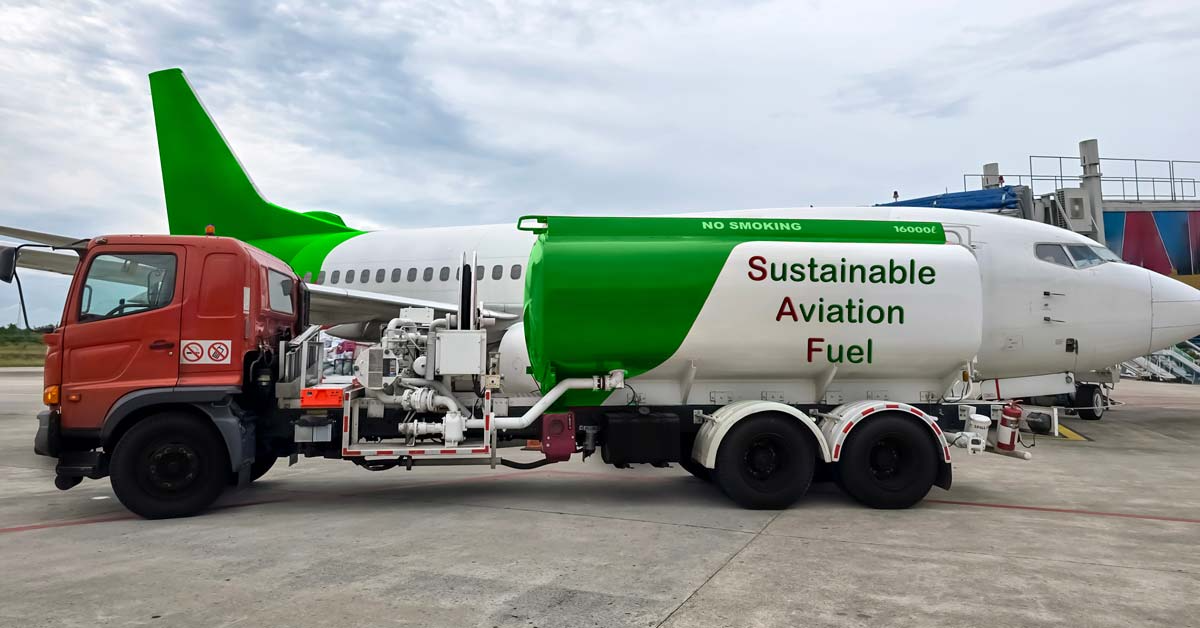
Airlines around the world are increasing their investments in sustainable aviation fuel as part of a broader effort to reduce carbon emissions and address the environmental impact of air travel. The aviation industry is responsible for a significant share of global greenhouse gas emissions, prompting airlines, governments, and energy companies to explore cleaner alternatives to conventional jet fuel. In 2026, sustainable aviation fuel is emerging as one of the most promising solutions for lowering the carbon footprint of commercial flights without requiring major changes to existing aircraft engines. As global travel demand continues to rise, the development and adoption of sustainable fuels are becoming central to the aviation industry’s long-term sustainability strategy.
Sustainable aviation fuel, often referred to as SAF, is produced from renewable sources such as agricultural waste, used cooking oils, municipal waste, and certain plant-based materials. Unlike traditional fossil-based jet fuel, SAF can significantly reduce lifecycle carbon emissions because the raw materials used in production absorb carbon dioxide during their growth or collection process. Although the fuel still produces emissions when burned during flight, the overall environmental impact is substantially lower compared with conventional aviation fuel. Industry estimates suggest that sustainable aviation fuel could reduce carbon emissions by up to 80 percent over its lifecycle, depending on the feedstock and production method.
Airlines are forming partnerships with fuel producers, energy companies, and research institutions to accelerate the development of sustainable aviation fuel technologies. Several major carriers have signed long-term agreements to purchase large volumes of SAF as production capacity expands. These agreements provide financial support for fuel producers while helping airlines secure access to sustainable fuel supplies. At the same time, governments in many regions are introducing incentives and regulatory frameworks designed to encourage the production and use of cleaner aviation fuels.
Despite growing interest, the widespread adoption of sustainable aviation fuel still faces several challenges. One of the main obstacles is the limited production capacity compared with the massive fuel demand of the global aviation sector. Current SAF production represents only a small fraction of the total jet fuel consumed each year. Expanding production will require significant investments in new refining facilities and supply chains capable of processing renewable feedstocks at a much larger scale. Researchers are also exploring advanced production technologies that could improve efficiency and reduce costs.
Cost remains another important factor affecting the adoption of sustainable aviation fuel. SAF is currently more expensive than conventional jet fuel due to the complexity of its production process and the limited scale of manufacturing. However, industry experts believe that prices will gradually decline as production capacity increases and technology improves. Many airlines are willing to absorb higher fuel costs in the short term as part of their commitment to long-term environmental goals and regulatory requirements.
In addition to sustainable fuel development, airlines are also pursuing other strategies to reduce emissions across their operations. These initiatives include investing in more fuel-efficient aircraft, optimizing flight routes to reduce fuel consumption, and exploring new propulsion technologies for future aircraft. However, experts widely agree that sustainable aviation fuel will play a crucial role in reducing emissions from long-haul flights, where electrification or alternative propulsion systems remain difficult to implement.
Looking ahead, sustainable aviation fuel is expected to become a key component of the aviation industry’s transition toward cleaner operations. Continued collaboration between airlines, fuel producers, and governments will be essential to expand production capacity and reduce costs. As technology advances and regulatory support strengthens, sustainable aviation fuel could significantly transform the environmental profile of global air travel while allowing the aviation sector to continue connecting people and economies worldwide.













 Artificial Intelligence4 months ago
 Football3 months ago
 Latest News7 months ago
 Latest News7 months ago
 Football3 months ago
 Latest News7 months ago
 Latest News7 months ago
 Latest News7 months ago