Travel & Aviation
Smart Airports and AI Technology Transform Passenger Experience

Airports around the world are undergoing a major transformation as artificial intelligence and digital technologies reshape how passengers move through terminals. The concept of the smart airport is rapidly becoming a reality, with airports integrating advanced data systems, automation, and AI-powered services to improve efficiency, security, and traveler convenience. As global air travel continues to expand, airport operators are turning to technology-driven solutions to handle growing passenger volumes while enhancing the overall travel experience. In 2026, smart airport infrastructure is emerging as a key component of modern aviation systems.
Artificial intelligence is playing a central role in improving airport operations and passenger services. AI-powered systems are being used to analyze passenger flows, predict congestion points, and optimize airport resources in real time. By processing large amounts of data from ticketing systems, security checkpoints, and boarding gates, AI can help airport operators manage queues and reduce delays. These predictive systems allow staff to allocate resources more efficiently, improving both operational performance and passenger satisfaction.
One of the most visible changes in smart airports is the growing use of biometric identification technologies. Facial recognition and biometric verification systems are being deployed to streamline passenger identification at various stages of the travel process, including check-in, security screening, and boarding. These systems allow travelers to move through airport checkpoints more quickly while maintaining high security standards. By reducing the need for repeated document checks, biometric technologies help create a smoother and faster airport journey.
Automation is also transforming many traditional airport services. Self-service kiosks, automated baggage drop systems, and digital boarding gates are becoming standard features in modern terminals. These technologies allow passengers to complete routine procedures independently, reducing waiting times and easing the workload on airport staff. Mobile applications and digital platforms further enhance the passenger experience by providing real-time updates on flight schedules, gate changes, and baggage tracking.
AI technology is also improving airport security and safety operations. Advanced surveillance systems equipped with machine learning algorithms can monitor large areas of airport infrastructure and detect unusual behavior patterns in real time. These systems support security personnel by identifying potential risks more quickly and accurately. Additionally, predictive maintenance systems powered by AI help airport operators monitor critical infrastructure such as runways, lighting systems, and ground equipment, reducing the likelihood of operational disruptions.
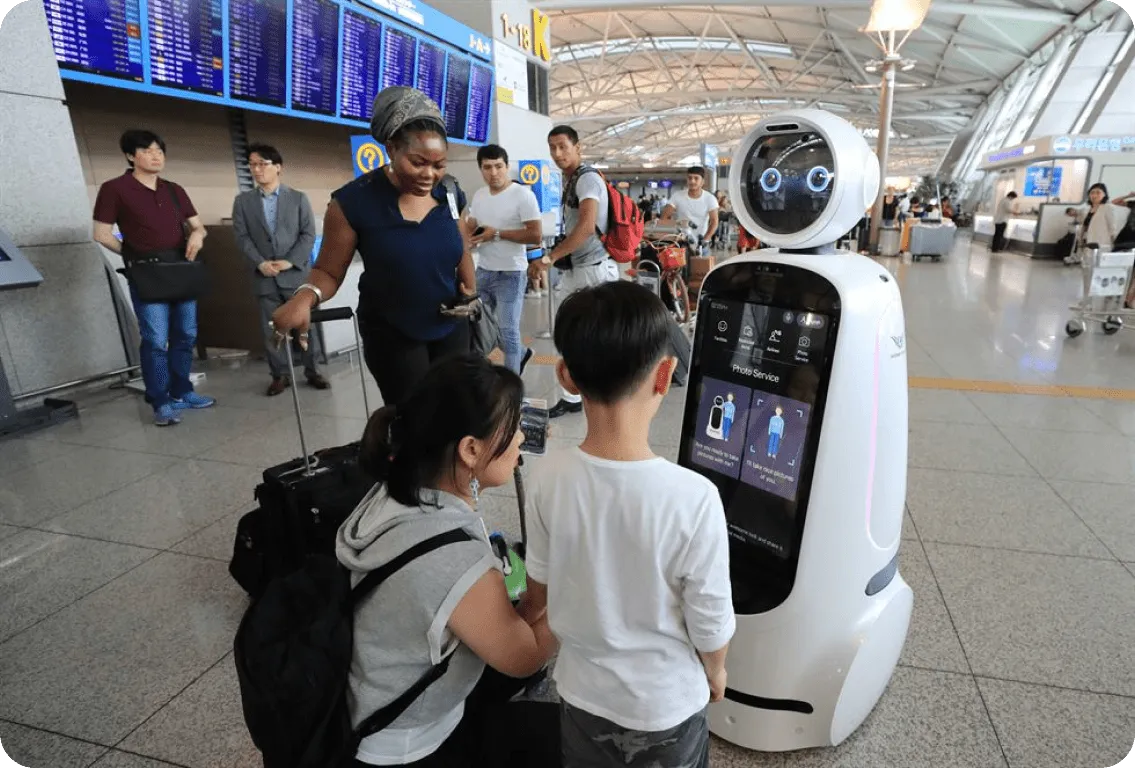
Smart airport technology is not limited to operational efficiency; it is also transforming the commercial and customer service aspects of airports. Retailers, restaurants, and airport service providers are increasingly using data analytics and AI-driven insights to personalize services for travelers. Digital assistants, smart information kiosks, and AI chatbots can provide passengers with guidance on airport navigation, shopping options, and travel services. These innovations help create a more connected and convenient airport environment.
As technology continues to evolve, smart airports are expected to become even more advanced in the coming years. Integration of AI systems with broader transportation networks, including rail and urban mobility systems, could further streamline the passenger journey from home to destination. By combining digital infrastructure with intelligent automation, airports are redefining the travel experience and setting new standards for efficiency, security, and passenger comfort in global aviation.

You may like
Travel & Aviation
The Rise of Ultra-Long-Haul Flights in Modern Aviation

Ultra-long-haul flights are becoming an increasingly important part of modern aviation as airlines expand their networks to connect distant cities without the need for stopovers. These flights, often lasting more than 16 hours, allow passengers to travel directly between continents, reducing total travel time and improving convenience for both business and leisure travelers. Advances in aircraft technology, fuel efficiency, and flight planning systems have made it possible for airlines to operate routes that were previously considered impractical. In 2026, the rise of ultra-long-haul travel reflects a growing demand for direct international connectivity between major global hubs.
One of the main factors driving the growth of ultra-long-haul flights is the development of new-generation aircraft designed for extended range and improved fuel efficiency. Modern wide-body aircraft are capable of flying longer distances while consuming less fuel than earlier models. These aircraft feature advanced aerodynamics, lightweight composite materials, and highly efficient engines that allow airlines to operate non-stop flights across vast distances. The introduction of such aircraft has enabled airlines to connect cities that previously required multiple connecting flights, significantly improving travel convenience for passengers.
Passenger demand for direct flights is another key factor behind the expansion of ultra-long-haul routes. Many travelers prefer non-stop journeys because they eliminate the need for transit connections, reducing travel stress and the risk of delays or missed flights. For business travelers in particular, time efficiency is a major advantage, allowing them to reach destinations more quickly and maximize productivity. Airlines are responding to this demand by launching new non-stop routes between major economic centers across North America, Europe, Asia, and the Middle East.
Operating ultra-long-haul flights also requires careful attention to passenger comfort and cabin design. Since these flights involve extended travel times, airlines are investing in improved seating, enhanced cabin environments, and advanced in-flight services to make long journeys more comfortable. Many aircraft used on ultra-long-haul routes feature improved air filtration systems, optimized cabin humidity levels, and lighting designed to reduce jet lag. Premium cabins with lie-flat seats and spacious seating arrangements are particularly important for passengers traveling on long routes.
Flight operations and route planning are also becoming more sophisticated as airlines manage the challenges of long-distance travel. Pilots, crew scheduling, and fuel management must be carefully coordinated to ensure safe and efficient flights. Airlines use advanced data analysis and weather monitoring systems to optimize flight paths and reduce fuel consumption during long journeys. These technologies help airlines maintain operational efficiency while meeting safety regulations and passenger expectations.
Despite the advantages of ultra-long-haul travel, airlines must also consider environmental concerns associated with long-distance flights. The aviation industry faces increasing pressure to reduce carbon emissions as global travel demand grows. Airlines are exploring ways to make ultra-long-haul operations more sustainable through the use of fuel-efficient aircraft, optimized flight routes, and the adoption of sustainable aviation fuels. These efforts aim to balance the benefits of global connectivity with the need for environmentally responsible aviation practices.
Looking ahead, the rise of ultra-long-haul flights is expected to continue as technology advances and global travel demand expands. New aircraft designs with even greater range and efficiency could enable airlines to introduce additional direct routes connecting distant regions of the world. For passengers, these developments promise faster and more convenient international travel, further strengthening the role of aviation in connecting global economies and cultures.
Travel & Aviation
Airlines Invest in Sustainable Aviation Fuel to Cut Emissions

Airlines around the world are increasing their investments in sustainable aviation fuel as part of a broader effort to reduce carbon emissions and address the environmental impact of air travel. The aviation industry is responsible for a significant share of global greenhouse gas emissions, prompting airlines, governments, and energy companies to explore cleaner alternatives to conventional jet fuel. In 2026, sustainable aviation fuel is emerging as one of the most promising solutions for lowering the carbon footprint of commercial flights without requiring major changes to existing aircraft engines. As global travel demand continues to rise, the development and adoption of sustainable fuels are becoming central to the aviation industry’s long-term sustainability strategy.
Sustainable aviation fuel, often referred to as SAF, is produced from renewable sources such as agricultural waste, used cooking oils, municipal waste, and certain plant-based materials. Unlike traditional fossil-based jet fuel, SAF can significantly reduce lifecycle carbon emissions because the raw materials used in production absorb carbon dioxide during their growth or collection process. Although the fuel still produces emissions when burned during flight, the overall environmental impact is substantially lower compared with conventional aviation fuel. Industry estimates suggest that sustainable aviation fuel could reduce carbon emissions by up to 80 percent over its lifecycle, depending on the feedstock and production method.
Airlines are forming partnerships with fuel producers, energy companies, and research institutions to accelerate the development of sustainable aviation fuel technologies. Several major carriers have signed long-term agreements to purchase large volumes of SAF as production capacity expands. These agreements provide financial support for fuel producers while helping airlines secure access to sustainable fuel supplies. At the same time, governments in many regions are introducing incentives and regulatory frameworks designed to encourage the production and use of cleaner aviation fuels.
Despite growing interest, the widespread adoption of sustainable aviation fuel still faces several challenges. One of the main obstacles is the limited production capacity compared with the massive fuel demand of the global aviation sector. Current SAF production represents only a small fraction of the total jet fuel consumed each year. Expanding production will require significant investments in new refining facilities and supply chains capable of processing renewable feedstocks at a much larger scale. Researchers are also exploring advanced production technologies that could improve efficiency and reduce costs.
Cost remains another important factor affecting the adoption of sustainable aviation fuel. SAF is currently more expensive than conventional jet fuel due to the complexity of its production process and the limited scale of manufacturing. However, industry experts believe that prices will gradually decline as production capacity increases and technology improves. Many airlines are willing to absorb higher fuel costs in the short term as part of their commitment to long-term environmental goals and regulatory requirements.
In addition to sustainable fuel development, airlines are also pursuing other strategies to reduce emissions across their operations. These initiatives include investing in more fuel-efficient aircraft, optimizing flight routes to reduce fuel consumption, and exploring new propulsion technologies for future aircraft. However, experts widely agree that sustainable aviation fuel will play a crucial role in reducing emissions from long-haul flights, where electrification or alternative propulsion systems remain difficult to implement.
Looking ahead, sustainable aviation fuel is expected to become a key component of the aviation industry’s transition toward cleaner operations. Continued collaboration between airlines, fuel producers, and governments will be essential to expand production capacity and reduce costs. As technology advances and regulatory support strengthens, sustainable aviation fuel could significantly transform the environmental profile of global air travel while allowing the aviation sector to continue connecting people and economies worldwide.
Travel & Aviation
Luxury Tourism Evolves With Experiential Travel Trends

Luxury tourism is undergoing a significant transformation as travelers increasingly seek unique and immersive experiences rather than traditional high-end vacations. In recent years, affluent travelers have shifted their focus from luxury defined by comfort and material indulgence toward journeys that offer cultural authenticity, personal enrichment, and memorable activities. In 2026, the global luxury travel industry is adapting to these changing expectations by offering experiential travel packages that combine exclusivity with meaningful engagement. From private cultural tours to adventure-based luxury retreats, the concept of luxury travel is expanding beyond five-star hotels to include deeper connections with destinations and local communities.
One of the defining characteristics of experiential luxury travel is the emphasis on personalized itineraries. Modern travelers are looking for trips tailored specifically to their interests, whether that involves exploring local traditions, learning regional cuisines, or participating in unique outdoor activities. Travel companies are increasingly designing customized experiences that allow visitors to interact with local cultures and environments in authentic ways. These personalized journeys often include private guides, small-group activities, and exclusive access to historical landmarks or cultural events that are not typically available to mass tourism.
Adventure tourism has also become an important part of the evolving luxury travel landscape. Many high-end travelers now seek experiences that combine comfort with exploration and excitement. Luxury safari expeditions, polar cruises, mountain retreats, and private island adventures are among the travel options attracting affluent tourists who want both exclusivity and adventure. These trips often provide premium accommodations and services while allowing travelers to explore remote destinations and natural landscapes in ways that were previously associated mainly with expedition travel.
Sustainability and responsible tourism are also influencing how luxury travel experiences are designed. Wealthy travelers are increasingly interested in supporting environmentally responsible tourism initiatives and preserving natural ecosystems. Many luxury resorts and travel operators are adopting sustainable practices such as eco-friendly construction, renewable energy use, and wildlife conservation programs. In addition, travelers are showing greater interest in destinations that prioritize environmental protection and community development. This shift toward responsible luxury travel reflects a broader awareness of the environmental impact of tourism.
Technology is also shaping the future of luxury tourism by making travel planning more efficient and personalized. Digital platforms and artificial intelligence are helping travel companies analyze customer preferences and design highly customized travel experiences. Virtual previews of destinations, digital concierge services, and real-time travel assistance are becoming common features in high-end travel services. These technological innovations allow travelers to plan complex itineraries while maintaining flexibility and convenience throughout their journeys.
The growth of experiential luxury tourism is also benefiting local communities and smaller destinations that were previously overlooked by mainstream tourism. Travelers seeking authentic cultural experiences are exploring lesser-known regions that offer rich history, local traditions, and unique landscapes. This trend is encouraging the development of boutique hotels, cultural tours, and local tourism initiatives that provide economic opportunities while preserving local heritage.
As global travel continues to recover and evolve, experiential travel is expected to remain one of the most influential trends in the luxury tourism industry. By combining comfort, authenticity, adventure, and sustainability, experiential luxury travel offers a new definition of what it means to travel well. For modern travelers, luxury is no longer just about where they stay but about the meaningful experiences they gain along the journey.

USDC Circulation Expands as Stablecoin Liquidity Reenters Global Crypto Markets

Emerging Markets Turn to USDT for Cross Border Transactions as Dollar Liquidity Tightens

Crypto Liquidity and Capital Flows: Could Rising USDT Activity Influence Pakistan’s Equity Markets
Trending
PSX1 month agoCrypto Liquidity and Capital Flows: Could Rising USDT Activity Influence Pakistan’s Equity Markets
PSX1 month agoPSX Bloodbath as KSE100 Plunges Over 13,000 Points After Trading Resumes
PSX1 month agoPSX Plunges Over 11,000 Points as Middle East Tensions Shake Markets
PSX1 month agoKSE 100 Drops Over 1,300 Points After Early Session Recovery
Crypto1 month agoEthereum Tests ‘DVT-Lite’ System to Simplify Validator Setup for Institutional Staking
PSX1 month agoPSX Trading Halted After KSE30 Triggers Market Circuit Breaker
Global Affairs1 month agoGlobal Power Shifts Reshape Diplomacy as Emerging Alliances Redefine International Order
Local Affairs1 month agoPakistan’s Provincial Governments Accelerate Urban Development Plans