Connect with us

Mobiles & Gadgets

Leaked Renders Suggest Apple’s Foldable iPhone Could Resemble iPad Mini

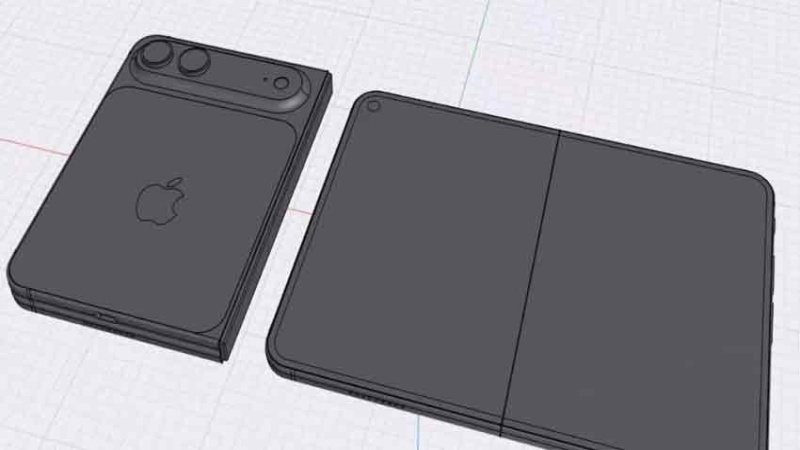
Leaked design images circulating online suggest that Apple’s long rumored foldable iPhone may resemble a compact tablet similar to the iPad mini when fully opened. The images, reportedly shared by well known Apple leaker Sonny Dickson, provide an early look at what could become Apple’s first foldable smartphone. Although Apple has not officially confirmed the device, the new renders are fueling speculation that the company could finally enter the foldable smartphone market with a major product launch expected in 2026.

The images show both folded and unfolded views of the device and appear to support earlier rumors about Apple experimenting with a larger foldable display format. Industry analysts say Apple has been studying foldable technology for several years, waiting for improvements in durability and display performance before releasing its own product. If accurate, the leaked designs indicate that Apple could adopt a tablet style folding device rather than the book style or clamshell designs currently used by many competitors.

Foldable Design Appears Similar to Compact Tablet

The leaked CAD style images suggest that the foldable iPhone could expand into a screen size comparable to Apple’s iPad mini when unfolded. This design approach would allow the device to function as both a smartphone and a compact tablet, providing users with a larger workspace for applications, multitasking, and media consumption.

The renders show a clean device layout with a centered pinhole selfie camera on the front display. When the device is unfolded, an additional camera appears to be positioned near the top left corner of the expanded screen. This configuration could allow Apple to maintain strong camera performance while adapting to the unique design challenges of foldable hardware.

The rear section of the device features a horizontal camera bar containing two lenses along with a separate flash module. While the exact camera specifications remain unknown, the layout suggests Apple may prioritize a slim design while maintaining strong photography capabilities.

Several other hardware elements appear consistent across the leaked renders. The camera lenses are aligned horizontally and the volume buttons appear to be positioned on the left side of the device. These design choices may help maintain usability when switching between folded and unfolded modes.

Apple’s Entry Into the Foldable Smartphone Market

Foldable smartphones have been gradually gaining popularity since Samsung introduced its first foldable Galaxy device in 2019. Several manufacturers including Huawei, Oppo, Xiaomi, and Motorola have since released foldable devices with different design approaches.

Despite the growing market segment, Apple has not yet introduced its own foldable product. Industry observers believe the company has been carefully studying consumer behavior, durability issues, and supply chain readiness before committing to a launch.

Analysts say Apple tends to enter new hardware categories later than competitors but focuses on refining the technology before introducing a product to the mass market. This strategy was previously seen with products such as the Apple Watch and AirPods, which entered existing markets but quickly became dominant due to design improvements and ecosystem integration.

If Apple releases a foldable iPhone, the device could reshape competition in the foldable smartphone market. Apple’s large customer base and strong ecosystem of services could drive broader adoption of foldable devices worldwide.

Leak Details Raise Questions About Final Design

While the leaked images have generated strong interest among technology enthusiasts, it remains unclear whether the renders are based on official design specifications or early concept models. Sonny Dickson, who shared the images, did not provide additional details about their origin or confirm their accuracy.

The renders show the device in two different color variations, though these colors may not reflect the final production design. Earlier rumors had suggested that the rear camera module might feature an all black design rather than a color matched finish.

Another uncertainty involves the physical dimensions of the device. The leaked images do not include measurements, making it difficult to determine the exact screen size or thickness of the foldable iPhone.

Despite these unknowns, the images appear to align with earlier design sketches that surfaced in late 2025. That consistency has led some industry watchers to believe the overall concept may be relatively close to Apple’s current development direction.

Supply chain analysts have also noted that large scale component orders related to foldable iPhones have not yet appeared in industry reports. This has made it harder to confirm whether Apple is preparing for a near term launch or continuing internal testing.

Growing Demand for Advanced Smartphone Form Factors

The global smartphone market has been gradually exploring new device formats as manufacturers attempt to differentiate their products. Foldable phones represent one of the most visible innovations in recent years, offering larger displays while maintaining portability.

These devices appeal to users who want a single product that can function as both a phone and a tablet. Larger displays allow for improved productivity, gaming, video streaming, and multitasking experiences.

However foldable devices also face challenges. The flexible displays require advanced materials and hinge systems that must withstand thousands of opening cycles. Manufacturers have spent several years improving these mechanisms to reduce durability concerns.

Apple’s engineering approach typically focuses on long term reliability and design simplicity. If the company introduces a foldable iPhone, analysts expect Apple to emphasize durability, seamless software integration, and performance optimization.

Outlook

Apple is widely expected to reveal new hardware products in September 2026, and industry speculation suggests a foldable iPhone could be among them. If the leaked images prove accurate, the device may introduce a hybrid smartphone tablet experience that could reshape the premium mobile device market.

Share on:
Continue Reading
Click to comment

Leave a Reply

Your email address will not be published. Required fields are marked *

Mobiles & Gadgets

Samsung’s Mario-Themed microSD Card for Switch 2 Gets 35 Percent Discount

Nintendo Switch 2 users looking to expand their console storage have a new affordable option after Samsung’s Mario themed microSD Express card received a major discount across major retailers. The 256GB storage card, originally priced at $59.99, is now available for around $39.99 at several online and retail stores. The price reduction represents a 35 percent drop and makes the accessory one of the most accessible storage upgrades currently available for Switch 2 owners who are running out of internal space.

The timing of the discount coincides with celebrations around Mario Day, a promotional event that often brings gaming deals tied to Nintendo’s flagship character. While the Mario themed microSD card has previously been criticized for its higher retail price compared with standard storage cards, the current pricing significantly improves its value proposition. For gamers who frequently download digital titles or large updates, the discounted storage card provides a convenient way to expand available capacity without replacing the console itself.

Growing Storage Demands on the Nintendo Switch 2

The Nintendo Switch 2 launched with an internal storage capacity of 256GB, which initially appears sufficient for most players. However, the increasing size of modern games has started to put pressure on available storage space, especially for users who prefer digital downloads instead of physical cartridges. Although many of Nintendo’s first party titles are optimized to remain relatively compact, the broader gaming ecosystem includes larger third party titles that can quickly consume available storage.

For example, several modern games now exceed 50GB in download size. Even titles with modest requirements can accumulate quickly once updates, downloadable content, and expansion packs are installed. A typical Nintendo first party game may require less than 20GB of storage, but frequent players can easily reach the console’s internal limit after installing a handful of titles. This growing demand has made expandable storage increasingly important for maintaining a flexible gaming library.

Samsung’s microSD Express Technology and Performance

Samsung’s microSD Express cards represent a newer generation of removable storage designed to deliver faster read and write speeds compared with traditional microSD cards. The technology allows the card to communicate with devices using a faster interface that significantly improves loading times and file transfer speeds. For gaming consoles like the Nintendo Switch 2, this performance improvement can reduce game load times and improve overall system responsiveness.

The Mario themed version of the card also carries a distinctive design that appeals to Nintendo fans. Featuring artwork inspired by the company’s iconic character, the card adds a visual element that differentiates it from standard storage products. While the design itself does not affect performance, branded accessories often attract collectors and fans who appreciate themed gaming hardware.

From a technical perspective, the 256GB capacity provides enough space to store multiple large games while maintaining room for system updates and downloadable content. For many users, this amount of additional storage can double the effective game library size available on the console without requiring frequent file management.

Retail Availability and Competitive Pricing

The discounted microSD card is currently available through several major retailers, including large online marketplaces and electronics stores. Companies such as Amazon, Best Buy, GameStop, and Walmart have all listed the product at the lower promotional price, increasing accessibility for buyers in different regions. Retail competition often plays a significant role in determining the final price of consumer electronics accessories, and broad availability tends to push discounts further during promotional periods.

Although this deal does not represent the lowest price ever recorded for a 256GB storage upgrade, it remains one of the most affordable options currently available that specifically supports the microSD Express format. Standard microSD cards may still be cheaper in some cases, but they do not always provide the same performance benefits offered by the newer technology.

The pricing strategy also reflects a broader trend in the gaming industry where accessories often experience periodic discounts tied to gaming events or promotional holidays. Mario Day, celebrated annually by Nintendo fans, frequently brings hardware and software deals that encourage players to expand their gaming collections.

Expansion Storage as a Key Part of Modern Gaming

Expandable storage has become a central feature in modern gaming ecosystems as digital distribution continues to grow. Many players now prefer downloading games directly from online stores instead of purchasing physical copies, which places greater emphasis on available storage capacity. As games become larger and more complex, the demand for affordable storage solutions continues to rise.

Console manufacturers increasingly rely on external storage support to balance hardware costs and user flexibility. Providing a moderate internal storage capacity while allowing users to expand it through accessories helps keep console prices competitive while still supporting large game libraries. For players who frequently download games, storage upgrades can become one of the first accessories they purchase after buying a new console.

Outlook for Switch 2 Storage Needs

As the Nintendo Switch 2 library continues to expand, storage upgrades are likely to remain an important part of the platform’s ecosystem. Discounts like the current Mario themed microSD card promotion highlight how accessory pricing can evolve as hardware adoption grows. For players who want to maintain a larger digital game library without constantly deleting older titles, affordable storage solutions will continue to play a key role in the overall gaming experience.

Share on:
Continue Reading

Mobiles & Gadgets

Pakistan’s New Mobile Manufacturing Policy Aims to Move Industry Beyond Assembly

Pakistan’s mobile phone industry has experienced rapid growth over the past several years, driven largely by government policies designed to encourage local assembly of devices. The transformation has been dramatic. In 2019, the majority of phones sold in Pakistan were imported fully built devices. Today, nearly 94 percent of mobile phones available in the local market are assembled within the country.

Despite this progress, policymakers acknowledge that the current model of local assembly represents only the first step in building a sustainable electronics manufacturing ecosystem. The government is now preparing a new mobile manufacturing policy covering the period from 2026 to 2033, with the goal of shifting the industry from simple assembly operations toward deeper local manufacturing and higher value production.

The proposed framework aims to increase domestic value addition, encourage exports, and integrate Pakistan into global electronics supply chains.

Local Assembly Has Expanded Rapidly Since 2020

Pakistan introduced its first dedicated mobile manufacturing policy in 2020 when locally assembled phones represented only a small share of the domestic market. At that time, roughly 70 percent of mobile devices sold in Pakistan were imported as fully built units.

The policy offered incentives for manufacturers to establish assembly operations within the country. These incentives included tax advantages and import duties designed to encourage companies to import components for assembly rather than finished phones.

As a result, the industry expanded quickly. The Pakistan Telecommunication Authority issued 37 manufacturing licenses during the past several years, allowing global smartphone brands to establish assembly lines across the country.

Today nearly every major smartphone brand assembles devices locally, including Samsung, Xiaomi, Vivo, Oppo, and several others. Apple remains one of the few global manufacturers that has not established assembly operations in Pakistan.

The rapid growth of assembly operations helped reduce import dependence while lowering device prices for local consumers. Increasing internet penetration and a growing population also contributed to rising smartphone demand, further encouraging manufacturers to set up operations within the country.

However, the majority of components used in locally assembled devices are still imported from abroad. Industry estimates suggest that more than 90 percent of parts used in Pakistan’s mobile phones originate from international suppliers.

New Policy Targets Local Manufacturing and Export Growth

The government’s upcoming mobile manufacturing framework aims to address this limitation by encouraging deeper localisation of the supply chain. The policy proposes raising the local content share of smartphone production to approximately 50 percent by 2033.

To achieve this objective, policymakers plan to introduce incentives designed to support domestic manufacturing of key components and attract international electronics manufacturers to establish production facilities in Pakistan.

Another major goal of the policy is to expand exports of locally produced mobile phones. Authorities hope that Pakistan’s electronics sector can eventually export more than 500 million dollars worth of mobile devices and related components.

The framework proposes the introduction of a Technology Innovation Fund designed to support research, development, and export incentives. This fund would be financed through levies imposed on imported mobile devices and components, generating resources that could be reinvested in export promotion programs.

According to government projections, these levies could generate more than 100 billion rupees during the seven year policy period. The funds would help finance export rebates for companies that meet performance benchmarks and achieve international quality certifications.

Manufacturers participating in the program would be required to meet global regulatory standards such as CE certification and environmental compliance frameworks in order to qualify for incentives.

Pakistan Aims to Join Global Electronics Supply Chains

Beyond local manufacturing, the policy envisions positioning Pakistan as a competitive electronics production hub capable of participating in global supply chains.

Countries such as China and Vietnam currently dominate the global smartphone manufacturing industry. China produces the majority of the world’s smartphones, including most Apple iPhones, while Vietnam has become a major production center for Samsung devices.

Other countries including India, Malaysia, and Indonesia have also expanded their electronics manufacturing capabilities through targeted government incentives and supply chain investments.

Pakistan hopes to follow a similar path by encouraging multinational companies to establish manufacturing facilities and collaborate with local firms.

The policy also proposes attracting global technology companies such as Apple and Samsung to build full manufacturing plants rather than simple assembly lines. In addition, the government is considering initiatives related to refurbishment and re export of used smartphones.

Officials estimate that Pakistan could refurbish millions of devices annually and export them to international markets, potentially generating hundreds of millions of dollars in revenue.

Challenges Remain for Export Competitiveness

Despite the ambitious goals of the new policy, industry experts caution that entering the global smartphone export market will be challenging. Major manufacturing hubs already serve most international markets, supported by well developed supply chains and trade agreements.

Countries that dominate mobile phone exports have built decades of expertise in electronics manufacturing and benefit from extensive supplier ecosystems. Pakistan will need to develop similar infrastructure and partnerships to compete effectively.

Another challenge involves the manufacturing of high value components such as smartphone displays, processors, and advanced sensors. These components require significant capital investment and specialized technical expertise.

While the policy outlines long term localisation targets, industry observers note that achieving these goals will require sustained investment, regulatory support, and cooperation between government institutions and private companies.

Outlook

Pakistan’s new mobile manufacturing policy represents an effort to transform the country’s smartphone industry from a simple assembly base into a competitive electronics manufacturing ecosystem. Achieving deeper localisation and export growth will require long term commitment, strategic investment, and strong collaboration between government and industry stakeholders.

Share on:
Continue Reading

Mobiles & Gadgets

Poco Confirms March 17 Launch for New Poco X8 Pro Smartphone Series

Poco has officially confirmed the global launch date for its upcoming Poco X8 Pro smartphone series, signaling the arrival of the company’s next generation performance focused mobile devices. The announcement reveals that the new lineup will be introduced on March 17 during an official product event scheduled for 8 PM Beijing time.

The launch will also be streamed globally to audiences in different regions including India, Europe, and the United States. According to the official schedule, the event will take place at 5:30 PM in India, 2 PM in Eastern Europe, 1 PM in Central Europe, 12 PM in London, and 8 AM in New York. The company is positioning the new devices as performance driven smartphones aimed at users seeking high speed processing and large battery capacity.

Poco has built its reputation by delivering powerful hardware at competitive prices, and the X8 Pro series is expected to continue that strategy by offering strong specifications designed for mobile gaming, multimedia consumption, and everyday productivity.

Poco Hints at Multiple Devices in X8 Pro Series

Although Poco has not yet officially confirmed the full lineup of devices, the company’s promotional tagline for the launch event provides an important clue. The phrase “Speed to the max” strongly suggests that the upcoming release will include more than one smartphone model, including a higher performance variant.

Industry leaks indicate that the company may introduce two devices during the event: the Poco X8 Pro and the Poco X8 Pro Max. These devices are expected to target different segments of the premium mid range smartphone market while sharing several hardware features.

The Poco X8 Pro is rumored to be closely related to the Redmi Turbo 5 smartphone that was recently introduced in China. Smartphone manufacturers frequently adapt existing designs under different brand names for global markets, allowing companies to expand their product lineup while reducing development costs.

If the reports prove accurate, the Poco X8 Pro may deliver flagship level performance in a more affordable price range. Poco has historically focused on offering strong processor performance and large batteries, two features that are highly valued among mobile gamers and power users.

Large Battery Capacity Could Become Key Selling Point

One of the most discussed aspects of the upcoming Poco X8 Pro series is the expected battery capacity of the devices. According to leaks circulating within the smartphone industry, the standard Poco X8 Pro may feature a battery capacity of approximately 6,500 mAh.

The rumored Poco X8 Pro Max could push battery capacity even further, with reports suggesting a massive 8,500 mAh battery. If confirmed, this would place the device among the largest battery smartphones currently available in the market.

Large battery capacities are becoming an increasingly important feature in modern smartphones as users demand longer usage times for gaming, streaming, and social media applications. Devices with high capacity batteries can often deliver multiple days of moderate use on a single charge, reducing the need for frequent charging.

Battery technology improvements also support fast charging systems, allowing large batteries to recharge quickly even with their increased capacity. Many smartphone manufacturers now integrate advanced charging technologies capable of restoring significant battery levels within minutes.

For consumers, battery life remains one of the most influential factors when selecting a new smartphone. By focusing on high capacity batteries, Poco may be targeting users who prioritize endurance and performance over ultra thin device designs.

Poco Continues to Compete in the Performance Smartphone Segment

Since its creation as a sub brand of Xiaomi, Poco has focused heavily on delivering performance oriented smartphones at competitive price points. The company gained international recognition with the launch of the Poco F1 in 2018, which offered flagship level performance at a significantly lower cost than many competing devices.

Over the past several years, Poco has continued expanding its smartphone portfolio with devices targeting gamers, tech enthusiasts, and value focused consumers. The brand often emphasizes strong processors, large batteries, and high refresh rate displays as core features.

The upcoming X8 Pro series appears to follow this same philosophy by prioritizing speed and performance. The promotional tagline for the launch event reinforces this focus, highlighting the company’s intention to deliver powerful hardware that can handle demanding applications and modern mobile workloads.

Competition in the global smartphone market has intensified in recent years, particularly within the premium mid range segment. Companies such as Samsung, Realme, OnePlus, and Motorola continue introducing new devices designed to attract consumers who want flagship performance without the high price of top tier smartphones.

Poco’s strategy has been to deliver aggressive specifications that appeal to performance focused users while maintaining competitive pricing compared with flagship devices.

Smartphone Industry Continues Rapid Innovation

The smartphone industry remains one of the fastest evolving technology sectors, with manufacturers continuously introducing new hardware capabilities and design improvements. Innovations in battery technology, processor performance, camera systems, and display quality are driving intense competition among device makers.

Consumers increasingly expect smartphones to function as powerful personal computing devices capable of handling advanced gaming, content creation, and productivity tasks. As a result, smartphone brands are investing heavily in hardware improvements that enhance speed, efficiency, and battery endurance.

The launch of the Poco X8 Pro series reflects this ongoing trend toward performance focused devices designed to meet the demands of modern mobile users.

Outlook

The official unveiling of the Poco X8 Pro series on March 17 will reveal whether the leaked specifications prove accurate. If the devices deliver the rumored battery capacities and performance upgrades, the new smartphones could strengthen Poco’s position in the competitive global smartphone market.

Share on:
Continue Reading

Trending