Connect with us

Currencies

India’s Rupee Rises Sharply as Central Bank Steps In to Support Currency

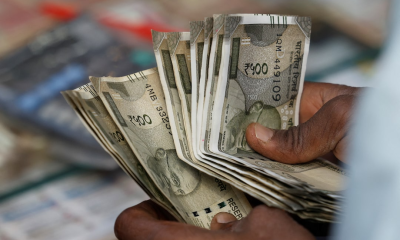
India’s currency recorded the strongest gain among Asian currencies after the country’s central bank stepped in to stabilize the market following a sharp decline in the previous session. The Indian rupee strengthened significantly during trading as the Reserve Bank of India (RBI) reportedly intervened in both offshore and domestic currency markets. The rupee gained around 0.7 percent at its peak, rising to approximately 91.51 against the US dollar. The recovery came after the currency had earlier fallen to a record low, prompting authorities to take action in order to limit further depreciation and stabilize investor sentiment in the foreign exchange market.

Market participants indicated that the RBI sold US dollars in the market to support the rupee and curb excessive volatility. The intervention was observed in both onshore and offshore trading markets, according to sources familiar with the developments. Central bank intervention in currency markets is typically aimed at reducing extreme fluctuations and ensuring orderly market conditions. Analysts noted that the rupee had come under pressure due to rising global uncertainties and higher oil prices, which tend to weaken currencies of oil-importing nations. By supplying dollars into the market, the central bank was able to temporarily strengthen the rupee and restore some stability.

The recent weakness in the rupee has been linked to several external pressures affecting emerging market currencies. Rising oil prices have increased concerns about India’s import costs because the country depends heavily on imported energy to meet domestic demand. Higher crude oil prices often lead to a widening trade deficit and create downward pressure on the national currency. In addition to energy market concerns, global investors have also been reacting to geopolitical tensions and shifting monetary policy expectations in major economies. These factors have contributed to increased volatility across many emerging market currencies.

Financial analysts believe that the RBI’s intervention reflects the central bank’s commitment to maintaining currency stability and preventing excessive speculation in the foreign exchange market. While authorities generally allow the rupee to move based on market forces, they may intervene when fluctuations become too sharp or disruptive. Currency stability is particularly important for emerging economies because rapid depreciation can increase inflationary pressures and affect investor confidence. By acting quickly, the RBI aims to maintain orderly trading conditions and reassure investors about the strength of India’s financial system.

Despite the latest rebound, currency markets are expected to remain sensitive to global developments. Investors are closely monitoring geopolitical tensions, global oil price movements, and international trade developments that could influence the direction of emerging market currencies. For India, the outlook for the rupee will depend on several factors including energy prices, foreign investment flows, and domestic economic performance. Market participants expect the central bank to continue monitoring the currency closely and intervene if necessary to prevent excessive volatility in the coming weeks.


Share on:

Currencies

Currency and Tax Concerns Temper Private Equity Optimism in India

India continues to attract strong interest from global private equity investors due to its robust economic growth and expanding business ecosystem, yet concerns about currency depreciation and taxation are limiting overall return expectations. Investors say that while India remains one of the most important destinations for emerging market capital, the impact of a weakening rupee and capital gains taxes has become a key consideration when evaluating investment opportunities. These financial pressures have prompted many international funds to reassess return projections even as deal activity and exit opportunities continue to grow in the country.

The Indian rupee has experienced steady depreciation against the US dollar over recent years, creating additional pressure for foreign investors seeking to repatriate profits. Currency weakness erodes the value of returns when investments are converted back into dollars, making exchange rate movements an important factor in overall performance. Although India’s strong economic expansion continues to support investor confidence, the gradual decline in the rupee has forced many global funds to factor currency risks more carefully into their investment strategies and long-term planning.

Tax policies also play a significant role in shaping investor sentiment. Private equity investors face capital gains taxes when exiting investments, which can reduce net returns from successful deals. Industry participants say that capital gains taxes typically ranging between ten and fifteen percent can limit profitability compared with other emerging markets that offer more favorable tax structures. As competition for global capital intensifies, investors believe that tax policies could become an important factor in determining how much private equity funding flows into India in the future.

Despite these challenges, India’s investment environment remains attractive due to its large consumer market, expanding technology sector and improving capital markets. The country has seen growing opportunities for private equity exits through public listings and strategic sales, creating stronger liquidity pathways for investors. Analysts note that the development of deeper financial markets and a growing base of experienced fund managers have strengthened India’s position as a core allocation within emerging market portfolios.

Another distinctive feature of India’s private equity landscape is the relatively limited use of financial leverage compared with other markets. Regulatory restrictions on borrowing for share acquisitions and corporate governance rules limit the ability of investors to use debt to enhance returns. While this reduces the potential for financial engineering strategies commonly used in other markets, it also lowers exposure to refinancing risks and interest rate fluctuations, making investments potentially more stable during periods of economic uncertainty.

Investors say that as financial leverage remains constrained, private equity firms are increasingly focusing on operational improvements to generate value within portfolio companies. This approach involves strengthening management structures, expanding market reach and improving efficiency rather than relying heavily on debt-driven returns. The strategy aligns with India’s broader economic transformation as companies modernize operations and scale their businesses in competitive industries.

Looking ahead, the long-term outlook for private equity investment in India remains positive despite the current concerns around currency movements and tax policies. Investors continue to view the country as one of the most dynamic emerging markets due to its economic growth potential and expanding investment opportunities. However, the balance between strong growth prospects and financial constraints such as currency depreciation and taxation will remain an important factor shaping private equity strategies in the years ahead.

Share on:
Continue Reading

Currencies

Gabon Seeks IMF Support as Fiscal Pressures Mount Across Central Africa

Gabon is exploring the possibility of securing financial support from the International Monetary Fund as the country attempts to stabilize its public finances following several years of political and economic turbulence. The oil-producing Central African nation has faced a series of disruptions, including a military coup, a contested election and frequent changes in financial leadership that have complicated policy continuity. Government officials believe that an IMF program could help restore investor confidence and unlock additional international funding at a time when access to global capital markets has become increasingly difficult for several African economies.

Officials from the International Monetary Fund recently concluded a ten-day mission to Gabon, marking the first round of formal discussions since the government signaled its intention to seek financial assistance. The discussions focused on evaluating the country’s fiscal position, debt sustainability and economic outlook. While the visit represents an early step toward a possible financial arrangement, both sides indicated that negotiations are likely to continue over the coming months. IMF representatives emphasized that strong fiscal discipline and transparent economic policies would be essential to ensure financial stability not only in Gabon but also across the broader Central African region.

Gabon’s attempt to secure financial assistance is taking place against the backdrop of growing liquidity pressures among countries in the Central African Economic and Monetary Community. Several members of the regional bloc are experiencing funding constraints as external reserves decline and access to international borrowing becomes more limited. Analysts note that Gabon’s potential return to an IMF program could influence policy decisions across neighboring economies that are also considering seeking support from international financial institutions to address fiscal imbalances and stabilize their economies.

However, uncertainty surrounding Gabon’s economic data and fiscal transparency has raised concerns among investors and credit rating agencies. The country’s previous IMF-supported program, which was approved in 2021, failed to stay on track and ended earlier than expected. That experience has made international lenders cautious about entering a new arrangement without stronger assurances regarding policy implementation and economic oversight. Analysts say that credible reforms and improved transparency will likely be required before negotiations can advance toward a formal financial package.

Another major challenge facing Gabon is the limited availability of reliable economic data. International analysts have pointed out that gaps in fiscal reporting and statistical transparency make it difficult to accurately assess the country’s financial position. Without clear data on public spending, government debt and fiscal deficits, policymakers and international lenders face uncertainty about the scale of economic adjustments that might be required. Addressing these data limitations is expected to become an important part of the reform discussions between Gabon and international financial institutions.

The broader economic outlook for Gabon also depends on the government’s willingness to implement potentially difficult reforms aimed at improving fiscal sustainability. These measures could include reducing public spending, strengthening tax collection and introducing structural reforms to improve economic management. While such steps are often necessary to secure IMF support, they can be politically sensitive and challenging to implement in environments where economic conditions are already under strain.

As discussions continue, financial markets and international observers will be closely watching how Gabon balances economic reform with political stability. If a new IMF program eventually moves forward, it could provide a crucial financial anchor for the country and signal a renewed commitment to economic reforms. At the same time, the outcome of the negotiations may also influence how other Central African economies approach their own fiscal challenges as the region navigates a complex global financial environment.

Share on:
Continue Reading

Currencies

Argentina’s President Courts Wall Street Investors as Emerging Market Outlook Shifts

Argentina’s President Javier Milei sought to strengthen investor confidence during a visit to New York, presenting his government’s economic reforms to major financial institutions and market participants. Speaking during an investment forum organized as part of “Argentina Week,” the president highlighted the country’s ongoing stabilization efforts and encouraged global investors to consider Argentina as an attractive opportunity despite recent global market volatility. The event brought together investment managers, financial analysts, and corporate executives who are closely monitoring developments in emerging markets. Milei’s appearance came at a time when investors are reassessing global economic risks linked to geopolitical tensions, rising energy prices, and a strong US dollar that has influenced capital flows across developing economies.

During his presentation to investors and executives at a major financial institution in New York, Milei emphasized the progress his administration has made in implementing economic reforms aimed at stabilizing Argentina’s financial system. The government has pursued a series of policy measures including tighter fiscal discipline, deregulation of key sectors, and structural reforms designed to improve economic efficiency. These initiatives are intended to address long-standing economic challenges such as inflation, fiscal deficits, and currency instability. According to the president, these reforms are gradually restoring confidence among both domestic and international investors, creating conditions that could support long-term economic growth and financial stability in Argentina.

The Argentine government is also focusing on strengthening the country’s external economic position, particularly through improvements in the energy sector. Officials highlighted that Argentina has moved from being a net importer of energy to becoming an exporter, a shift that could support the country’s balance of payments. Increased energy production and exports are expected to generate additional foreign currency inflows, helping stabilize Argentina’s financial system and strengthen the central bank’s reserves. Government representatives suggested that improved trade dynamics may provide the country with a stronger economic foundation as global commodity markets evolve.

International financial cooperation has also played an important role in Argentina’s economic strategy. Support from global financial partners and diplomatic cooperation with major economies have helped the government maintain financial stability during periods of economic transition. In recent years, Argentina has engaged with international lenders and financial institutions to secure liquidity arrangements and strengthen investor confidence. These initiatives were particularly important during periods of political and economic uncertainty, helping prevent currency volatility and maintain access to global capital markets.

Despite the optimism expressed by Argentine officials, global investors remain cautious as broader emerging market conditions continue to face external pressures. Rising oil prices, geopolitical conflicts, and a stronger US dollar have created challenges for many developing economies. Higher energy costs can affect trade balances and inflation levels, while stronger US currency conditions often lead to capital outflows from emerging markets as investors seek safer assets. These global factors are shaping investment strategies and influencing how international investors evaluate opportunities in developing economies.

Market analysts note that Argentina’s reform agenda will need sustained policy consistency and continued economic improvements to maintain investor confidence. While recent reforms have been welcomed by many financial market participants, long-term economic stability will depend on the successful implementation of structural changes across multiple sectors of the economy. Continued improvements in fiscal management, regulatory transparency, and investment conditions will be important in strengthening Argentina’s position in global financial markets.

Argentina’s outreach to international investors reflects a broader effort by emerging economies to attract capital and support economic development in an uncertain global environment. As global markets remain sensitive to geopolitical developments and economic trends, countries seeking investment must demonstrate policy stability and credible economic management. For Argentina, maintaining reform momentum and strengthening investor trust will remain essential as the country works to secure long-term economic recovery and financial resilience.

Share on:
Continue Reading

Trending