Connect with us

Crypto

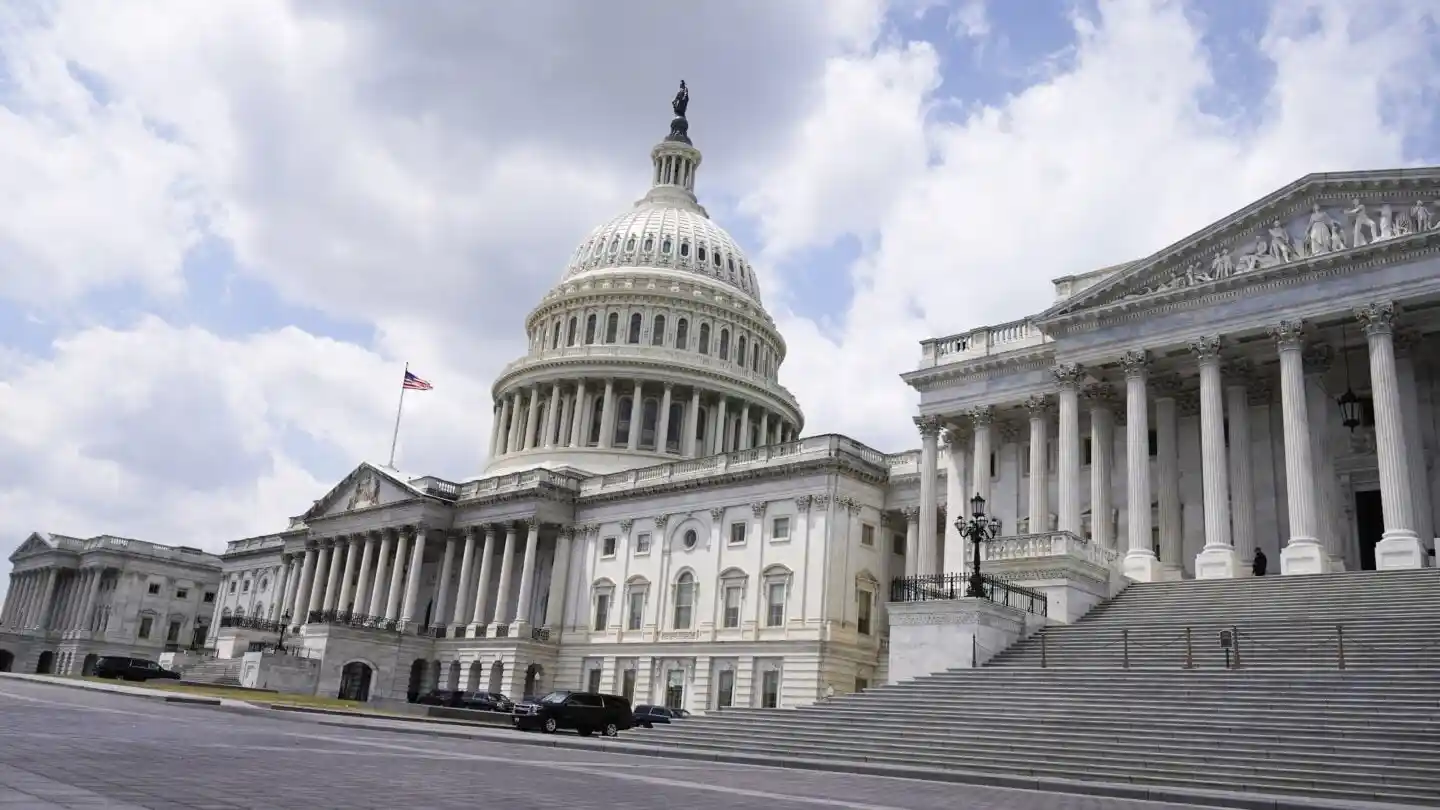
US Senators Seek Compromise to Advance Crypto Clarity Act Amid Stablecoin Debate

US lawmakers are working to revive stalled cryptocurrency legislation by negotiating a compromise on stablecoin rewards, a key issue that has delayed progress on the proposed Digital Asset Market Clarity Act. The legislation aims to establish clearer rules for the rapidly growing digital asset sector while addressing concerns raised by the traditional banking industry. As the legislative calendar tightens for the year, policymakers are attempting to balance financial innovation with safeguards designed to protect the stability of the US banking system and prevent disruptions to traditional deposit markets.

The proposed compromise centers on how stablecoin platforms can offer rewards to users. Banking groups have argued that allowing interest-like returns on stablecoin holdings could encourage customers to shift funds away from traditional bank deposits. Such a shift could weaken banks’ funding base and alter the structure of the financial system. Lawmakers involved in the negotiations have acknowledged these concerns while emphasizing that digital asset innovation remains an important policy objective for the United States.

Discussions between lawmakers, banking representatives and digital asset advocates suggest that the final legislative framework may restrict rewards tied directly to passive stablecoin holdings. Instead, potential compromises are focusing on limited reward structures connected to transaction activity or other forms of platform engagement. This approach aims to reduce the risk that stablecoins function as direct substitutes for traditional savings accounts while still allowing digital asset companies to offer incentives that encourage the use of their platforms.

Several senators involved in the negotiations have indicated that the eventual agreement may leave both sides partially dissatisfied. Policymakers say this reflects the challenge of balancing competing priorities in financial regulation. On one side, banking institutions are seeking strict limits to protect deposit stability, while on the other side the cryptocurrency industry argues that consumer incentives are essential to supporting adoption and innovation in digital finance.

The banking sector has actively lobbied lawmakers to close potential regulatory gaps related to stablecoin rewards. Industry representatives warn that if digital asset companies are allowed to offer returns that resemble bank interest rates, it could create competitive pressures that shift funds away from the regulated banking system. Banks argue that maintaining consistent rules across financial products is necessary to ensure fairness and protect financial stability.

At the same time, cryptocurrency advocates maintain that carefully structured reward programs can promote broader participation in digital financial systems without undermining traditional banking. They emphasize that stablecoins play an important role in facilitating digital payments, cross-border transactions and blockchain-based financial services. Supporters of the Clarity Act argue that regulatory certainty could strengthen the United States’ leadership in financial technology innovation.

Regulatory agencies are also playing a role in shaping the debate. Financial authorities have recently proposed rules that incorporate elements of existing stablecoin legislation while clarifying how digital asset issuers and platforms may operate under federal oversight. These proposals are being closely examined by both the banking industry and cryptocurrency companies as they evaluate how future regulations might affect business models and market development.

The outcome of the negotiations could determine whether comprehensive cryptocurrency market structure legislation moves forward this year. Lawmakers face a limited window to finalize agreements and guide the bill through congressional procedures. If a compromise is reached, the legislation could represent one of the most significant regulatory frameworks for digital assets in the United States, shaping how stablecoins, exchanges and other crypto platforms operate within the broader financial system.

Share on:

Crypto

USDC Circulation Expands as Stablecoin Liquidity Reenters Global Crypto Markets

Stablecoin liquidity is again becoming a central driver of activity in global cryptocurrency markets as the circulation of USD Coin continues to expand across trading platforms, decentralized finance networks, and cross border payment channels. Market participants increasingly view stablecoins as a core liquidity layer for digital assets because they allow traders and institutions to move capital quickly without relying on traditional banking rails. Over the past several months, analysts have observed a gradual rise in USDC supply and transaction volume, indicating that market participants are reentering the crypto ecosystem with fresh capital after a period of subdued activity. This renewed liquidity is beginning to influence trading conditions, price discovery, and the broader digital asset market structure.

Stablecoins Return as a Core Liquidity Layer

Stablecoins play a fundamental role in cryptocurrency markets because they provide a bridge between fiat currencies and blockchain based assets. USDC, which is issued by Circle and backed by reserves consisting of cash and short term US Treasury instruments, has become one of the most widely used digital dollar instruments across global exchanges. As circulation expands, the availability of on chain dollar liquidity improves, allowing market participants to trade assets, hedge positions, and move funds between platforms with greater efficiency. Data from blockchain monitoring platforms indicates that stablecoin transaction activity has steadily increased in recent months as investors reposition portfolios and return to digital asset markets.

Market Activity Reflects Changing Investor Sentiment

Rising stablecoin liquidity often signals improving sentiment among traders and institutional investors. When investors deposit stablecoins into exchanges or decentralized trading platforms, it typically reflects preparation for market activity rather than capital exiting the ecosystem. Over the past quarter, several digital asset exchanges reported higher balances of USDC on their platforms, suggesting that traders are allocating capital in anticipation of potential market opportunities. Increased stablecoin balances also support derivatives markets and liquidity pools, which rely on stable digital assets to maintain trading depth and price stability across volatile crypto assets.

Institutional Adoption Strengthens Stablecoin Demand

Institutional adoption has also contributed to the growing presence of USDC within global financial infrastructure. Financial technology firms, payment platforms, and digital asset custodians have increasingly integrated USDC into settlement systems for faster transfers and programmable payments. The ability to move dollar denominated value on blockchain networks within minutes has attracted interest from companies exploring cross border payment solutions and digital treasury management. Several financial institutions have begun experimenting with blockchain based settlement frameworks where stablecoins function as a neutral liquidity instrument that operates independently of traditional banking hours.

DeFi and Blockchain Networks Expand USDC Utility

Decentralized finance ecosystems continue to play an important role in expanding the utility of USDC. Lending protocols, decentralized exchanges, and liquidity pools rely heavily on stablecoins to facilitate borrowing, trading, and yield generation activities. Because USDC maintains a value pegged to the US dollar, it serves as a stable reference asset within these platforms, allowing participants to manage risk while interacting with blockchain based financial products. As DeFi infrastructure evolves across multiple blockchain networks, the circulation of stablecoins has increased accordingly, reinforcing their role as the backbone of decentralized liquidity.

Regulatory Attention Shapes the Stablecoin Landscape

The growing importance of stablecoins has also drawn attention from regulators and policymakers worldwide. Governments and financial authorities are examining how stablecoins fit within existing payment regulations and financial stability frameworks. In several jurisdictions, policymakers are exploring legislation that would require issuers to maintain transparent reserves, robust auditing procedures, and clear operational standards. Regulatory clarity is viewed by many market participants as a necessary step for broader institutional adoption because it could provide confidence that stablecoin systems operate within a well defined financial framework.

Global Crypto Markets Respond to Liquidity Shifts

Liquidity conditions often influence how quickly cryptocurrency markets move during periods of volatility. When stablecoin supply expands, traders typically have greater capacity to deploy capital into digital assets, which can accelerate market activity during bullish cycles. Conversely, shrinking stablecoin balances can signal capital leaving exchanges and trading platforms. Analysts monitoring blockchain data therefore pay close attention to stablecoin supply trends because they often provide an early indication of changes in market momentum. The recent increase in USDC circulation suggests that liquidity conditions in the crypto ecosystem are gradually improving.

Outlook

While cryptocurrency markets remain sensitive to regulatory developments and macroeconomic conditions, the expansion of stablecoin circulation indicates that the digital asset ecosystem continues to evolve toward more mature financial infrastructure. If stablecoin adoption continues across trading platforms, financial institutions, and cross border payment systems, digital dollar liquidity could remain a key foundation supporting the next phase of global crypto market growth.

Share on:
Continue Reading

Crypto

Ethereum Tests ‘DVT-Lite’ System to Simplify Validator Setup for Institutional Staking

Ethereum co-founder Vitalik Buterin has introduced a new initiative aimed at simplifying how validators operate within the Ethereum network, potentially making staking infrastructure easier for large institutional investors. In a recent statement, Buterin revealed that the Ethereum Foundation is experimenting with a simplified version of distributed validator technology known as “DVT-Lite.” The initiative is designed to streamline validator operations and lower technical barriers for institutions holding large amounts of ether. If successful, the approach could significantly expand participation in Ethereum’s staking ecosystem while strengthening the decentralization of the network’s validation infrastructure.

The Ethereum Foundation has already begun testing the new system by staking approximately 72,000 ether using the experimental setup. The test aims to demonstrate how distributed validator systems can operate more efficiently when the deployment process is simplified. Buterin explained that the objective is to reduce technical complexity and enable operators to run validators across multiple machines without requiring advanced infrastructure management. By simplifying deployment, the project hopes to encourage a broader range of participants to contribute to Ethereum’s network security.

In its current form, running an Ethereum validator typically requires a dedicated computer system that stores a private key used to sign blocks and confirm transactions on the blockchain. If that single machine goes offline or encounters technical problems, the validator may stop functioning and risk penalties for inactivity. This centralized dependency on a single machine has been one of the operational risks for validator operators, especially for large institutions managing significant amounts of cryptocurrency assets.

Distributed validator technology addresses this challenge by allowing several independent machines to collectively function as a single validator. Instead of relying on one device and one key, the system distributes responsibilities across multiple nodes. A subset of these nodes can cooperate to sign blocks and maintain validator activity even if some machines experience downtime. This structure increases reliability while reducing the risk that a single technical failure could disrupt validator operations.

Despite its advantages, traditional distributed validator systems can be complicated to configure and maintain. Operators often need to coordinate networking arrangements, key management, and communication between multiple machines before the system can function properly. These technical requirements have limited adoption among smaller operators and have contributed to the concentration of staking activity among large professional service providers with specialized infrastructure capabilities.

The proposed “DVT Lite” framework aims to simplify much of that complexity through automated setup procedures. According to Buterin, the system is being designed with a goal of creating a nearly one-click configuration process. Operators would select the machines that will run validator nodes, install the software, and enter the same validator key across those machines. The system would then automatically connect the nodes and begin staking operations without requiring extensive manual configuration.

By reducing technical barriers, Ethereum developers hope the new system will help decentralize validator participation across the network. A wider distribution of validator operators is considered important for blockchain security and governance, as it prevents excessive control from concentrating among a small group of large staking providers. Greater participation by institutions, independent operators and smaller infrastructure providers could strengthen the resilience of Ethereum’s consensus system.

If the experiment proves successful, the simplified validator approach could reshape how large holders of ether participate in network staking. Institutional investors that previously relied on external staking providers may be able to operate their own infrastructure more easily, increasing direct participation in blockchain validation. As Ethereum continues evolving its proof of stake ecosystem, innovations such as DVT Lite may play a key role in improving accessibility, security and decentralization across the network.

Share on:
Continue Reading

Crypto

Crypto Firm Zerohash Seeks US National Trust Bank Charter

Digital asset infrastructure provider Zerohash has applied for a national trust bank charter in the United States, marking another step in the cryptocurrency industry’s effort to integrate more closely with traditional financial systems. The application was submitted to the US Office of the Comptroller of the Currency (OCC), the federal agency responsible for regulating and supervising national banks. If approved, the charter would allow Zerohash to operate as a federally regulated trust bank, enabling it to provide cryptocurrency custody and related financial services within a more formal banking framework. The move reflects the growing demand for regulatory clarity as digital asset companies attempt to expand their services and build stronger relationships with institutional investors.

Zerohash is known for providing digital asset infrastructure that enables businesses to offer cryptocurrency services to their customers. The company’s platform supports trading, settlement, custody, and compliance solutions for financial institutions and fintech firms that want to integrate crypto capabilities into their services. By applying for a national trust bank charter, the firm aims to enhance its regulatory standing and increase the range of services it can provide to institutional clients. Becoming a regulated trust bank could also allow the company to directly manage and safeguard digital assets on behalf of customers while adhering to federal banking standards.

The application highlights a broader trend in the cryptocurrency industry, where several firms are seeking regulatory approvals to operate within established financial frameworks. As digital assets become more widely adopted, companies are increasingly pursuing licenses and charters that provide greater credibility and oversight. Regulators and policymakers have emphasized the importance of ensuring that cryptocurrency businesses operate within clear legal and compliance structures. Obtaining a trust bank charter from the OCC would place Zerohash under federal supervision, potentially increasing investor confidence and encouraging greater participation from traditional financial institutions.

Industry analysts note that regulatory recognition could significantly strengthen the position of cryptocurrency firms in the global financial system. Institutional investors often prefer working with entities that operate under well-defined regulatory frameworks because it reduces operational and compliance risks. If Zerohash successfully secures the charter, it could position itself as a key infrastructure provider for companies looking to offer regulated digital asset services. The move may also signal growing cooperation between cryptocurrency companies and traditional financial regulators as both sides seek to establish stable and transparent markets.

The application comes at a time when digital assets are gaining increasing attention from policymakers, regulators, and financial institutions around the world. Governments are exploring ways to balance innovation with financial stability, particularly as cryptocurrencies and blockchain technologies continue to reshape financial services. By seeking a national trust bank charter, Zerohash is positioning itself to operate more closely within the regulated banking sector while supporting the expansion of digital asset services. The outcome of the application could influence how other cryptocurrency firms approach regulatory engagement in the evolving digital finance landscape.

Share on:
Continue Reading

Trending