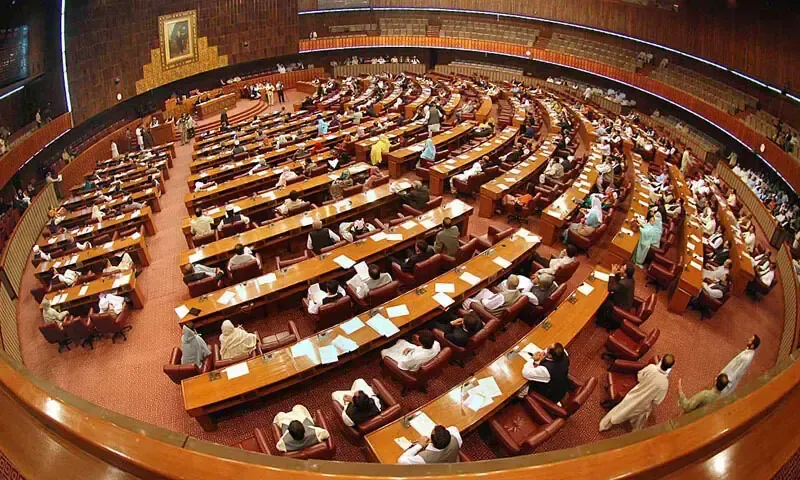
Pakistan’s National Assembly temporarily suspended its usual procedural rules on Tuesday, allowing lawmakers to swiftly pass a bill aimed at regulating cryptocurrency assets before opening a debate on the evolving crisis in the Middle East. The legislation was approved within minutes after the government used parliamentary provisions to alter the day’s agenda. Officials said the move was intended to fast-track the establishment of a regulatory framework for digital assets in Pakistan. The bill clears the path for creating a supervisory authority responsible for overseeing cryptocurrency activities, exchanges, and related digital financial instruments. Supporters of the legislation argue that formal regulation is necessary as global financial systems increasingly integrate blockchain-based assets into mainstream markets.
The session initially began with a proposal from Minister for Parliamentary Affairs Dr. Tariq Fazal Chaudhry, who requested the suspension of the scheduled private members’ business so the Assembly could address the security situation following recent military developments involving the United States, Israel, and Iran. However, before lawmakers began their discussion on geopolitical tensions, the government moved quickly to present the cryptocurrency legislation for approval. Parliamentary observers noted that the bill passed rapidly with limited debate, highlighting the government’s urgency to introduce a legal structure for digital asset oversight. The swift approval reflects growing recognition among policymakers that digital currencies and blockchain technologies are becoming increasingly relevant to Pakistan’s financial landscape.
The proposed regulatory framework aims to establish a dedicated authority responsible for supervising cryptocurrency transactions, monitoring compliance, and ensuring investor protection. Lawmakers supporting the measure argued that unregulated digital asset trading carries risks including fraud, market manipulation, and financial instability. By creating a formal oversight body, the government hopes to promote transparency while also enabling innovation in financial technology. Several policymakers emphasized that global markets are moving toward regulated crypto environments and Pakistan must adapt to remain competitive. A regulated system could also provide the government with better monitoring tools to prevent illicit financial flows and strengthen overall financial governance.
During the subsequent debate on regional tensions, members of the National Assembly strongly condemned the reported killing of Iranian Supreme Leader Ayatollah Ali Khamenei. Several lawmakers expressed concern that escalating hostilities in the Middle East could have far-reaching implications for regional security. Some parliamentarians warned that growing geopolitical tensions could eventually draw neighboring countries into broader instability. In their remarks, lawmakers emphasized the importance of maintaining diplomatic engagement and regional cooperation to prevent further escalation. The debate reflected deep concern among Pakistani legislators regarding the potential impact of international conflicts on the country’s economic and security environment.
Despite the intense discussion on geopolitical developments, the approval of the cryptocurrency bill remained a key outcome of the session. Analysts believe the legislation signals a shift in Pakistan’s approach toward digital finance and emerging technologies. If implemented effectively, the new regulatory authority could play a significant role in shaping the country’s digital asset ecosystem. Experts say a clear regulatory framework may encourage responsible innovation while protecting investors and maintaining financial stability. As cryptocurrency adoption continues to grow worldwide, Pakistan’s policymakers appear to be positioning the country to participate more actively in the evolving global digital economy.
Tags:











 Artificial Intelligence4 months ago
 Football3 months ago
 Latest News7 months ago
 Latest News7 months ago
 Football3 months ago
 Latest News7 months ago
 Latest News7 months ago
 Latest News7 months ago