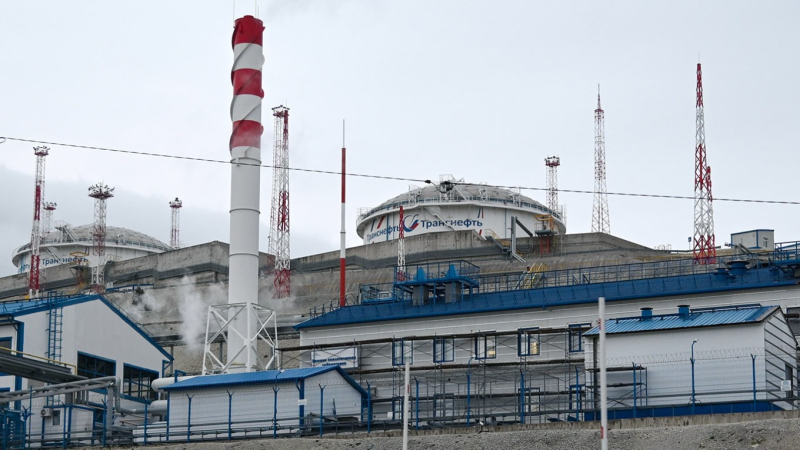
Russia’s federal budget came under increasing pressure in February as falling energy revenues and a strong national currency reduced income from the country’s most important economic sector. Oil and gas revenues have traditionally formed a significant share of Russia’s government income, but recent financial data shows a sharp decline compared with last year. According to official figures released by the finance authorities, energy companies contributed about 423.3 billion rubles to the federal budget in February, marking a substantial decline from the same month a year earlier. The drop highlights the challenges facing Russia’s fiscal planning at a time when geopolitical tensions and market volatility are reshaping global energy markets. Analysts say the situation could complicate budget management if energy revenues fail to recover in the coming months.
Energy Revenue Decline Adds Pressure to Government Finances
Energy exports have long served as the backbone of Russia’s public finances. Taxes and duties collected from oil and gas companies represent one of the government’s largest revenue streams. However, recent figures show that these revenues have declined sharply in early 2026. Oil and gas contributions to the federal budget fell by approximately 44 percent in February compared with the same period last year. This marks the second consecutive month in which resource revenues have experienced a steep decline.
Combined figures for January and February show the scale of the downturn. Total oil and gas revenues during the first two months of the year reached 826 billion rubles, significantly lower than the 1.56 trillion rubles recorded during the same period in the previous year. The decline reflects both market conditions and structural challenges affecting Russia’s energy sector.
One of the most important sources of these revenues is the mineral extraction tax, which is paid by companies involved in oil and gas production. In February, receipts from this tax reached 437.7 billion rubles, slightly lower than January’s figure of 440.3 billion rubles. Although the change may appear small, it reflects broader pressure on the energy sector that ultimately affects government finances.
Oil Market Conditions and Production Challenges
The decline in revenue occurred even as the average price of Russia’s Urals crude rose modestly during the same period. Market data shows that the price increased from around forty one dollars per barrel to approximately forty five dollars per barrel. Despite this increase, government income from the energy sector did not improve significantly.
Economists suggest that lower oil production may have contributed to the decline in revenue. Russian oil companies began reducing output toward the end of last year as they encountered difficulties selling crude oil to key buyers, particularly in India. India had previously become one of the largest importers of Russian oil following sanctions imposed by Western countries.
Lower production levels naturally translate into lower tax payments and reduced government revenue. When combined with currency movements, the effect becomes even more pronounced. A strong ruble can reduce the local currency value of export earnings, further squeezing government income from energy exports.
These factors together have created a difficult environment for Russia’s fiscal planners, who rely heavily on the energy sector to support public spending and economic programs.
Budget Deficit Concerns Grow
Declining revenues have already begun to affect Russia’s fiscal balance. Financial analysts estimate that the federal budget deficit may have reached around 1.5 trillion rubles in February alone. When combined with the deficit recorded in January, the total shortfall for the first two months of the year could reach approximately 3.2 trillion rubles.
This figure is particularly significant because it approaches the government’s full year deficit target of 3.8 trillion rubles. If current trends continue, Russia may reach its annual deficit target far earlier than expected, forcing policymakers to adjust fiscal strategies or increase borrowing.
Budget pressures are further intensified by government spending patterns. In the first two months of the year, federal spending had already reached about 19 percent of the planned annual total, while revenues accounted for only about 15 percent of the yearly target. This imbalance between income and expenditure highlights the challenges facing Russia’s fiscal management in 2026.
Governments typically rely on strong commodity revenues to offset large public spending commitments. When these revenues decline, maintaining fiscal stability becomes significantly more difficult.
Global Oil Prices Could Provide Temporary Relief
Despite the current challenges, rising global oil prices could offer some relief to Russia’s federal budget in the coming months. International oil markets have experienced sharp price increases amid geopolitical tensions in the Middle East. Brent crude has surged above one hundred dollars per barrel following the escalation of conflict involving Iran.
Russia’s Urals crude blend has also risen sharply, approaching seventy dollars per barrel in some markets. Higher prices could eventually translate into increased tax revenues for the Russian government if the trend continues.
Financial institutions expect energy revenues to recover slightly in March if the average price of Urals crude remains between fifty and sixty dollars per barrel. Under such conditions, oil and gas revenues could rise to between 800 billion and 900 billion rubles during the month.
However, the impact of higher prices may not be immediate. Energy tax calculations are typically based on earlier market data, meaning the effects of recent price increases may only appear in government revenue reports later in the year.
Outlook
Although rising oil prices may provide some short term support, Russia’s budget outlook remains uncertain due to continued geopolitical tensions and fluctuating energy markets. Fiscal stability will depend largely on sustained energy prices and the government’s ability to manage spending as global economic conditions evolve.







 Artificial Intelligence4 months ago
 Football3 months ago
 Latest News7 months ago
 Latest News7 months ago
 Football3 months ago
 Latest News7 months ago
 Latest News7 months ago
 Latest News7 months ago