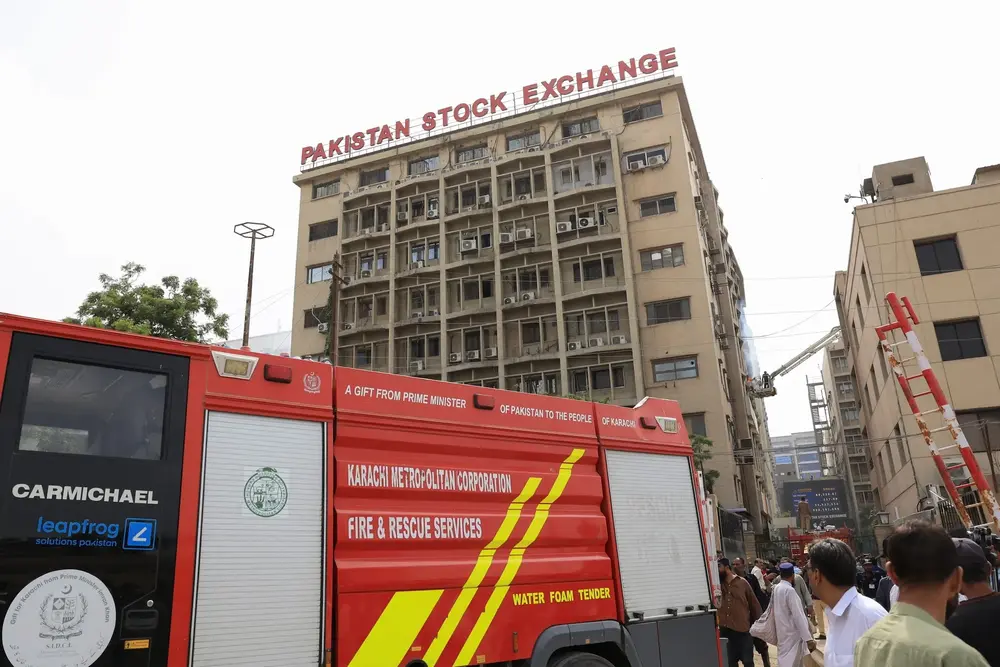
Pakistan’s stock market experienced a dramatic selloff as the benchmark KSE100 Index plunged more than 13,000 points shortly after trading resumed on Monday. The sharp decline highlighted extreme volatility at the Pakistan Stock Exchange (PSX) as investors reacted to growing economic concerns and global market uncertainty. By around 10:50 a.m., the index had fallen approximately 13,050 points, representing a drop of more than eight percent compared with the previous close. The massive decline reflected widespread panic selling across the market, with investors rapidly offloading stocks amid fears that rising global energy prices and economic pressures could negatively affect corporate earnings and overall economic stability.
Earlier in the morning session, trading activity at the exchange had been temporarily halted after the market triggered a circuit breaker. Around 9:20 a.m., the KSE100 Index dropped by nearly 9,780 points, crossing the six percent decline threshold required to activate the exchange’s market halt mechanism. As a result, all equity trading was automatically suspended under PSX regulations. At that time, the benchmark index had fallen to around 147,715 points, marking a sharp decline from the previous session’s closing level. The temporary suspension was implemented to prevent panic-driven trading and provide investors with time to reassess market conditions before trading resumed.
Once trading restarted, selling pressure intensified across multiple sectors of the market. Several major industries experienced significant losses, including automobile assemblers, cement manufacturers, commercial banks, oil and gas exploration companies, oil marketing firms, power generation companies, and refinery stocks. The broad-based decline indicated that investors were pulling funds from equities across nearly all sectors rather than focusing on specific companies. Market analysts noted that such widespread selling is typically observed during periods of heightened uncertainty when investors prefer to reduce risk exposure.
Large-cap companies that carry significant weight in the benchmark index also traded sharply lower during the session. Major stocks such as MCB Bank, Meezan Bank, National Bank of Pakistan, Mari Energies, Oil and Gas Development Company, Pakistan Petroleum Limited, Pakistan State Oil, Sui Northern Gas Pipelines, Sui Southern Gas Company, and Hub Power Company were among those experiencing heavy losses. Because these companies represent a large portion of the index’s value, declines in their share prices had a substantial impact on the overall market performance. The drop in these index-heavy stocks contributed significantly to the steep fall in the KSE-100 Index.
Market participants believe the sudden selloff was largely driven by rising global oil prices and fears of renewed inflationary pressure on the economy. Crude oil prices have surged sharply in global markets amid escalating geopolitical tensions, raising concerns about higher fuel costs and increased production expenses for businesses. For Pakistan, which relies heavily on imported energy, rising oil prices can significantly impact inflation and economic stability. Investors are increasingly cautious about the potential economic consequences if energy prices remain elevated for an extended period. As a result, market volatility may continue in the coming days as investors closely monitor global developments and domestic economic indicators.



















 Artificial Intelligence4 months ago
 Football3 months ago
 Latest News7 months ago
 Latest News7 months ago
 Football3 months ago
 Latest News7 months ago
 Latest News7 months ago
 Football3 months ago