Currencies
Euro May Strengthen as Global Role Expands, ECB’s Wunsch Says

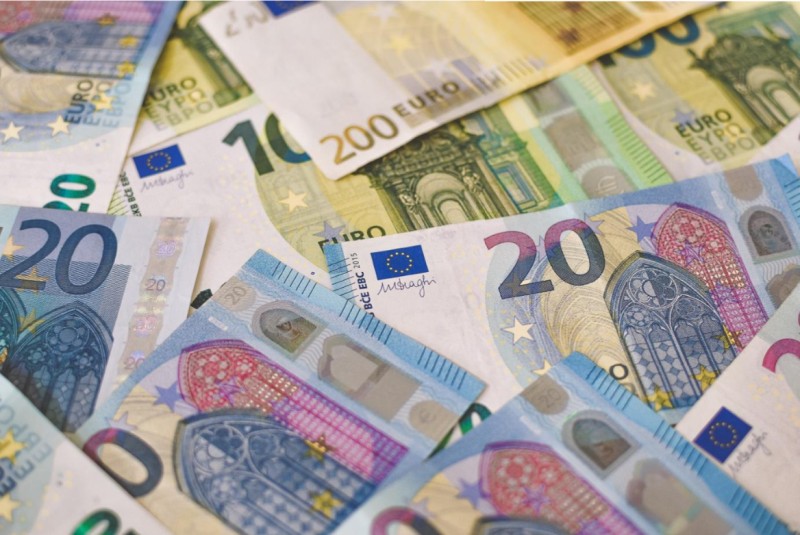
The euro could gain further strength in global markets if Europe continues efforts to expand the international role of its common currency, according to European Central Bank Governing Council member Pierre Wunsch. Speaking in an interview in Brussels, the Belgian central bank chief said policymakers should prepare for the possibility of a stronger euro as the region seeks to enhance the currency’s global influence. Wunsch explained that if Europe succeeds in increasing the euro’s international usage in trade, finance, and global reserves, upward pressure on the currency could follow naturally. His comments come at a time when global financial systems are gradually evolving and policymakers are exploring ways to diversify international currency dominance.
The European Union has been working to strengthen the euro’s global standing in recent years, aiming to reduce reliance on other major currencies in international transactions. A stronger role for the euro could improve the region’s financial independence and influence within the global economic system. Wunsch emphasized that expanding the international use of the euro could bring benefits such as greater resilience in financial markets and stronger global recognition of European financial institutions. However, he also acknowledged that an appreciation in the currency could create challenges for exporters, as a stronger euro may make European goods more expensive in global markets.
The discussion around the euro’s global role has gained importance as geopolitical tensions and shifting economic alliances reshape international financial dynamics. Several countries and financial institutions have shown increasing interest in diversifying currency exposure, particularly in response to global economic uncertainties. Analysts say the euro is often viewed as the most credible alternative to the US dollar in global financial markets due to the size of the eurozone economy and the stability of its financial system. Expanding the euro’s role in global trade and finance could therefore strengthen Europe’s position in the international monetary system.
However, policymakers must also carefully balance the potential economic impacts of a stronger currency. While currency appreciation can enhance purchasing power and improve financial stability, it may also affect export competitiveness for European companies. Wunsch indicated that central banks need to consider these trade-offs when shaping policies that support the internationalization of the euro. Economic growth, trade balances, and capital flows could all be influenced by movements in the exchange rate if the euro gains a larger global presence.
Market observers note that the euro’s future trajectory will depend on multiple factors including monetary policy decisions, economic growth across the eurozone, and global financial conditions. The European Central Bank continues to monitor inflation trends, interest rates, and economic activity while maintaining stability within the region’s financial system. As discussions around the international role of the euro continue, policymakers are likely to weigh both the benefits and risks associated with a stronger currency. Any shift toward greater global use of the euro could have significant implications for international finance and global currency markets.

Currencies
Pakistan Currency Gains Against Dollar but Slips Versus Euro

The Pakistani rupee was strengthened to a 19-month high against the US dollar on Thursday. The local currency was closed at Rs277.97, gaining Re0.03 in the interbank market. In the open market, the dollar was bought at Rs278.87 and sold at Rs279.68. The rupee was weakened against the euro, UAE dirham and Saudi riyal, while the US dollar index remained near a one-month low at 100.47.
Currencies
Currency and Tax Concerns Temper Private Equity Optimism in India

India continues to attract strong interest from global private equity investors due to its robust economic growth and expanding business ecosystem, yet concerns about currency depreciation and taxation are limiting overall return expectations. Investors say that while India remains one of the most important destinations for emerging market capital, the impact of a weakening rupee and capital gains taxes has become a key consideration when evaluating investment opportunities. These financial pressures have prompted many international funds to reassess return projections even as deal activity and exit opportunities continue to grow in the country.
The Indian rupee has experienced steady depreciation against the US dollar over recent years, creating additional pressure for foreign investors seeking to repatriate profits. Currency weakness erodes the value of returns when investments are converted back into dollars, making exchange rate movements an important factor in overall performance. Although India’s strong economic expansion continues to support investor confidence, the gradual decline in the rupee has forced many global funds to factor currency risks more carefully into their investment strategies and long-term planning.
Tax policies also play a significant role in shaping investor sentiment. Private equity investors face capital gains taxes when exiting investments, which can reduce net returns from successful deals. Industry participants say that capital gains taxes typically ranging between ten and fifteen percent can limit profitability compared with other emerging markets that offer more favorable tax structures. As competition for global capital intensifies, investors believe that tax policies could become an important factor in determining how much private equity funding flows into India in the future.
Despite these challenges, India’s investment environment remains attractive due to its large consumer market, expanding technology sector and improving capital markets. The country has seen growing opportunities for private equity exits through public listings and strategic sales, creating stronger liquidity pathways for investors. Analysts note that the development of deeper financial markets and a growing base of experienced fund managers have strengthened India’s position as a core allocation within emerging market portfolios.
Another distinctive feature of India’s private equity landscape is the relatively limited use of financial leverage compared with other markets. Regulatory restrictions on borrowing for share acquisitions and corporate governance rules limit the ability of investors to use debt to enhance returns. While this reduces the potential for financial engineering strategies commonly used in other markets, it also lowers exposure to refinancing risks and interest rate fluctuations, making investments potentially more stable during periods of economic uncertainty.
Investors say that as financial leverage remains constrained, private equity firms are increasingly focusing on operational improvements to generate value within portfolio companies. This approach involves strengthening management structures, expanding market reach and improving efficiency rather than relying heavily on debt-driven returns. The strategy aligns with India’s broader economic transformation as companies modernize operations and scale their businesses in competitive industries.
Looking ahead, the long-term outlook for private equity investment in India remains positive despite the current concerns around currency movements and tax policies. Investors continue to view the country as one of the most dynamic emerging markets due to its economic growth potential and expanding investment opportunities. However, the balance between strong growth prospects and financial constraints such as currency depreciation and taxation will remain an important factor shaping private equity strategies in the years ahead.
Currencies
Gabon Seeks IMF Support as Fiscal Pressures Mount Across Central Africa

Gabon is exploring the possibility of securing financial support from the International Monetary Fund as the country attempts to stabilize its public finances following several years of political and economic turbulence. The oil-producing Central African nation has faced a series of disruptions, including a military coup, a contested election and frequent changes in financial leadership that have complicated policy continuity. Government officials believe that an IMF program could help restore investor confidence and unlock additional international funding at a time when access to global capital markets has become increasingly difficult for several African economies.
Officials from the International Monetary Fund recently concluded a ten-day mission to Gabon, marking the first round of formal discussions since the government signaled its intention to seek financial assistance. The discussions focused on evaluating the country’s fiscal position, debt sustainability and economic outlook. While the visit represents an early step toward a possible financial arrangement, both sides indicated that negotiations are likely to continue over the coming months. IMF representatives emphasized that strong fiscal discipline and transparent economic policies would be essential to ensure financial stability not only in Gabon but also across the broader Central African region.
Gabon’s attempt to secure financial assistance is taking place against the backdrop of growing liquidity pressures among countries in the Central African Economic and Monetary Community. Several members of the regional bloc are experiencing funding constraints as external reserves decline and access to international borrowing becomes more limited. Analysts note that Gabon’s potential return to an IMF program could influence policy decisions across neighboring economies that are also considering seeking support from international financial institutions to address fiscal imbalances and stabilize their economies.
However, uncertainty surrounding Gabon’s economic data and fiscal transparency has raised concerns among investors and credit rating agencies. The country’s previous IMF-supported program, which was approved in 2021, failed to stay on track and ended earlier than expected. That experience has made international lenders cautious about entering a new arrangement without stronger assurances regarding policy implementation and economic oversight. Analysts say that credible reforms and improved transparency will likely be required before negotiations can advance toward a formal financial package.
Another major challenge facing Gabon is the limited availability of reliable economic data. International analysts have pointed out that gaps in fiscal reporting and statistical transparency make it difficult to accurately assess the country’s financial position. Without clear data on public spending, government debt and fiscal deficits, policymakers and international lenders face uncertainty about the scale of economic adjustments that might be required. Addressing these data limitations is expected to become an important part of the reform discussions between Gabon and international financial institutions.
The broader economic outlook for Gabon also depends on the government’s willingness to implement potentially difficult reforms aimed at improving fiscal sustainability. These measures could include reducing public spending, strengthening tax collection and introducing structural reforms to improve economic management. While such steps are often necessary to secure IMF support, they can be politically sensitive and challenging to implement in environments where economic conditions are already under strain.
As discussions continue, financial markets and international observers will be closely watching how Gabon balances economic reform with political stability. If a new IMF program eventually moves forward, it could provide a crucial financial anchor for the country and signal a renewed commitment to economic reforms. At the same time, the outcome of the negotiations may also influence how other Central African economies approach their own fiscal challenges as the region navigates a complex global financial environment.

Pakistan’s First RoRo Operation

PM Shehbaz Orders Fast-Track Rollout of Business Reform Act

Petrol Raised to Rs316.15, Diesel Price Surges by Rs31.05 Per Litre

South Korea Unveils $880 Billion AI and c Investment Plan

Crypto Liquidity and Capital Flows: Could Rising USDT Activity Influence Pakistan’s Equity Markets

PSX Bloodbath as KSE100 Plunges Over 13,000 Points After Trading Resumes
Trending
Artificial Intelligence3 weeks agoSouth Korea Unveils $880 Billion AI and c Investment Plan
Latest News4 months agoCrypto Liquidity and Capital Flows: Could Rising USDT Activity Influence Pakistan’s Equity Markets
Latest News4 months agoPSX Bloodbath as KSE100 Plunges Over 13,000 Points After Trading Resumes
Budget4 months agoCanada Nominates Annette Ryan as New Parliamentary Budget Officer
Latest News4 months agoPSX Plunges Over 11,000 Points as Middle East Tensions Shake Markets
Latest News4 months agoPSX Trading Halted After KSE30 Triggers Market Circuit Breaker
Latest News4 months agoFrom Catalog Clicks to Conversational AI: How Moeed Sheikh Is Building Revenue Driven Digital Experiences
Currencies4 months agoGabon Seeks IMF Support as Fiscal Pressures Mount Across Central Africa