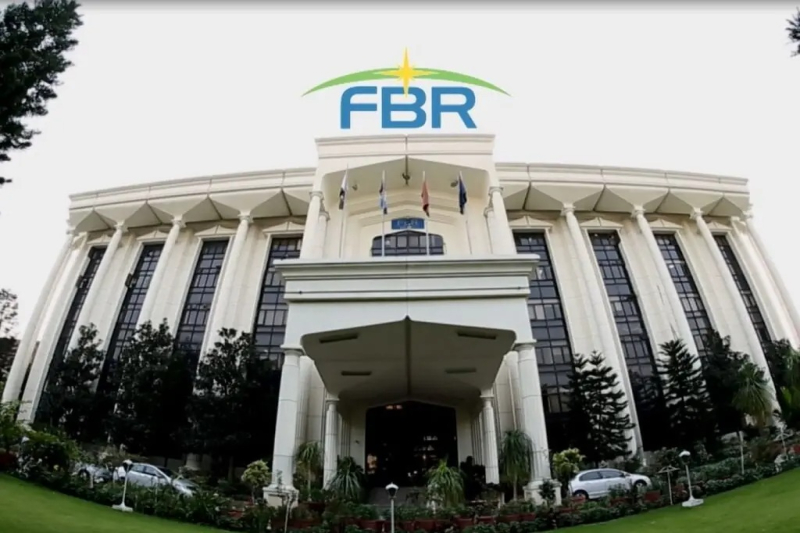
Pakistan’s tax administration framework has come under renewed scrutiny as a constitutional petition challenges the legality of the Federal Board of Revenue’s reward distribution system, widely known as the peer ranking policy. The case, currently before the Lahore High Court, questions whether the scheme complies with constitutional and fiscal regulations governing the use of public funds. The petition argues that monetary rewards distributed among tax officials may lack a clear statutory foundation and transparent criteria required under Pakistan’s fiscal governance framework. The development has drawn attention from legal experts, policymakers, and financial oversight institutions because it involves the use of public funds within the country’s tax administration system.
Court Examines Legality of FBR Reward Distribution Rules
The constitutional petition was filed by tax lawyer Waheed Shahzad Butt, who has raised concerns regarding the legal basis of the reward scheme used within the Federal Board of Revenue. According to the petition, the peer ranking system allows the distribution of financial incentives among tax officials based on internal evaluation by their colleagues.
The petitioner contends that these payments are allegedly drawn from public funds without proper statutory authorization, transparent criteria, or parliamentary approval. Such concerns have prompted legal scrutiny of the framework under which these rewards are granted.
The Lahore High Court had previously issued notices to several key government institutions and officials, including the Chairman of the Federal Board of Revenue, members of the FBR Policy Board, the Principal Secretary to the Prime Minister, and senior officials responsible for financial oversight.
Other respondents include the Auditor General of Pakistan and the Director General of the Federal Investigation Agency, indicating the broader institutional importance of the case. These institutions have been asked to submit written responses addressing the legal and constitutional issues raised in the petition.
FBR Yet to Submit Written Response
Despite receiving notices from the Lahore High Court, the Federal Board of Revenue has not yet submitted its written comments responding to the allegations raised in the petition. Legal observers say this delay raises questions about institutional accountability and transparency within the tax administration system.
The petition challenges the legitimacy of reward distribution under both the Inland Revenue Reward Rules and the Customs Reward Rules. These regulations govern how financial incentives are granted to officials involved in tax enforcement activities.
According to the petitioner, the reward mechanism has allegedly enabled the distribution of significant public funds without adequate oversight or clearly defined eligibility criteria. The petition argues that such practices could conflict with constitutional requirements governing the management of public finances.
Legal experts note that the court’s review of these rules could have important implications for how the Federal Board of Revenue structures its internal incentive programs in the future.
Governance Concerns Within Tax Administration
The legal challenge emerges at a time when governance practices within Pakistan’s revenue authority are already under public scrutiny. Analysts and policy commentators have raised concerns about administrative practices related to appointments and internal policy decisions within the organization.
Critics argue that several senior appointments within the Federal Board of Revenue have been made through general administrative provisions of the Civil Servants Act rather than through structured appointment procedures established under the FBR Act of 2007. This practice, according to critics, may limit institutional transparency and reduce parliamentary oversight.
The constitutional petition therefore raises broader questions about governance and regulatory oversight within Pakistan’s tax administration framework. The case is likely to examine whether existing rules governing reward distribution align with constitutional principles of transparency and financial accountability.
Supreme Court Precedent and Constitutional Implications
The petition also references an important Supreme Court judgment that clarified the limits of executive authority over fiscal matters. In the cited ruling, the Supreme Court held that decisions involving public finances and senior bureaucratic appointments must be exercised collectively by the federal cabinet rather than through unilateral administrative decisions.
Legal experts believe that this precedent may play a significant role in the court’s evaluation of the reward scheme. If the court determines that the distribution of rewards was not properly authorized through lawful procedures, it could lead to significant changes in how financial incentives are managed within the Federal Board of Revenue.
Such a ruling could also strengthen oversight mechanisms governing the use of public funds within government institutions.
Potential Impact on FBR Regulatory Framework
Observers say the outcome of the case could have far reaching consequences for Pakistan’s tax administration system. If the court rules that the reward scheme lacks constitutional validity, the Federal Board of Revenue may be required to redesign its incentive structure in accordance with legal and regulatory requirements.
Changes to reward rules could affect how tax enforcement officers are compensated for performance related activities. Any revisions would likely require clearer regulatory frameworks, transparent criteria, and stronger oversight mechanisms to ensure compliance with fiscal governance standards.
The involvement of multiple oversight institutions in the case highlights the importance of accountability when public funds are used within government agencies.
Outlook
The Lahore High Court’s review of the FBR reward scheme is expected to clarify the legal framework governing financial incentives within Pakistan’s tax administration. The court’s decision could reshape regulatory practices related to reward distribution and strengthen oversight of public funds in revenue institutions.







 Artificial Intelligence4 months ago
 Football3 months ago
 Latest News7 months ago
 Latest News7 months ago
 Football3 months ago
 Latest News7 months ago
 Latest News7 months ago
 Latest News7 months ago