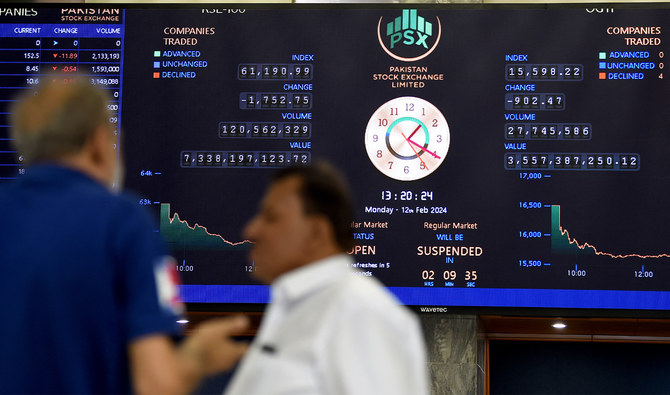
Pakistan’s stock market witnessed a sharp selloff as the Pakistan Stock Exchange (PSX) plunged dramatically at the start of the trading week, reflecting growing investor concerns over geopolitical tensions and domestic economic uncertainties. The benchmark KSE-100 Index dropped more than 11,000 points during Monday’s trading session, falling to around 146,480 points. The decline represented a loss of nearly seven percent compared with the previous closing level. The massive drop highlighted a wave of panic selling across the market as investors moved to reduce exposure to equities amid fears that rising global oil prices and policy uncertainty could affect economic stability and corporate profitability in the coming months.
Earlier in the session, trading activity at the exchange was temporarily suspended after the index recorded a fall exceeding 10,000 points. The halt was triggered under the exchange’s regulatory framework designed to prevent extreme volatility and allow investors time to reassess market conditions. Despite the temporary suspension, selling pressure continued once trading resumed, pushing the index further into negative territory. Market analysts noted that the decline reflected both domestic economic concerns and broader global market trends, with investors reacting strongly to developments in international energy markets and geopolitical tensions in the Middle East.
Market participation remained significant despite the sharp drop in share prices. Trading data showed that more than 621 million shares were exchanged during the session, representing a substantial increase compared with the previous trading day when around 363 million shares were traded. The total value of shares traded reached approximately Rs37 billion, indicating intense market activity driven largely by selling pressure. A total of 480 companies traded their shares during the day, with only 33 companies recording gains while 386 companies closed lower. Meanwhile, the share prices of 61 companies remained unchanged, reflecting widespread declines across multiple sectors.
Several stocks dominated the trading activity during the session. K-Electric Limited emerged as the most actively traded company, with more than 127 million shares changing hands at around Rs7.20 per share. Other heavily traded stocks included F. Nat. Equities and Bank of Punjab, both of which recorded significant trading volumes during the day. While most companies experienced losses, a few firms managed to record gains. Blessed Textiles Limited posted the highest increase in share price, followed by Faisal Spinning Mills Limited. On the downside, Unilever Pakistan Foods Limited recorded the largest decline in share price, while Sazgar Engineering Works Limited also faced notable losses.
Global developments played a major role in shaping investor sentiment during the session. Oil prices surged sharply amid escalating conflict in the Middle East, raising concerns about supply disruptions and rising energy costs. Brent crude prices climbed above $110 per barrel, while US West Texas Intermediate crude also surged significantly. Analysts say the spike in energy prices has intensified fears of inflation and higher business costs worldwide. If the conflict continues to disrupt energy supplies and shipping routes in the region, global fuel prices could remain elevated for an extended period. For Pakistan’s equity market, rising energy costs and geopolitical uncertainty are likely to remain key factors influencing investor sentiment and market performance.



















 Artificial Intelligence4 months ago
 Football3 months ago
 Latest News7 months ago
 Latest News7 months ago
 Football3 months ago
 Latest News7 months ago
 Latest News7 months ago
 Latest News7 months ago