Connect with us

Crypto

FBI Arrests Contractor Accused of Stealing $46 Million in Crypto From US Marshals

A government contractor accused of stealing more than $46 million in cryptocurrency from the US Marshals Service has been arrested by federal authorities in the Caribbean. The suspect, identified as John Daghita, was taken into custody late Wednesday on the island of Saint Martin following an international investigation led by the Federal Bureau of Investigation. According to officials, Daghita allegedly exploited his position while working as a contractor connected to the agency and gained unauthorized access to cryptocurrency holdings managed by the US Marshals Service. The arrest marks a significant development in the case, which involves one of the largest alleged cryptocurrency thefts connected to a US government agency.

Authorities said the investigation involved coordination between multiple international law enforcement agencies. The FBI worked with foreign partners to track the suspect’s location and secure his arrest outside the United States. In a statement shared publicly, FBI Director Kash Patel emphasized that law enforcement agencies remain committed to pursuing individuals who attempt to exploit government systems or defraud taxpayers. Officials stated that the arrest demonstrates the agency’s ability to follow complex financial trails across borders, particularly in cases involving digital assets where funds can move quickly across global networks.

The case highlights the growing challenges governments face when managing and securing digital assets such as cryptocurrencies. Over the past decade, law enforcement agencies including the US Marshals Service have seized large amounts of cryptocurrency during investigations into cybercrime, financial fraud, and illegal online activities. These seized assets are often stored in secure digital wallets until they are auctioned or transferred as part of legal proceedings. Because cryptocurrency transactions are recorded on blockchain networks, investigators are able to analyze digital trails, although tracking stolen funds can still be complicated due to the use of anonymizing technologies.

Investigators allege that the contractor was able to gain access to cryptocurrency accounts connected to the agency and transfer funds without authorization. Authorities have not yet disclosed the full details of how the theft allegedly occurred or whether additional individuals may have been involved. However, officials say the investigation remains ongoing and further charges could emerge as prosecutors review evidence gathered during the case. Law enforcement agencies are also working to determine whether any of the stolen cryptocurrency has been recovered or traced through blockchain analysis.

The arrest underscores the increasing importance of cybersecurity and digital asset protection within government institutions. As cryptocurrencies become more widely used in financial systems and law enforcement operations, agencies must strengthen safeguards to prevent unauthorized access and theft. Experts say the case could lead to stronger internal controls and improved security protocols for managing seized digital assets. Authorities indicated that the suspect will face legal proceedings following the arrest, while investigators continue examining the full scope of the alleged cryptocurrency theft and its potential implications for digital asset management.


Share on:
Continue Reading
Click to comment

Leave a Reply

Your email address will not be published. Required fields are marked *

Crypto

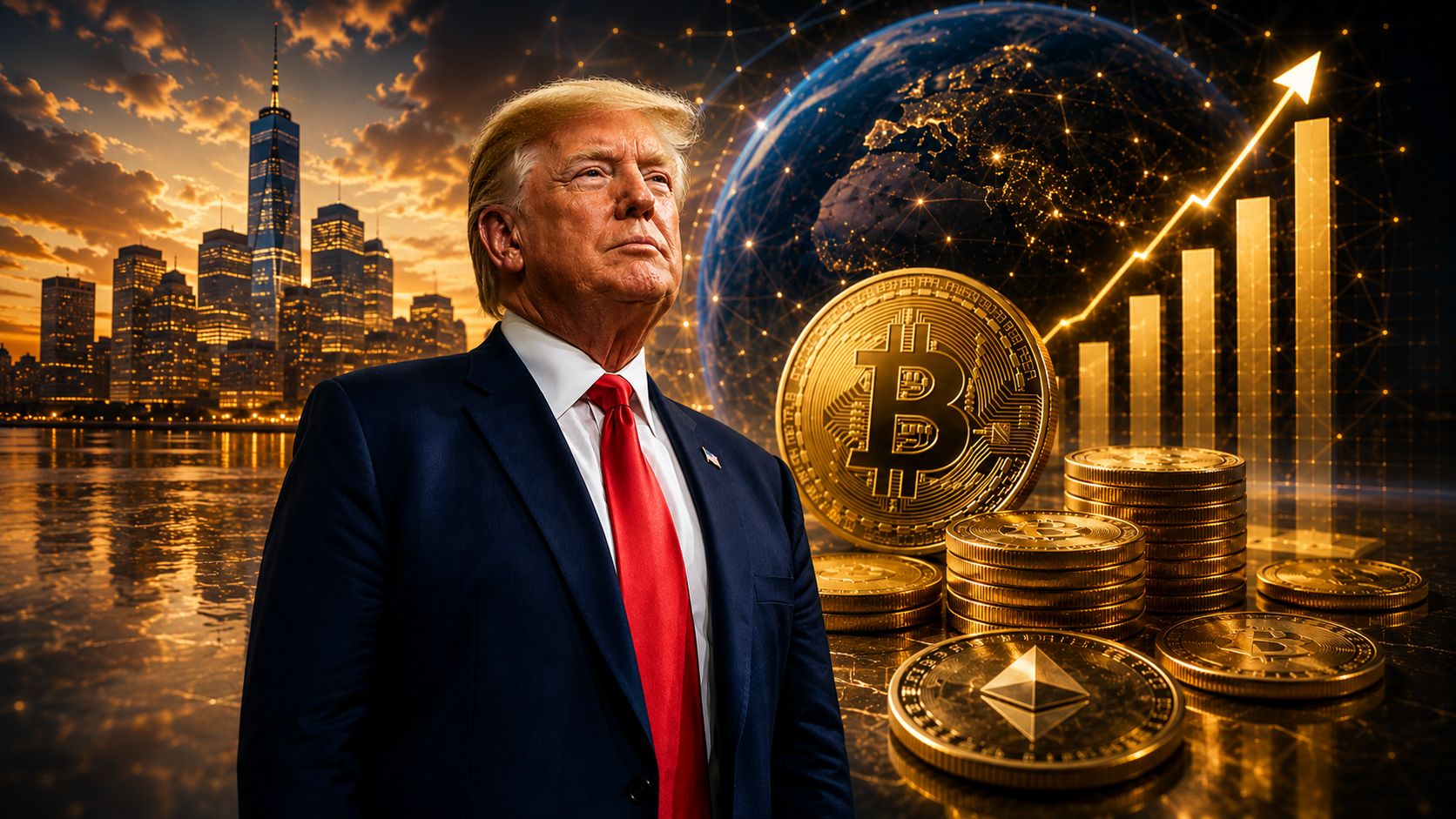
Trump Reports $1.2 Billion Crypto Income in 2025 Disclosure

US ethics disclosures reveal that President Donald Trump earned approximately $1.2 billion from cryptocurrency-related activities in 2025. The filing highlights income from World Liberty Financial, holdings in WLFI tokens, and royalties linked to the $TRUMP cryptocurrency launched before his inauguration, underscoring the growing financial impact of digital assets.

Share on:
Continue Reading

Crypto

PVARA Chairman Highlights Pakistan’s Crypto Ambitions in Zurich

Pakistan Virtual Assets Regulatory Authority (PVARA) Chairman and Minister of State Bilal Bin Saqib presented Pakistan’s digital asset vision at the Point Zero Forum 2026 in Zurich. He highlighted Pakistan as one of the world’s largest digital asset markets and reaffirmed the country’s “Pakistan-first” strategy for digital assets during a global policy discussion.

Share on:
Continue Reading

Crypto

USDC Circulation Expands as Stablecoin Liquidity Reenters Global Crypto Markets

Stablecoin liquidity is again becoming a central driver of activity in global cryptocurrency markets as the circulation of USD Coin continues to expand across trading platforms, decentralized finance networks, and cross border payment channels. Market participants increasingly view stablecoins as a core liquidity layer for digital assets because they allow traders and institutions to move capital quickly without relying on traditional banking rails. Over the past several months, analysts have observed a gradual rise in USDC supply and transaction volume, indicating that market participants are reentering the crypto ecosystem with fresh capital after a period of subdued activity. This renewed liquidity is beginning to influence trading conditions, price discovery, and the broader digital asset market structure.

Stablecoins Return as a Core Liquidity Layer

Stablecoins play a fundamental role in cryptocurrency markets because they provide a bridge between fiat currencies and blockchain based assets. USDC, which is issued by Circle and backed by reserves consisting of cash and short term US Treasury instruments, has become one of the most widely used digital dollar instruments across global exchanges. As circulation expands, the availability of on chain dollar liquidity improves, allowing market participants to trade assets, hedge positions, and move funds between platforms with greater efficiency. Data from blockchain monitoring platforms indicates that stablecoin transaction activity has steadily increased in recent months as investors reposition portfolios and return to digital asset markets.

Market Activity Reflects Changing Investor Sentiment

Rising stablecoin liquidity often signals improving sentiment among traders and institutional investors. When investors deposit stablecoins into exchanges or decentralized trading platforms, it typically reflects preparation for market activity rather than capital exiting the ecosystem. Over the past quarter, several digital asset exchanges reported higher balances of USDC on their platforms, suggesting that traders are allocating capital in anticipation of potential market opportunities. Increased stablecoin balances also support derivatives markets and liquidity pools, which rely on stable digital assets to maintain trading depth and price stability across volatile crypto assets.

Institutional Adoption Strengthens Stablecoin Demand

Institutional adoption has also contributed to the growing presence of USDC within global financial infrastructure. Financial technology firms, payment platforms, and digital asset custodians have increasingly integrated USDC into settlement systems for faster transfers and programmable payments. The ability to move dollar denominated value on blockchain networks within minutes has attracted interest from companies exploring cross border payment solutions and digital treasury management. Several financial institutions have begun experimenting with blockchain based settlement frameworks where stablecoins function as a neutral liquidity instrument that operates independently of traditional banking hours.

DeFi and Blockchain Networks Expand USDC Utility

Decentralized finance ecosystems continue to play an important role in expanding the utility of USDC. Lending protocols, decentralized exchanges, and liquidity pools rely heavily on stablecoins to facilitate borrowing, trading, and yield generation activities. Because USDC maintains a value pegged to the US dollar, it serves as a stable reference asset within these platforms, allowing participants to manage risk while interacting with blockchain based financial products. As DeFi infrastructure evolves across multiple blockchain networks, the circulation of stablecoins has increased accordingly, reinforcing their role as the backbone of decentralized liquidity.

Regulatory Attention Shapes the Stablecoin Landscape

The growing importance of stablecoins has also drawn attention from regulators and policymakers worldwide. Governments and financial authorities are examining how stablecoins fit within existing payment regulations and financial stability frameworks. In several jurisdictions, policymakers are exploring legislation that would require issuers to maintain transparent reserves, robust auditing procedures, and clear operational standards. Regulatory clarity is viewed by many market participants as a necessary step for broader institutional adoption because it could provide confidence that stablecoin systems operate within a well defined financial framework.

Global Crypto Markets Respond to Liquidity Shifts

Liquidity conditions often influence how quickly cryptocurrency markets move during periods of volatility. When stablecoin supply expands, traders typically have greater capacity to deploy capital into digital assets, which can accelerate market activity during bullish cycles. Conversely, shrinking stablecoin balances can signal capital leaving exchanges and trading platforms. Analysts monitoring blockchain data therefore pay close attention to stablecoin supply trends because they often provide an early indication of changes in market momentum. The recent increase in USDC circulation suggests that liquidity conditions in the crypto ecosystem are gradually improving.

Outlook

While cryptocurrency markets remain sensitive to regulatory developments and macroeconomic conditions, the expansion of stablecoin circulation indicates that the digital asset ecosystem continues to evolve toward more mature financial infrastructure. If stablecoin adoption continues across trading platforms, financial institutions, and cross border payment systems, digital dollar liquidity could remain a key foundation supporting the next phase of global crypto market growth.

Share on:
Continue Reading

Trending