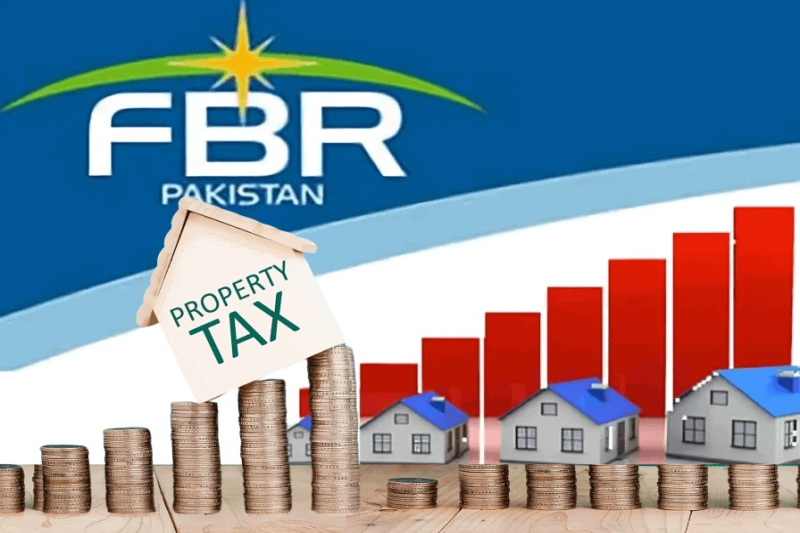
Property valuations across Islamabad Capital Territory have witnessed significant adjustments after the Federal Board of Revenue issued a new notification revising the official valuation tables for residential and commercial properties. The revised framework increases property values in several areas of the federal capital by as much as seventy five percent while excluding Defence Housing Authority zones from the new valuation structure. The revision is part of broader efforts by tax authorities to align official property values more closely with prevailing market rates. Real estate stakeholders believe the changes could influence transaction activity, taxation levels, and overall investor sentiment in Islamabad’s property market over the coming months.
Revised Valuation Tables Introduced Through New Notification
The updated property values were introduced through SRO.163(I)/2026, replacing the earlier valuation tables that had been issued under SRO.2392(I)/2025. Tax authorities stated that the new values were determined after consultations with real estate professionals operating within Islamabad Capital Territory.
Officials explained that the revised framework aims to establish fair market values for both residential and commercial properties within different sectors of the capital. Under the updated guidelines, the valuation of built structures will be calculated based on the age of the building. Superstructures that are less than five years old will carry a valuation of approximately Rs3,000 per square foot, while older structures will be assessed at around Rs1,500 per square foot.
The updated valuation tables apply across several urban areas of Islamabad, although Defence Housing Authority has been excluded from the new notification. Authorities have not publicly disclosed the reasons behind this exemption, though market observers note that DHA properties often operate under separate valuation considerations.
Property Rates Rise Across Multiple Areas of Islamabad
The revised valuation system results in price increases ranging from approximately fifteen percent to seventy five percent across different localities in the federal capital. Property analysts say the adjustment reflects the government’s attempt to narrow the gap between official valuation benchmarks and actual market transaction prices.
In previous years, the disparity between official tax valuation rates and real market prices often created challenges for both buyers and tax authorities. Lower official valuations sometimes encouraged underreporting of property transaction values, which reduced potential tax revenues.
By updating the valuation tables, policymakers aim to bring property taxation more in line with real market conditions while improving transparency in property transactions.
Stakeholder Feedback Influenced Final Decision
Earlier attempts to significantly increase Islamabad property valuations had triggered strong reactions from real estate agents and property investors. Following industry feedback, the government temporarily suspended the previous notification to reassess the valuation framework.
The revised notification reflects a moderated approach that still raises official property values but adjusts some of the proposed increases introduced under the earlier policy. Real estate professionals say the consultation process helped reduce the potential shock to the market while still allowing authorities to modernize the valuation structure.
Market participants believe the revised policy represents a compromise between revenue objectives and the concerns of property investors operating in Islamabad’s real estate sector.
Rural Property Valuation to Follow Local Administration Rates
In addition to urban property valuations, the updated notification also outlines the mechanism for assessing property values in rural areas of Islamabad Capital Territory. According to the revised framework, valuation rates for rural properties will be determined by the local district administration.
Authorities stated that if a conflict arises between the values set by the tax authority and those determined by the district administration, the higher valuation will apply. This measure is intended to ensure consistency in property tax assessments across both urban and rural regions within the federal capital.
Market Impact on Property Transactions
Real estate experts say the revised valuation tables could influence property market behavior in several ways. Higher official property values may increase transaction taxes and documentation costs for buyers and sellers, potentially affecting short term market activity.
However, aligning official valuations more closely with real market prices could also improve transparency and strengthen confidence among institutional investors interested in Islamabad’s property market.
Analysts note that clearer valuation benchmarks can help reduce speculative practices while improving the reliability of property transaction records.
Outlook for Islamabad’s Property Market
The revision of property valuation tables marks an important policy adjustment for Islamabad’s real estate market. As the new valuation framework becomes fully implemented, property investors and developers will closely monitor its impact on transaction volumes and market pricing.
While the short term effect may include adjustments in transaction patterns, the updated valuation system could ultimately contribute to greater transparency and stronger regulatory oversight within the property sector.







 Artificial Intelligence4 months ago
 Football3 months ago
 Latest News7 months ago
 Latest News7 months ago
 Football3 months ago
 Latest News7 months ago
 Latest News7 months ago
 Football3 months ago