PMEX
Escalating Iran Conflict Threatens Brazil’s Grain Exports and Fertilizer Supply Chain

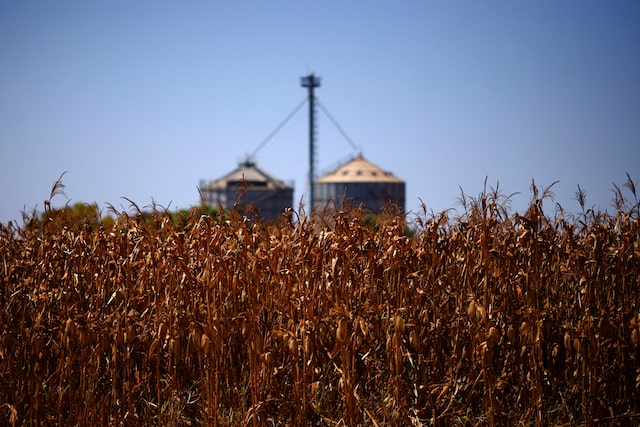
Brazil’s agricultural sector is facing growing uncertainty as the expanding conflict in the Middle East begins to disrupt global trade routes and fertilizer supplies. Analysts warn that the ongoing confrontation involving Iran could significantly impact Brazil’s grain exports and the availability of key agricultural inputs, particularly fertilizers sourced from the region. The disruption is largely tied to instability in the Strait of Hormuz, a vital shipping route through which a substantial portion of global energy and commodity trade flows. As tensions rise, concerns are mounting that shipping delays and logistical challenges could affect Brazil’s ability to deliver agricultural products to key international markets.
The Middle East has long been an important destination for Brazilian agricultural exports, including corn, soybeans, and other staple crops. Brazil is expected to surpass the United States this year as the world’s largest corn exporter, making stable trade routes critical for maintaining its export momentum. However, increasing security threats around maritime corridors have raised the risk of shipment delays and potential contract cancellations. If freight routes remain unstable, traders fear that buyers in the Middle East could seek alternative suppliers, potentially affecting Brazil’s agricultural revenues and market share in global grain trade.
Beyond export risks, Brazil also faces serious challenges related to fertilizer supplies. The country relies heavily on imported fertilizers to support its vast agricultural production, and a significant portion of those supplies originate from the Middle East. Urea, one of the most widely used nitrogen-based fertilizers, is particularly important for Brazilian farmers. Iran has historically been a major exporter of urea, and disruptions to its production or shipping capacity could tighten global fertilizer markets. Any prolonged disruption could lead to higher input costs for farmers and reduced availability of critical nutrients needed for crop growth.
Agricultural analysts say fertilizer shortages could have cascading effects across Brazil’s farming sector. Higher fertilizer prices would raise production costs for farmers, potentially reducing profit margins and influencing planting decisions for upcoming crop cycles. If supplies become scarce, some producers may be forced to cut back on fertilizer usage, which could affect crop yields and overall agricultural productivity. Given Brazil’s role as a leading global supplier of soybeans, corn, and other commodities, disruptions in its agricultural output could also ripple through international food markets.
The situation highlights the interconnected nature of global commodity supply chains, where geopolitical tensions can quickly influence agriculture and food production. Brazil’s heavy reliance on imported fertilizers makes it particularly vulnerable to international supply disruptions. Meanwhile, the country’s export-oriented farming industry depends on stable shipping routes and predictable global demand. If the Middle East conflict continues to escalate, both fertilizer supply chains and maritime logistics could face prolonged instability, complicating planning for exporters and farmers alike.
While it remains uncertain how long the conflict will last, market participants are closely monitoring developments in global energy routes and fertilizer markets. Any further escalation could intensify supply constraints and push agricultural input prices higher. For Brazil’s farming sector, maintaining access to fertilizers and ensuring uninterrupted export logistics will be crucial in safeguarding production levels and sustaining its growing role in global agricultural trade.

You may like

Brent Oil Prices Expected to Stay Above $95 per Barrel Amid Ongoing Middle East Conflict

PMEX Records PKR 56.148 Billion in Daily Trading Activity Across Multiple Commodities

Gold Prices Fall by Rs6,500 Per Tola in Pakistan as Global Rates Decline

Price Holds Steady as Market Trades Near $83 Per Ounce

Copper Price Volatility Disrupts Pakistan’s Cable Industry Supply Chains

Global Markets Pause as Investors Assess Middle East Conflict
PMEX
South India Cotton Yarn Prices Hold Steady Despite Polyester Market Volatility

Cotton yarn prices across major textile hubs in South India remained largely stable despite significant volatility in polyester and polyester-cotton (PC) yarn markets. Market participants reported that cotton yarn maintained steady price levels due to consistent downstream demand from textile manufacturers and garment exporters. Industry observers noted that the demand dynamics for cotton-based yarn differ considerably from synthetic fibre markets, allowing cotton yarn to remain relatively stable even when polyester prices fluctuate sharply. Major trading centres such as Mumbai and Tiruppur continued to witness moderate buying activity, which helped support yarn prices during the latest trading period. However, traders also pointed out that payment cycles and liquidity constraints in the textile supply chain remain ongoing challenges affecting the pace of transactions.
Market analysts indicated that the pricing trends for cotton yarn and polyester yarn are influenced by different factors within the textile industry. Polyester yarn prices often respond quickly to changes in global petrochemical markets because polyester is derived from petroleum-based raw materials. In contrast, cotton yarn prices are more closely tied to agricultural supply conditions and the availability of raw cotton. This distinction has helped stabilize cotton yarn markets even as polyester prices experienced sharp swings during the same period. Textile manufacturers that focus on natural fibre products continued to show steady procurement patterns, providing additional support to cotton yarn prices across the region.
Textile hubs in Mumbai and Tiruppur reported average downstream demand from knitting and garment manufacturing units, which helped maintain stability in cotton yarn prices. Tiruppur, one of India’s largest knitwear production centres, relies heavily on cotton yarn for its export-oriented garment sector. Manufacturers in the region continued to place regular yarn orders to support ongoing production schedules, particularly for international apparel markets. Although demand remained stable, traders noted that delayed payments from buyers and longer credit cycles are still creating financial pressure for some suppliers in the textile supply chain.
Meanwhile, cotton prices in Gujarat, one of India’s largest cotton-producing regions, recorded a slight increase during the trading session. The upward movement was partly supported by gains in ICE cotton futures in international markets. Global cotton price trends often influence domestic cotton markets in India because exporters and traders closely monitor international benchmarks. Even modest changes in global futures markets can affect local procurement activity and pricing trends for raw cotton within India’s textile industry.
Industry experts noted that the relationship between cotton and polyester markets is complex because both fibres serve different segments of the textile and apparel industry. Polyester yarn is widely used in blended fabrics and cost-sensitive apparel segments, while cotton yarn remains preferred for natural fibre garments and premium textile products. When polyester prices fluctuate significantly, some manufacturers may adjust their fibre usage strategies, but large-scale shifts between fibres typically occur gradually rather than immediately.
Looking ahead, market participants expect cotton yarn prices in South India to remain relatively stable in the near term if downstream demand continues at current levels. Textile manufacturers are closely monitoring global cotton futures, domestic cotton availability, and export demand from international garment markets. While volatility in polyester markets may continue due to fluctuations in crude oil prices, cotton yarn prices are likely to be influenced more by seasonal cotton supply conditions and demand from the apparel sector.
PMEX
Brent Oil Prices Expected to Stay Above $95 per Barrel Amid Ongoing Middle East Conflict

Global oil markets are expected to remain under pressure in the coming months as Brent crude prices are projected to stay above $95 per barrel due to the ongoing conflict in the Middle East. Energy market analysts indicate that geopolitical tensions in the region are continuing to influence global supply conditions and market sentiment. The latest outlook suggests that oil prices will remain elevated during the short term as traders assess the potential impact of disrupted production and transportation routes. The Middle East plays a crucial role in global energy markets, and any instability affecting production or export routes often triggers immediate reactions in oil prices. Market participants are closely monitoring developments in the region as uncertainty surrounding supply chains continues to affect global energy markets.
According to the latest short-term energy outlook from the United States Energy Information Administration, Brent crude is expected to remain above the $95 per barrel level for the next two months. The agency noted that heightened geopolitical risks linked to the conflict are likely to sustain price volatility in global oil markets. Energy analysts believe that disruptions to production and transportation infrastructure could tighten supply conditions in the near term. The outlook reflects growing concerns among market observers that continued instability could affect oil shipments from key exporting countries. As a result, traders and investors are pricing in the possibility of supply constraints, which is contributing to higher oil price expectations across international energy markets.
One of the main factors influencing the price outlook is the disruption of oil flows through the Strait of Hormuz, a strategic maritime corridor that handles a significant share of global crude exports. The strait connects major oil-producing countries in the Middle East to international markets and is responsible for transporting roughly one-fifth of the world’s oil supply. Any interruption to shipping activity through this route can have immediate consequences for global energy availability. Analysts note that the effective closure or restricted movement through the waterway could significantly reduce the volume of oil reaching global markets, leading to tighter supply conditions and upward pressure on prices.
Energy market observers believe that the supply disruptions linked to the regional conflict may result in temporary production reductions from some Middle Eastern oil producers. These production cutbacks could further limit available supply during the coming weeks, contributing to the elevated price outlook. However, analysts expect that the situation could gradually stabilize if transportation routes reopen and energy infrastructure operations return to normal levels. Once shipping activity resumes and oil flows stabilize, supply conditions are expected to improve, easing the pressure on international oil markets.
The longer-term outlook suggests that oil prices could moderate later in the year as supply conditions gradually normalize. The energy outlook indicates that Brent crude prices may fall below $80 per barrel during the third quarter of 2026 before declining further toward approximately $70 per barrel by the end of the year. This projection reflects expectations that production levels could recover once geopolitical tensions ease and energy shipments resume through key export routes. Nevertheless, energy markets remain highly sensitive to geopolitical developments, and future price movements will largely depend on how the regional situation evolves in the months ahead.
PMEX
PMEX Records PKR 56.148 Billion in Daily Trading Activity Across Multiple Commodities

Pakistan Mercantile Exchange (PMEX) reported significant trading activity in its daily market session, with the total traded value of metals, energy, indices, COTS, and agricultural commodities reaching PKR 56.148 billion. The session saw a total of 110,574 lots traded across various asset classes, reflecting continued investor interest in commodity and financial derivative markets. Market participants remained active across several key contracts, particularly in energy and global equity indices, as traders responded to movements in international commodity prices and financial market trends. PMEX continues to serve as a central platform for commodity trading in Pakistan, providing investors and institutional participants with opportunities to trade in a wide range of global commodities and financial instruments within a regulated exchange framework.
Among the traded commodities, crude oil recorded the highest trading activity during the session, reaching a value of PKR 32.913 billion. The energy commodity has consistently attracted strong participation due to its sensitivity to global supply and demand dynamics and its influence on broader financial markets. Following crude oil, Contracts of the Future Securities (COTS) registered a traded value of PKR 7.827 billion. Technology-focused index NSDQ100 also saw notable activity with a traded value of PKR 5.220 billion, highlighting investor interest in international technology stocks and global market indices. These segments collectively accounted for a large share of the total trading volume recorded during the day.
Precious metals and other energy commodities also contributed to the overall trading activity on the exchange. Gold trading amounted to PKR 3.651 billion during the session, reflecting its continued role as a widely traded asset among investors seeking portfolio diversification and exposure to global bullion markets. Brent crude contracts recorded a traded value of PKR 2.854 billion, while Japan Equity 225 futures reached PKR 1.760 billion in trading value. The performance of these contracts demonstrated the diverse range of instruments available on the PMEX platform, allowing investors to gain exposure to international commodity and equity markets through locally accessible derivatives.
Additional trading activity was observed in several other commodity and financial contracts listed on the exchange. The SP500 index contract recorded PKR 738.753 million in traded value, while platinum contracts reached PKR 536.476 million during the session. Natural gas futures generated trading activity worth PKR 315.955 million, reflecting continued interest in global energy markets. The Dow Jones index contract accounted for PKR 132.647 million in trades, while aluminium and copper contracts registered PKR 75.967 million and PKR 24.437 million respectively. These transactions highlight the broad spectrum of investment options available to market participants through PMEX.
Agricultural commodities also saw trading activity during the session, although at a comparatively smaller scale than energy and metal contracts. A total of 20 lots of agricultural commodities were traded during the day, generating a combined value of PKR 98.657 million. While agricultural contracts typically represent a smaller share of total exchange activity, they remain an important segment for investors seeking exposure to global food and agricultural markets. PMEX continues to expand its commodity offerings to support diverse trading interests while contributing to the development of Pakistan’s financial and commodity trading ecosystem.

USDC Circulation Expands as Stablecoin Liquidity Reenters Global Crypto Markets

Emerging Markets Turn to USDT for Cross Border Transactions as Dollar Liquidity Tightens

Crypto Liquidity and Capital Flows: Could Rising USDT Activity Influence Pakistan’s Equity Markets
Trending
PSX1 month agoCrypto Liquidity and Capital Flows: Could Rising USDT Activity Influence Pakistan’s Equity Markets
PSX1 month agoPSX Bloodbath as KSE100 Plunges Over 13,000 Points After Trading Resumes
PSX1 month agoPSX Plunges Over 11,000 Points as Middle East Tensions Shake Markets
PSX1 month agoKSE 100 Drops Over 1,300 Points After Early Session Recovery
Crypto1 month agoEthereum Tests ‘DVT-Lite’ System to Simplify Validator Setup for Institutional Staking
PSX1 month agoPSX Trading Halted After KSE30 Triggers Market Circuit Breaker
Global Affairs1 month agoGlobal Power Shifts Reshape Diplomacy as Emerging Alliances Redefine International Order
Local Affairs1 month agoPakistan’s Provincial Governments Accelerate Urban Development Plans