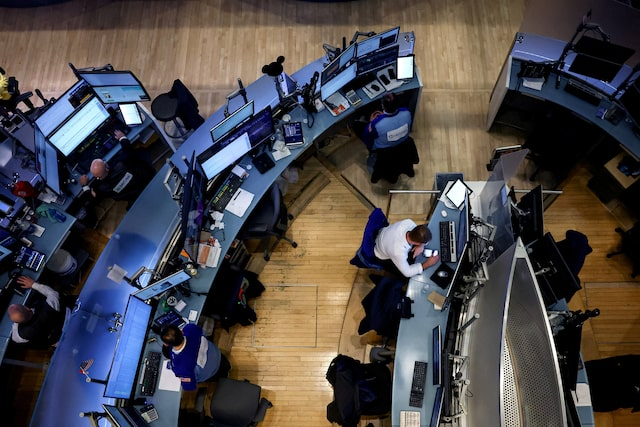
Executives from major US stock exchanges are calling for clearer regulatory frameworks as prediction markets rapidly expand and attract increasing participation from retail and institutional investors. The emerging sector allows users to trade contracts based on the outcomes of real-world events such as elections, economic indicators, policy decisions and sporting events. While the concept has existed for years in limited forms, technological platforms and growing investor interest have recently accelerated the sector’s development, prompting industry leaders to urge regulators to establish consistent rules that can protect investors and maintain market integrity.
Prediction markets operate by allowing participants to buy and sell contracts linked to the probability of future events. The price of each contract reflects the market’s collective expectations about whether a particular outcome will occur. Supporters argue that these markets can serve as powerful forecasting tools because they aggregate the views of thousands of participants into real-time probability signals. In some cases, prediction market outcomes have been used by analysts, businesses and policymakers as indicators of public sentiment and expectations about economic or political developments.
However, as participation grows, concerns about regulation and oversight are becoming more prominent. Exchange executives say clearer rules are necessary to ensure that prediction markets operate transparently and maintain investor confidence. Without a consistent regulatory framework, industry leaders worry that the rapid expansion of these platforms could expose investors to manipulation risks, unfair practices or unclear legal standards. Regulators are therefore facing increasing pressure to determine how prediction markets should be categorized within existing financial and betting regulations.
Another factor driving interest in prediction markets is the rising participation of retail investors. Digital trading platforms have made it easier for individuals to access markets that were once limited to specialized financial institutions or research groups. This accessibility has led to a surge in trading activity as individuals seek to speculate on events ranging from economic data releases to political developments. Market observers say the influx of retail participants has helped boost liquidity but also increases the importance of robust regulatory protections.
Wall Street firms and financial technology companies are also exploring the potential of prediction markets as part of the broader evolution of digital financial services. Some analysts believe that these platforms could become valuable tools for forecasting economic trends, political outcomes and even corporate performance indicators. The integration of prediction markets with modern trading technology could potentially transform how investors assess probabilities and manage risk across multiple asset classes.
Despite these opportunities, critics argue that prediction markets share similarities with gambling because they allow participants to wager on uncertain future events. Concerns have also been raised about the possibility that individuals with insider information could influence market outcomes or profit unfairly from confidential knowledge. These risks have intensified calls for regulatory clarity to ensure that the growing sector operates under appropriate financial oversight.
Industry leaders believe that establishing transparent and consistent rules could help prediction markets develop responsibly while maintaining investor confidence. Regulators may need to determine how these markets fit within existing frameworks governing derivatives trading, commodities markets and financial speculation. Clear guidelines could also help distinguish legitimate forecasting markets from platforms that operate primarily as speculative betting environments.
As interest in prediction markets continues to grow, policymakers and financial regulators are expected to play a key role in shaping how the sector evolves. The challenge for regulators will be balancing innovation with investor protection while ensuring that emerging financial platforms operate within stable and transparent market structures. With retail participation increasing and institutional investors exploring new opportunities, prediction markets may become an increasingly visible part of the global financial landscape.









 Artificial Intelligence4 months ago

 Football3 months ago

 Latest News7 months ago

 Latest News7 months ago

 Football3 months ago

 Latest News7 months ago

 Latest News7 months ago

 Latest News7 months ago