Connect with us

Key Economic Indicators

China Leads With 113 Investors in New Companies
September 2026, bringing the total number of registered companies in the country to 317,002. Of the new registrations, 99.9% were completed online through SECP’s eZfile portal and integrated federal and provincial systems. Punjab led with 2,740 new company registrations, accounting for 52.3% of the total. Islamabad Capital Territory followed with 1,009 registrations (19.2%), Sindh with 790 (15.1%), Khyber Pakhtunkhwa with 428 (8.2%), Gilgit-Baltistan with 169 (3.2%) and Balochistan with 105 (2.0%). The information technology sector recorded the highest number of new incorporations at 920, followed by trading with 808 and services with 599. Other sectors included construction with 339 companies, food and beverages with 239, tourism with 222, real estate development with 193, education with 189, e-commerce with 179, and mining and quarrying with 127. Companies in other sectors accounted for the remaining 1,426 incorporations. Newly incorporated companies also attracted participation from 167 foreign investors during September. China accounted for the largest number, with 113 investors, followed by the United States with seven, the United Kingdom with six, Hong Kong with five, and Singapore and Saudi Arabia with three each. Australia, the United Arab Emirates, Türkiye, Germany, Canada, Spain, Thailand and Afghanistan each accounted for two investors. Investors from other countries totalled 14. The foreign investors included 10 foreign corporate entities and 157 individuals. Gender-disaggregated data showed that women represented 14% of shareholders and directors, 11% of ultimate beneficial owners (UBOs) and 8% of chief executives. Men accounted for the remaining 86%, 89% and 92%, respectively.

Share on:
Continue Reading
Click to comment

Leave a Reply

Your email address will not be published. Required fields are marked *

Key Economic Indicators

Pakistan Highlights Stronger Economic Indicators
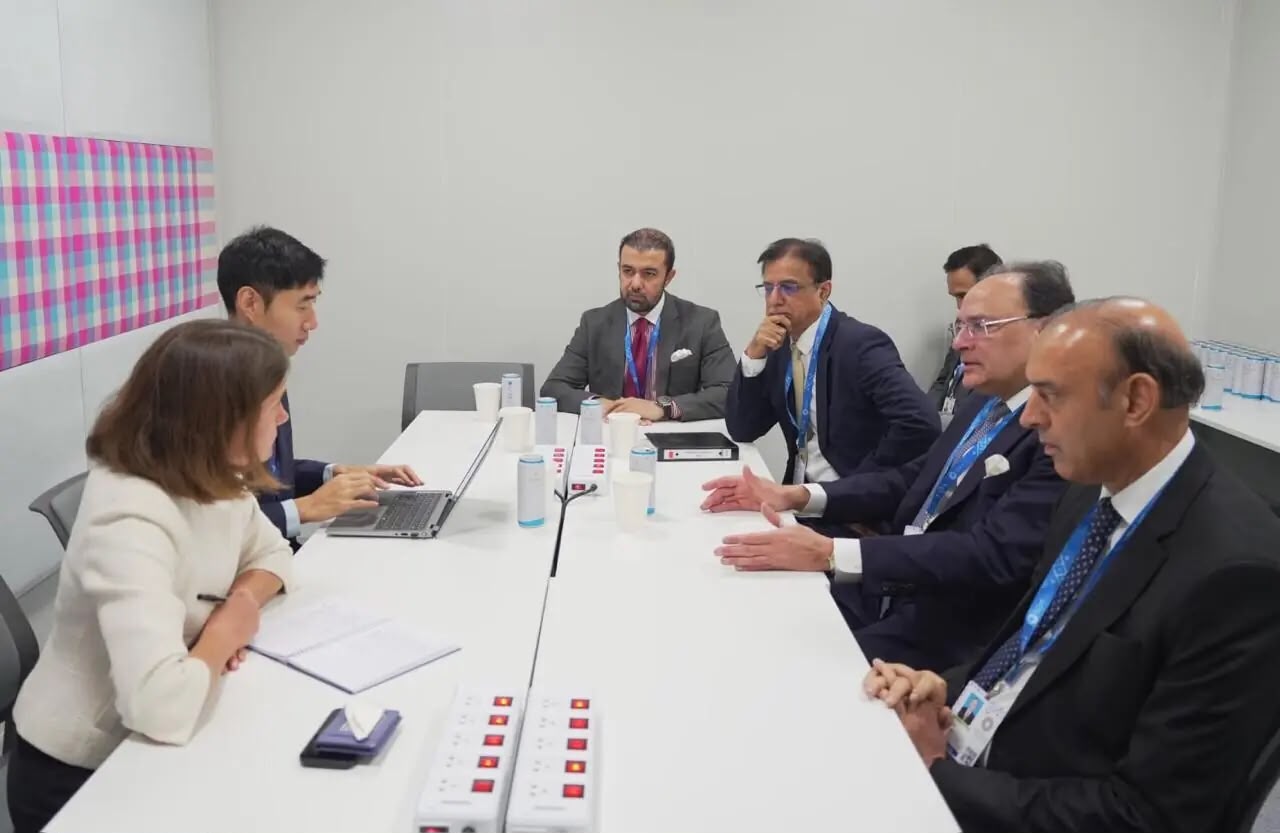
Finance Minister Muhammad Aurangzeb met Moody’s in Bangkok to discuss Pakistan’s economic outlook and prospects for a sovereign credit rating upgrade. He highlighted improved fiscal and external indicators, rising foreign exchange reserves, a contained current account deficit and lower State Bank forward liabilities. Aurangzeb also outlined plans to replace costly short-term debt with longer-maturity financing without increasing the external debt stock. He reaffirmed Pakistan’s commitment to structural reforms and export-led growth, and sought Moody’s views on achieving a stronger rating. Pakistan is rated ‘B’ by S&P Global Ratings and ‘B3’ by Moody’s, both with stable outlooks.

Share on:
Continue Reading

Key Economic Indicators

Pakistan Current Account May Slip into Deficit

Pakistan’s inflation rate is projected to rise to 9.9% in 2027, while economic growth is expected to slow to 3.5%, according to the IMF’s latest World Economic Outlook. Inflation is forecast at 7.1% in 2026, up from 4.5% in 2025. GDP growth is projected to improve to 3.6% in 2026 from 3.2% in 2025, before easing next year. The current account is expected to remain around balance in 2026 and move to a deficit equal to 1% of GDP in 2027, after recording a 0.5% surplus in 2025. Unemployment is forecast to fall from 7.1% in 2025 to 6.9% in 2026 and 6.5% in 2027.

Share on:
Continue Reading

Key Economic Indicators

Pakistan Plans to Refinance Short-Term Debt

Finance Minister Muhammad Aurangzeb says Pakistan plans to refinance some short-term external debt into longer maturities over the next two to three years to reduce rollover risks. Speaking to foreign media, he said the country aims to keep its total external debt—estimated at close to $100 billion—broadly unchanged while diversifying financing and extending repayment periods. Aurangzeb added that Pakistan is “not in a rush” to issue bonds this fiscal year.

Share on:
Continue Reading

Trending