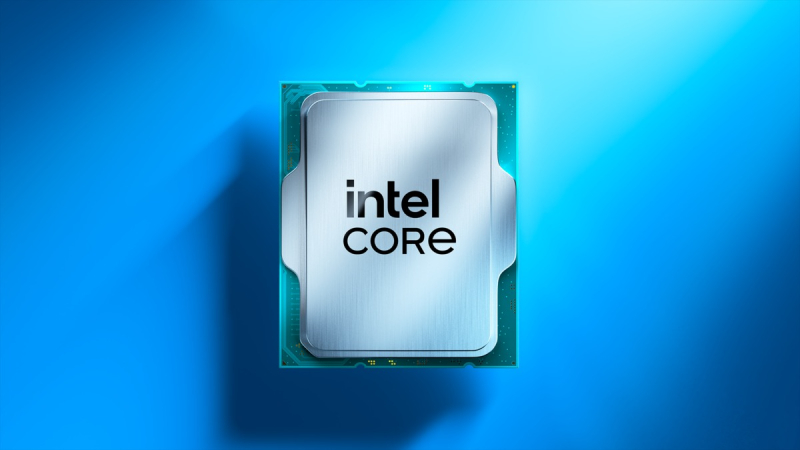
Intel has unveiled its new Core Series 2 processors along with an expanded portfolio of Edge AI solutions aimed at supporting real time computing and artificial intelligence workloads across industries. The announcement was made during Embedded World 2026 in Nuremberg, Germany, where the company showcased new technologies designed to improve performance, reliability, and AI acceleration in edge computing environments.
The new processor platform is designed for mission critical applications that require deterministic performance, fast data processing, and reliable system control. Intel also introduced an Edge AI suite focused on health and life sciences, highlighting the growing importance of artificial intelligence in patient monitoring and medical data analysis. The company says the new technologies will help enterprises deploy AI powered systems closer to where data is generated, enabling faster insights and more efficient operations.
Intel Targets Growing Demand for Edge Computing
Edge computing has emerged as one of the fastest growing segments in the technology industry as organizations increasingly process data locally rather than relying entirely on centralized cloud infrastructure. By bringing computing power closer to devices and sensors, companies can reduce latency, improve responsiveness, and maintain better control over sensitive data.
Intel’s Core Series 2 processors are designed specifically for these environments. The new chips include performance cores that enable systems to run multiple workloads simultaneously while maintaining precise timing and deterministic behavior. This capability is particularly important for industrial operations where control systems must respond instantly to changes in equipment conditions or manufacturing processes.
According to Intel executives, edge computing continues to represent a major opportunity for the company as industries adopt digital automation and AI driven analytics. The new processor lineup builds on Intel’s broader strategy of delivering integrated platforms that combine high performance computing with artificial intelligence acceleration.
Performance Improvements Over Competing Processors
Intel says the Core Series 2 processors deliver significant improvements compared with competing chips in the same category. The company reported that the processors offer up to 4.4 times lower PCIe latency and as much as 3.8 times better deterministic performance than competing platforms such as AMD’s Ryzen 7 9700X.
The processors also deliver up to 2.5 times faster deterministic response times and approximately 1.5 times higher multi thread performance in certain workloads. These improvements are intended to help manufacturers and system developers deploy applications that require predictable performance in environments where even small delays can disrupt operations.
Traditional industrial systems often rely on complex architectures that combine multiple processors to manage real time control tasks and high performance computing workloads separately. Intel’s new processor architecture aims to reduce this complexity by enabling a single platform to handle multiple workloads efficiently.
By simplifying system design, companies can lower development costs and accelerate deployment of new industrial automation solutions.
Edge AI Suite Targets Healthcare Innovation
In addition to the new processors, Intel also introduced its Edge AI suite for health and life sciences. The platform provides reference pipelines, benchmarking tools, and validated workflows that allow developers to build and test artificial intelligence applications designed for medical monitoring environments.
Healthcare providers around the world are facing increasing patient volumes while dealing with limited clinical staff. Artificial intelligence technologies are being explored as a way to monitor patients more effectively and detect early warning signs of health problems.
Intel’s Edge AI suite demonstrates several AI powered medical monitoring scenarios running locally on Intel processors. These include electrocardiogram analysis for detecting heart rhythm abnormalities, remote photoplethysmography for monitoring blood flow signals, and 3D visual tracking systems designed to observe patient activity without revealing personal identity.
By enabling these workloads to run directly on edge devices, healthcare providers can analyze patient data in real time without relying entirely on remote cloud systems. This approach can reduce latency and improve the reliability of monitoring systems used in hospitals and clinical environments.
Expanding Intel’s AI Ecosystem
The launch of the Core Series 2 processors follows Intel’s earlier release of the Core Ultra Series 3 processors, which also feature integrated AI acceleration capabilities. Together, these products form part of Intel’s broader strategy to build a comprehensive edge computing ecosystem capable of supporting a wide range of industries.
The company’s edge platform is designed to support applications across manufacturing, healthcare, smart infrastructure, robotics, and emerging AI driven services. By combining high performance processors with optimized AI software tools, Intel aims to make it easier for developers to build intelligent applications that operate outside traditional cloud environments.
Industry analysts say edge computing is expected to grow rapidly over the next decade as billions of connected devices generate massive volumes of data. Processing this information locally can improve efficiency while reducing the bandwidth required to transmit data to centralized data centers.
Availability and Industry Adoption
Intel confirmed that edge systems powered by the Core Series 2 processors and the Core Ultra Series 3 processors are already available to hardware manufacturers and technology partners. This availability allows system integrators to begin building new industrial devices and enterprise platforms based on the new architecture.
The preview version of the Edge AI suite for health and life sciences has also been released to developers through GitHub, with full availability expected in the second quarter of 2026. By providing early access to development tools, Intel hopes to accelerate innovation in AI powered healthcare solutions.
Outlook
Intel’s latest processor launch highlights the growing convergence between high performance computing and artificial intelligence at the edge. As industries increasingly adopt connected devices and automated systems, demand for reliable edge processing platforms is expected to continue expanding. With new processors and specialized AI software tools, Intel is positioning itself to capture a larger share of the emerging edge computing and AI infrastructure market.








 Artificial Intelligence4 months ago
 Football3 months ago
 Latest News7 months ago
 Latest News7 months ago
 Football3 months ago
 Latest News7 months ago
 Latest News7 months ago
 Latest News7 months ago