
REITs
Pakistan Records 29 Registered REIT Schemes

Pakistan’s Real Estate Investment Trust sector could attract private investment and strengthen capital markets through improved transparency, governance and tax reforms, experts said at an SECP Talk Series session. Commissioner Imtiaz Haider highlighted infrastructure financing opportunities, while Zahid Latif Khan discussed the $2.04 trillion global REIT market. Muhammad Ejaz presented successful Pakistani REIT models, including Dolmen City REIT. Pakistan had 29 registered REIT schemes by March 2026, with an aggregate fund size of Rs173.1 billion in December 2025. Speakers emphasized independent valuations, investor protection, simpler taxation and stronger regulatory oversight.












REITs
ABAD Members Explore REIT Registration
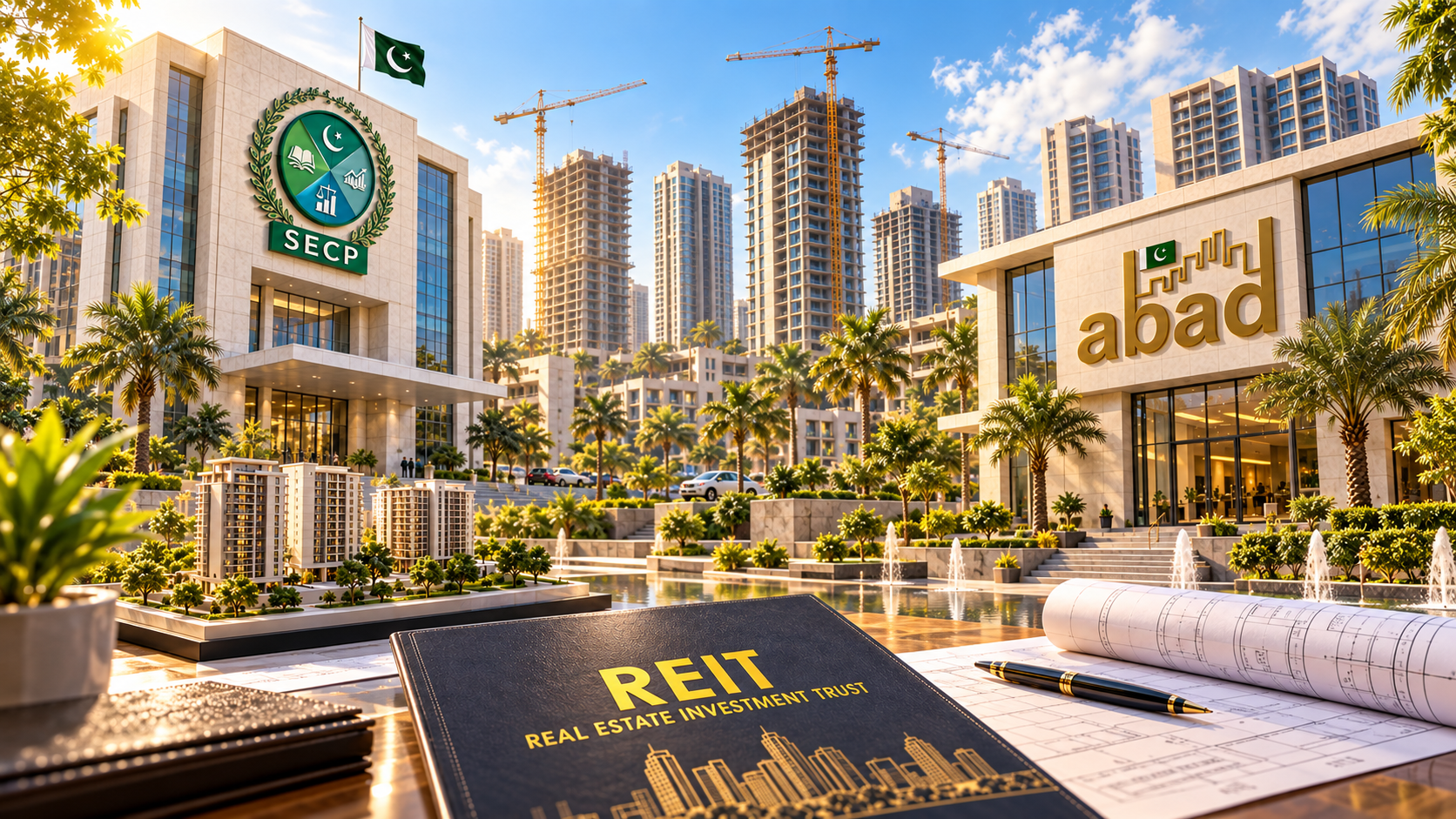
Members of the Association of Builders and Developers of Pakistan (ABAD) are considering registering their businesses as companies and setting up Real Estate Investment Trusts (REITs). The move follows an awareness session with the Securities and Exchange Commission of Pakistan (SECP), where Commissioner Muzaffar Ahmed Mirza outlined reforms aimed at simplifying company registration and clarifying regulations. ABAD Chairman Mohammed Hassan Bakshi welcomed the outreach and said members were exploring both options. No registrations were announced at the session.
Latest News
Pakistan’s Real Estate Sector a Rs100 Trillion Asset Class, SECP Told at Capital Market Conference
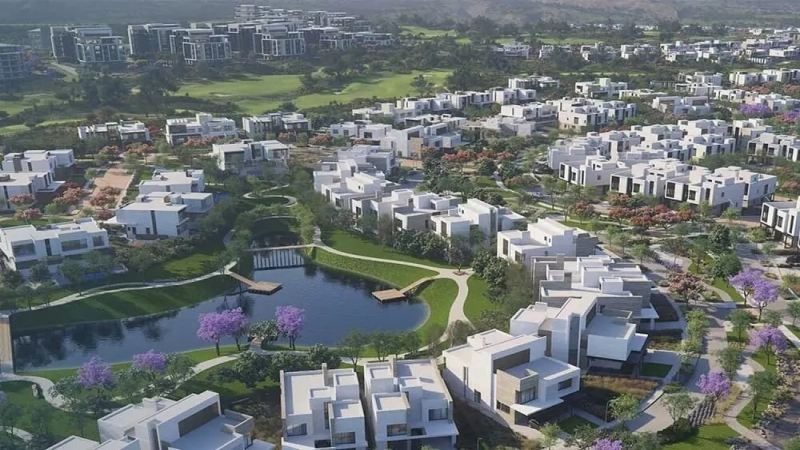
Pakistan’s real estate sector has been described as the country’s “mother industry” with an estimated asset value of around Rs100 trillion, highlighting its enormous economic potential and deep connections with multiple sectors of the economy. The observation was shared during discussions on Pakistan’s Real Estate Investment Trust ecosystem at the First International Capital Market Conference, where industry experts emphasized the importance of integrating real estate with the formal financial system. Officials noted that despite the sector’s vast size and economic importance, structural challenges such as informality, limited investor access, and regulatory fragmentation have prevented the industry from reaching its full potential.
REIT Framework Seen as Key to Formalizing Property Sector
During the conference, the chief executive of Arif Habib Dolmen REIT outlined how Real Estate Investment Trust structures can play a central role in transforming Pakistan’s property market. He described real estate as a massive asset class that remains underutilized due to the absence of structured investment channels capable of attracting institutional capital.
According to the presentation, REITs provide a regulated investment platform that allows investors to participate in professionally managed property projects through transparent financial structures. By pooling capital from investors and deploying it into real estate developments, REITs can improve governance standards while expanding investment opportunities in the property sector.
Industry experts believe that adopting structured investment models could help reduce informality in the real estate market while encouraging greater transparency in property transactions and development activities.
Institutional Structure Supports Investor Protection
The REIT system in Pakistan operates through a multi-layered institutional framework designed to safeguard investor interests and ensure regulatory oversight. Within this structure, trustees are responsible for protecting the assets of the REIT, while REIT Management Companies oversee investment operations and project development.
Other key participants in the ecosystem include property managers responsible for asset maintenance, development advisors guiding project execution, independent valuers providing property assessments, auditors monitoring financial compliance, and Shariah advisors ensuring adherence to Islamic finance principles where applicable.
Investors typically participate in REITs through units traded on the Pakistan Stock Exchange, allowing individuals and institutions to gain exposure to real estate assets without directly purchasing property. This capital market integration helps expand access to property investments for a wider range of investors.
Pakistan’s REIT Sector Shows Gradual Growth
According to industry statistics presented at the conference, Pakistan’s REIT sector currently includes 34 licensed REIT Management Companies and 25 registered REIT schemes with combined assets valued at approximately Rs208.7 billion. These figures indicate steady progress in the development of the country’s regulated property investment market.
Among the most prominent projects in the sector is Dolmen City REIT, recognized as the region’s first listed real estate investment trust. Other recent developments include hybrid and development oriented REIT structures such as Globe Residency REIT, TPL REIT Fund I, and Image REIT, which demonstrate the expanding range of investment models being introduced within the industry.
Market participants say that the gradual expansion of the REIT ecosystem could provide an alternative financing channel for large real estate projects while enabling investors to participate in property assets through regulated financial instruments.
Challenges Continue to Limit Sector Expansion
Despite the progress achieved in recent years, several structural challenges continue to limit the rapid expansion of Pakistan’s REIT market. Industry experts highlighted concerns related to taxation policies, which are often viewed as unfavorable for real estate investment trusts and could discourage potential investors.
Other challenges include the continued dominance of informal property transactions, fragmented regulatory oversight across different institutions, limited availability of formal financing options for developers, and relatively low awareness among investors regarding REIT investment opportunities.
Addressing these issues will be essential if policymakers aim to expand the role of REITs within Pakistan’s broader financial and property sectors.
Opportunities Emerging for Institutional Capital
Despite existing obstacles, industry leaders believe the REIT sector holds significant potential for future growth. Policymakers are increasingly focused on strengthening capital markets and improving regulatory frameworks that can attract institutional investors into real estate investment vehicles.
The growing demand for urban infrastructure and commercial developments across major cities could create opportunities for REIT structures to finance large scale property projects. Additionally, the development of Shariah compliant REIT models may attract participation from investors seeking Islamic investment options.
With a growing pipeline of property projects and increasing interest from financial institutions, the REIT sector could eventually become an important pillar of Pakistan’s investment landscape.
Outlook for Pakistan’s REIT Industry
Experts believe that integrating the real estate sector more closely with capital markets could unlock significant economic value within Pakistan’s property ecosystem. If regulatory challenges are addressed and investor participation continues to expand, REIT structures may play a larger role in financing urban development and improving transparency across the country’s real estate market.
Latest News
SECP Registers Three New REIT Schemes to Strengthen Pakistan’s Property Investment Market

Pakistan’s real estate investment trust sector continues to expand as the Securities and Exchange Commission of Pakistan has approved the registration of three new REIT schemes during January 2026. The approval reflects growing institutional interest in regulated property investment structures and highlights the gradual development of Pakistan’s REIT ecosystem. Regulators believe that expanding the number of investment trusts can improve transparency in the property sector while allowing investors to access professionally managed real estate portfolios. With the addition of the newly registered schemes, the total number of REIT structures approved in Pakistan has reached twenty eight, indicating steady progress in building a more formalized real estate investment market.
New REIT Schemes Include Rental and Investment Structures
According to regulatory disclosures, the newly approved REITs consist of two rental based trusts and one investment focused scheme. Rental REITs are designed to generate income through property leasing and recurring rental streams, while investment based REITs primarily target capital gains through the acquisition and development of real estate assets.
Rental REITs typically invest in commercial buildings, residential complexes, and other income generating properties that can provide stable cash flow over time. Investors participating in these trusts receive dividends derived from rental income generated by the underlying real estate assets.
Investment based REITs operate differently by focusing on acquiring property assets with the objective of generating profits through development activities or future appreciation in property value. These investment vehicles are often used to finance new real estate projects or to unlock value from existing land holdings through structured property development.
By approving both types of REIT structures, regulators aim to create a diversified investment ecosystem capable of supporting multiple real estate strategies.
Regulatory Framework Encourages Institutional Participation
The registration of the new REIT schemes has been carried out under the updated Real Estate Investment Trust Regulations introduced in 2022. These regulations were designed to improve governance standards and strengthen investor protection within Pakistan’s emerging property investment trust market.
Under the current framework, REIT schemes are allowed to raise capital from accredited investors such as financial institutions, corporate entities, insurance companies, and high net worth individuals. This institutional investor base is expected to play a key role in supporting the growth of the REIT sector by providing long term capital for property investments.
The revised regulations also aim to address some of the earlier structural challenges faced by Pakistan’s REIT market, including delays in project execution and limited market participation. By creating clearer regulatory guidelines and stronger oversight mechanisms, policymakers hope to encourage greater confidence among both investors and developers.
Industry analysts note that stronger regulatory frameworks are essential for attracting institutional investors who require transparent governance and predictable investment structures before allocating capital to real estate funds.
Mandatory Listing Requirement to Improve Market Visibility
A key feature of the revised REIT regulations is the requirement that both rental and investment based trusts must be listed on the stock exchange within a specified time frame. According to the regulatory guidelines, newly registered REIT schemes must complete their listing within one year of transferring real estate assets into the trust structure.
This mandatory listing requirement has been introduced to improve transparency and market visibility for property investment trusts. Listing on the stock exchange allows investors to trade REIT units in a regulated marketplace while also providing greater price discovery and liquidity.
Financial experts believe that publicly traded REIT structures can play an important role in connecting Pakistan’s property sector with the capital markets. By allowing investors to purchase units representing ownership in real estate portfolios, REITs create an alternative investment channel for individuals who may not have the capital required to purchase property directly.
Improved market visibility may also help attract international investors interested in gaining exposure to Pakistan’s property market through regulated investment vehicles.
Expanding REIT Market Reflects Growing Investor Interest
Regulators say the approval of additional REIT schemes reflects rising interest from both investors and issuers in structured property investment models. As the real estate sector evolves, developers and financial institutions are increasingly exploring REIT frameworks as a way to finance projects and manage property assets more efficiently.
Real estate investment trusts are widely used in international markets as a method of pooling capital from multiple investors to fund large scale property developments. In countries with mature REIT ecosystems, these trusts play a major role in financing commercial buildings, residential complexes, shopping malls, and infrastructure projects.
Pakistan’s REIT sector remains relatively small compared with global markets, but policymakers believe that continued regulatory improvements and increased investor participation could gradually expand the industry.
By promoting structured property investment vehicles, regulators aim to bring greater transparency and professionalism to the country’s real estate sector.
Outlook for Pakistan’s REIT Industry
The registration of three additional REIT schemes suggests that Pakistan’s property investment trust sector is gradually gaining traction. As more financial institutions and property developers explore the REIT model, the market could see increased capital flows into professionally managed real estate portfolios.
If supported by consistent regulatory oversight and successful project execution, the REIT sector may eventually become an important component of Pakistan’s broader financial and real estate markets.
Trending

 Artificial Intelligence4 months ago
South Korea Unveils $880 Billion AI and c Investment Plan

 Local Affairs2 months ago
Is PEMRA’s Role Broader Than Content Bans?

 Football4 months ago
Better Future Pakistan | Match -1 | Norway

 Latest News8 months ago
Crypto Liquidity and Capital Flows: Could Rising USDT Activity Influence Pakistan’s Equity Markets

 Football3 months ago
Better Future Pakistan | LIVE Match | Norway

 Latest News8 months ago
Etihad Town Phase I Introduces Overseas Block with Residential and Commercial Plot Opportunities in Lahore

 Latest News8 months ago
Punjab Introduces Mandatory Underground Infrastructure Rules for New Housing Societies in Lahore

 Latest News8 months ago
From Catalog Clicks to Conversational AI: How Moeed Sheikh Is Building Revenue Driven Digital Experiences