Connect with us

SBP & Monetary Policy

SBP Launches New Cisco Banking Network
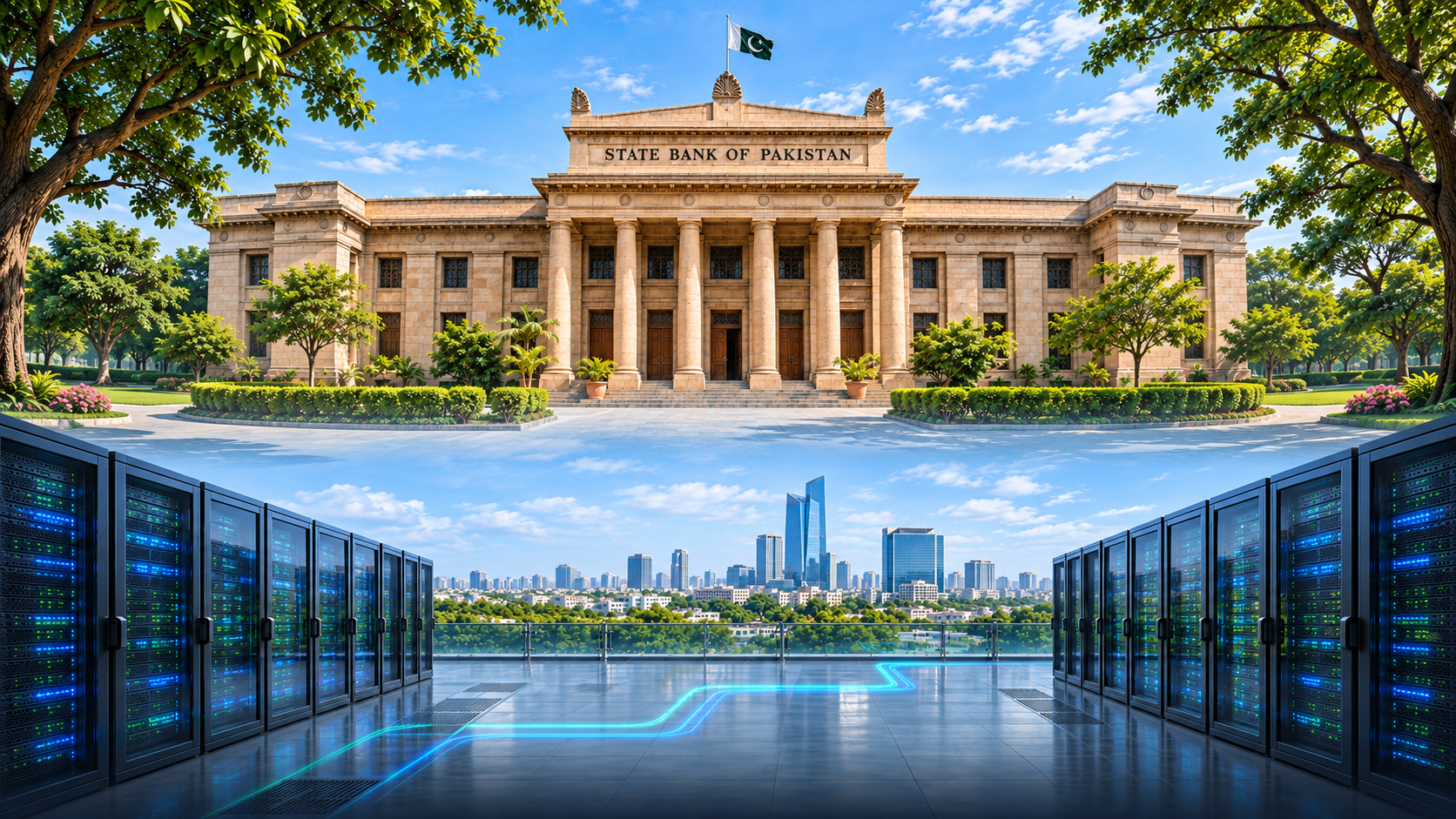
The State Bank of Pakistan has deployed a new core banking network and Software-Defined Data Centre, developed with US technology company Cisco. US Chargé d’Affaires Natalie Baker joined SBP Governor Jameel Ahmad and Cisco Pakistan’s senior leadership at the SBP Head Office in Karachi to mark the milestone. The multimillion-dollar project is designed to strengthen the security, agility and resilience of Pakistan’s financial infrastructure and support reliable digital banking services nationwide. The event also highlighted US-Pakistan cooperation in digital infrastructure, trade and investment.

Share on:
Continue Reading
Click to comment

Leave a Reply

Your email address will not be published. Required fields are marked *

SBP & Monetary Policy

Foreign Investors Back SBP Rate Hike

The State Bank of Pakistan’s decision to raise the policy rate by 50 basis points to 12% has sparked contrasting reactions from foreign investors and Pakistan’s business community. While overseas investors supported the move to control inflation and maintain macroeconomic stability, local industry leaders warned of rising borrowing costs, weaker investment, and declining export competitiveness. M. Abdul Aleem, Secretary General of the Overseas Investors Chamber of Commerce and Industry, welcomed the decision, citing the need to contain inflationary pressures and protect economic stability amid global energy price risks. However, Federation of Pakistan Chambers of Commerce and Industry President Atif Ikram Sheikh strongly opposed the hike, calling the 12% rate regionally uncompetitive. He warned that manufacturers already face high operational costs, soaring electricity tariffs, and liquidity shortages. Sheikh urged the government and SBP to reduce interest rates to single digits to make financing affordable for trade, small and medium enterprises, and large-scale manufacturing. Karachi Chamber of Commerce and Industry President Talat Mahmood cautioned that higher interest rates would increase the cost of doing business, discourage private-sector investment, and undermine economic growth. SITE Association of Industry President Abdul Hadi expressed concern that the decision would worsen industrial difficulties, particularly as many factories are operating significantly below capacity and struggling to remain operational. Korangi Association of Trade and Industry President Sheikh Umer Rehan warned that monetary tightening could negatively affect businesses, industrial growth, and economic recovery. Pakistan Textile Exporters Association Chairman Rehan Naseem Bharara highlighted the potential impact on exporters, saying higher working-capital costs could restrict investment and weaken Pakistan’s competitiveness in international markets. The divided response reflects the challenge of balancing inflation control and macroeconomic stability with affordable business financing, industrial expansion, employment, and export-led growth.

Share on:
Continue Reading

Major Projects

Rate Hike Adds Pressure on Construction
ABAD Chairman Muhammad Hanif Gohar has expressed concern over the State Bank’s recent interest rate increase, urging a rate cut to support affordable housing and construction growth. He said higher rates could intensify pressure on construction and related industries, while rising prices of cement, steel bars and other building materials may increase costs and affect investment. Gohar called on the government and State Bank to adopt economic policies that control inflation.

Share on:
Continue Reading

SBP & Monetary Policy

SBP Raises Interest Rate to 12%
State Bank of Pakistan is set to announce its latest monetary policy decision on October 26, 2026, amid rising inflation, global oil price volatility, and economic uncertainty. The benchmark interest rate currently stands at 11.5%, following the previous Monetary Policy Committee meeting in September.

Market expectations remain divided, with 61% of surveyed participants anticipating a rate hike and 39% expecting no change. A 50-basis-point increase is the most widely anticipated adjustment.

The decision could significantly influence borrowing costs, business investment, industrial growth, inflation, and Pakistan’s overall economic outlook.

Story by : Zunaib Khanzada

Share on:
Continue Reading

Trending